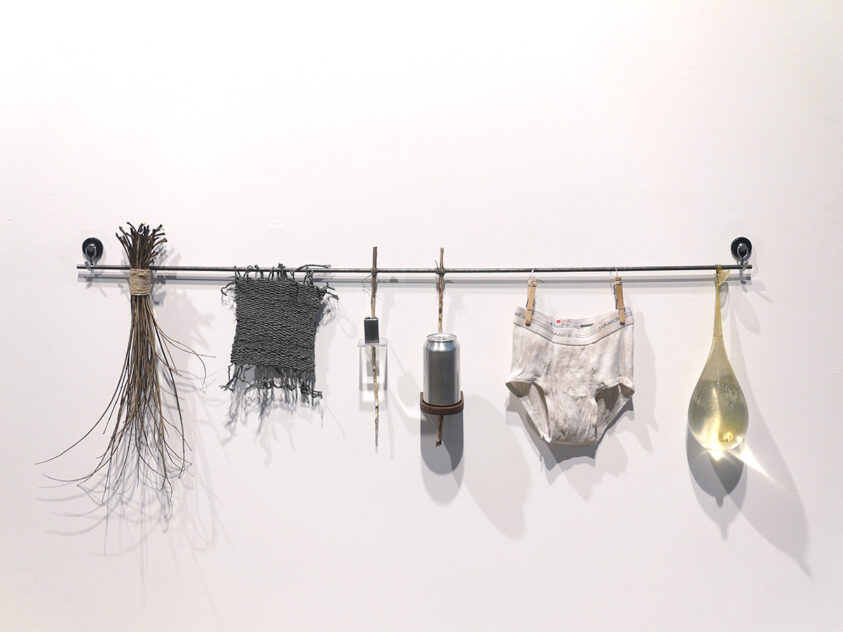
Several Ways to Start a Fire, 2013

Several Ways to Start a Fire, 2013
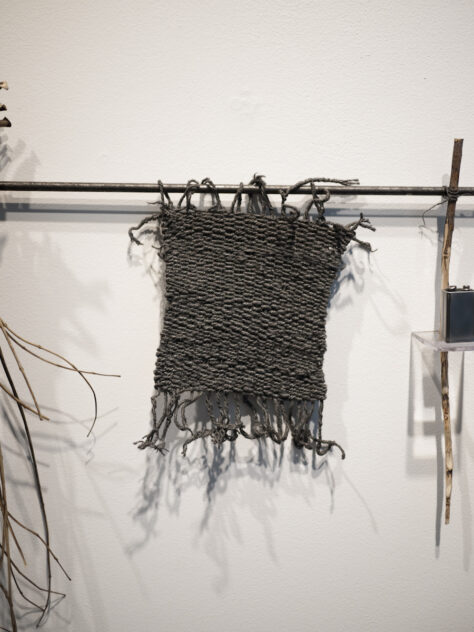
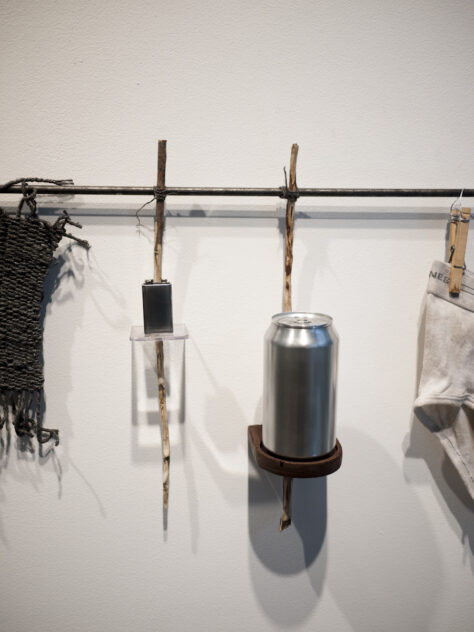
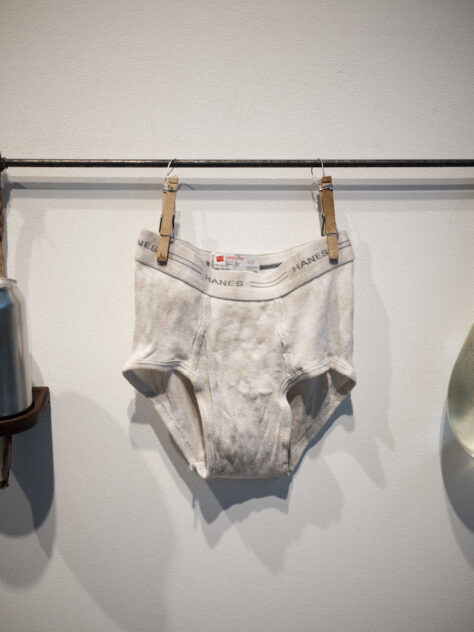
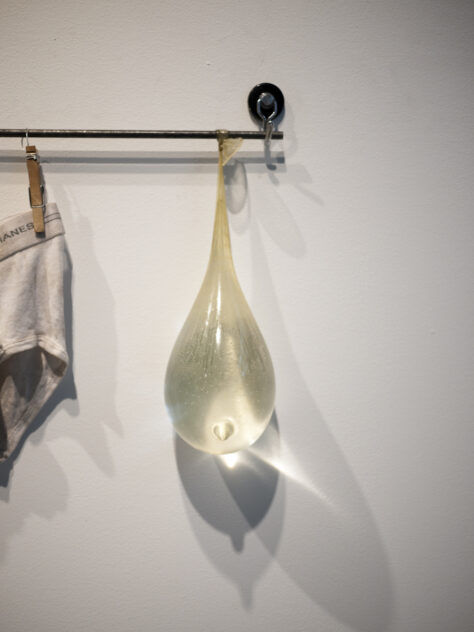
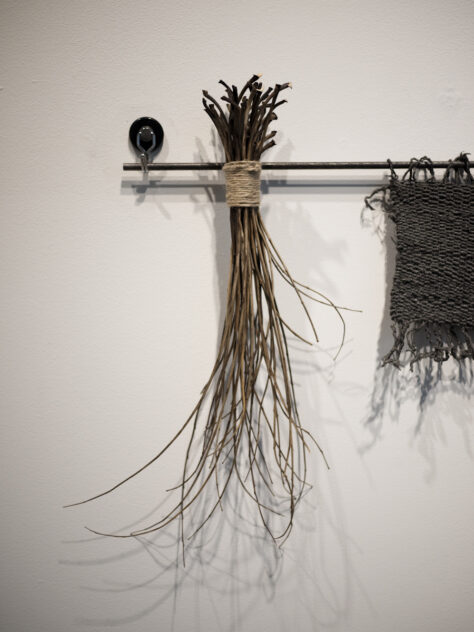
Twigs, rope, steel wool, 9v battery, magnifying glass, aluminum can, chocolate, underwear, close pins, condom, water, and hardware

Exhibited in For a Limited Time Only, MFA thesis exhibition, Moudy Gallery, Fort Worth, TX, 2013

Control of fire is one of the turning points of human evolution. It kept predators away, stretched the day past sunset, drew people together, and cooked the food that fed bigger brains. Several Ways to Start a Fire gathers the materials survivalists use to make fire: twigs, rope, steel wool, a 9-volt battery, a magnifying glass, an aluminum can, chocolate, cotton underwear, clothespins, and a water-filled condom.

Each object has been altered to pull it further from its everyday use, and the arrangement reads first as a formal composition. The piece works two ways: as an art object while there is a market to value it, and as a working survival kit if that market ever collapses. Making fire is part of what makes us human, and so is making, and admiring, things that have no practical use.

Purification Station, 2013

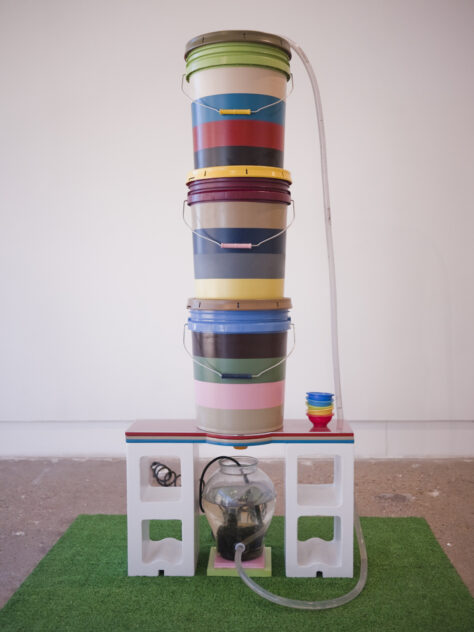
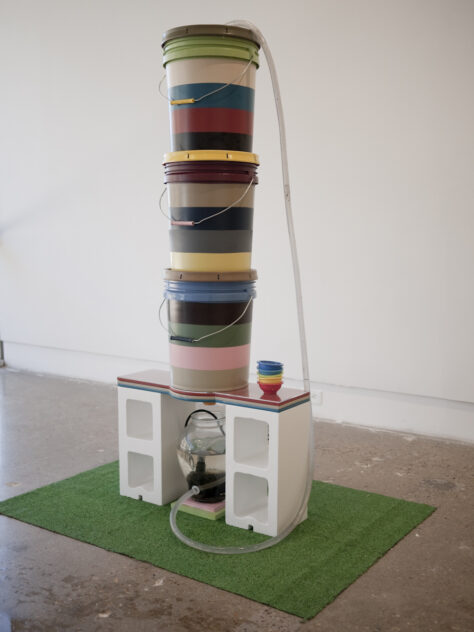
Purification Station, 2013
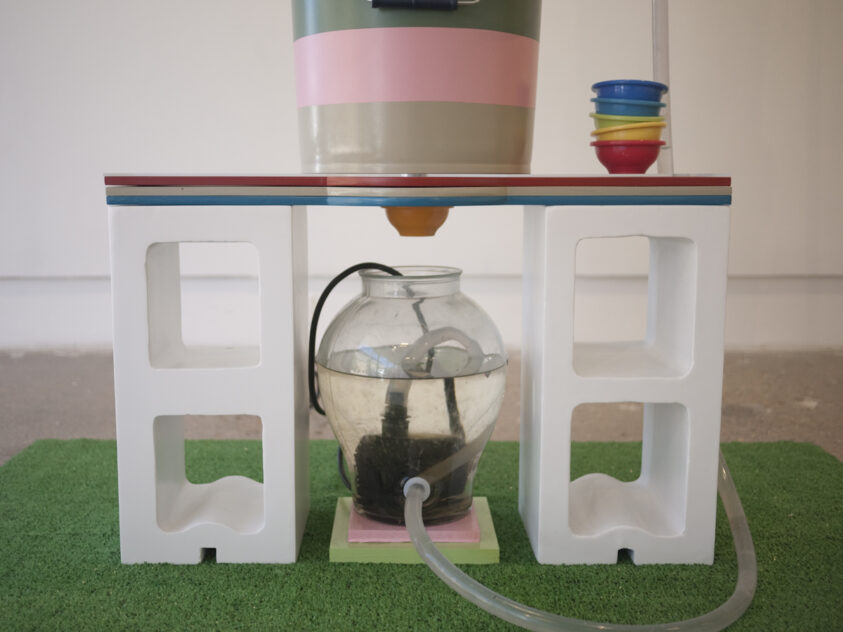
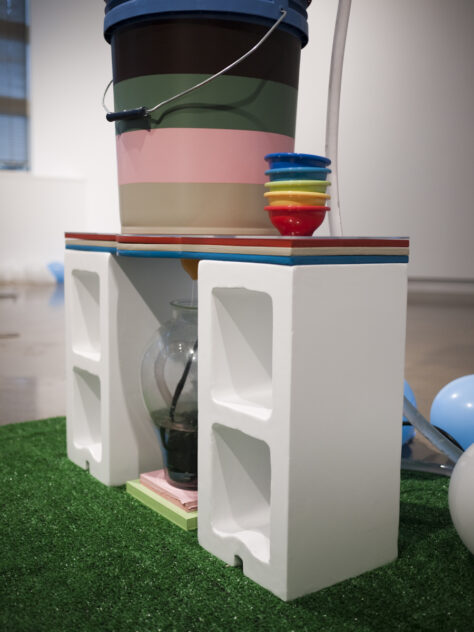
Plastic, Trinity River water, pecan & rose artesian charcoal, white marble chips, beach sand from Exotic Locations™, pump, and glass beverage dispenser
50″w x 61″h x 35″d

Exhibited in Experiencing Perspectives, Mercedes-Benz Financial Services, Fort Worth, TX, 2013
Exhibited in For a Limited Time Only, Brown’s TCU MFA thesis exhibition, Fort Worth Contemporary Arts, Fort Worth, TX, 2013

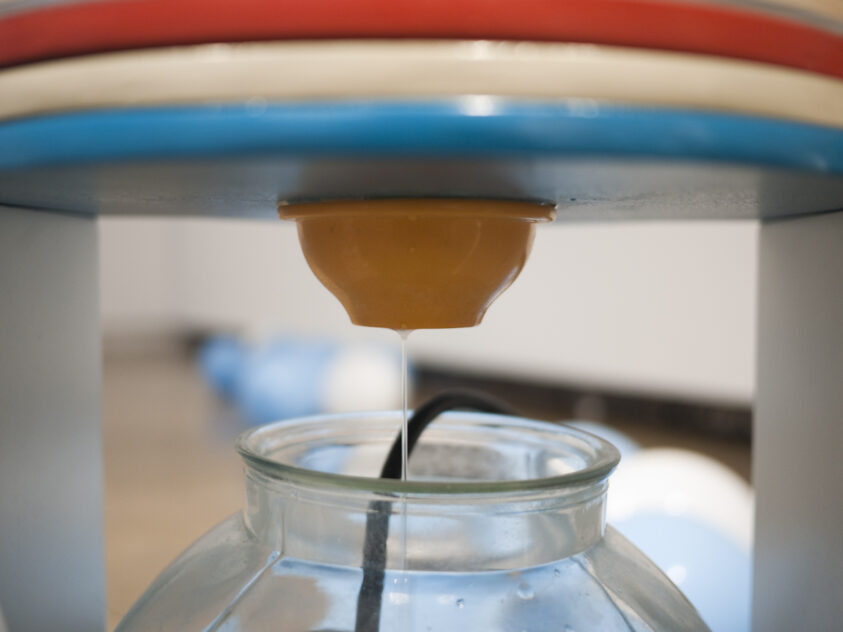
An emergency water filter is meant to be scraped together from whatever is at hand: buckets, cinder blocks, sand, gravel, and charcoal. Purification Station rebuilds that system with a glossy pop finish, so it looks like something you could pick up at Target, and runs Trinity River water through pecan and rose charcoal, marble chips, and beach sand from Exotic Locations™.

Survivalism has become a lifestyle and a product category, fed by reality TV and recurring end-of-the-world headlines. The piece looks at how styling shapes what we believe an object can do, and how quickly survival tools turn into decoration. Like Several Ways to Start a Fire, it is an art object as long as the art market holds and a working tool if it doesn’t.

Attention Retention, 2012

Attention Retention, 2012
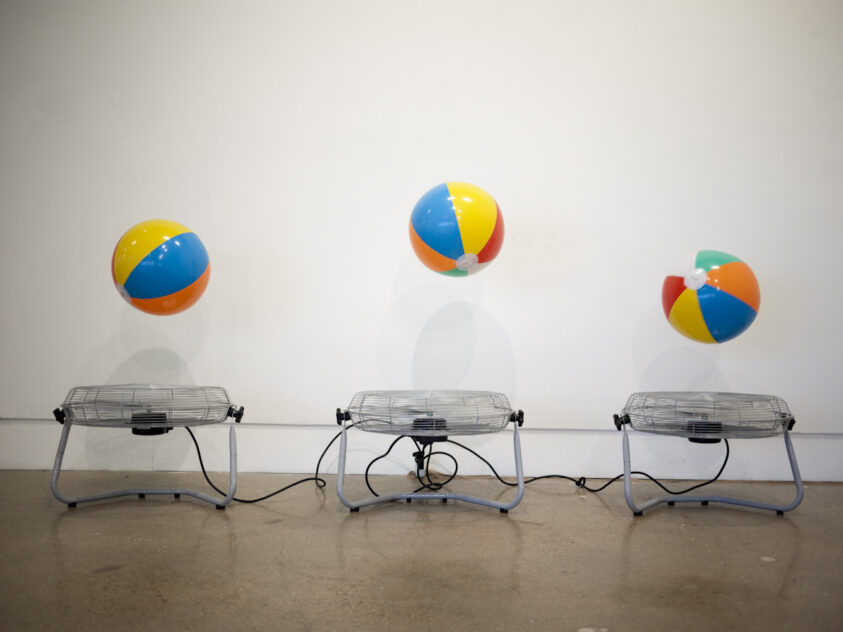
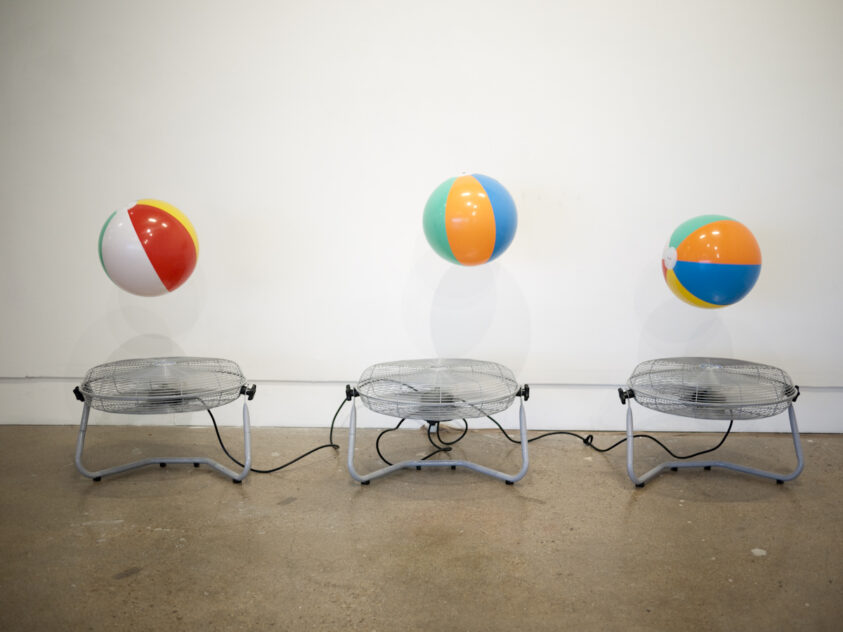
Three floor fans and three 16″ beach balls

Exhibited in For a Limited Time Only, Brown’s TCU MFA thesis exhibition, Fort Worth Contemporary Arts, Fort Worth, TX, 2013. Named one of the Top Five Artworks in Fort Worth Weekly’s Best of Culture 2013.

Walking through Walmart one day, Brown saw about six people gathered around a product display. Under a sign reading “Clearance—High Velocity Floor Fans—$34,” a chrome fan pointed straight up on full blast, with a multicolored beach ball hovering in the air above it. Bernoulli’s principle keeps the ball in place: fast-moving air has lower pressure than still air, so the stream wraps around the ball, pushes it back to center whenever it drifts, and holds it aloft. It’s a trick many people remember from junior high physics or a children’s science museum.

What caught Brown’s attention wasn’t the trick but the shoppers, who stood transfixed. The display held people longer than most viewers spend with an artwork in a museum or gallery. Would the same device hold an audience the same way if it were presented as an art object? Could it work as a Duchampian readymade once it was moved into a gallery?

Attention Retention takes that question into the gallery as a kind of social experiment. Three floor fans sit in a row, each levitating a 16″ beach ball. The balls bob in a constant rhythm, filling the room with color and repetitive motion that is hypnotic, holding the viewer’s gaze while demanding attention.

In a world of media saturation and nonstop information, attention has become a sought-after commodity. One 2008 study found that the average attention span had dropped to five minutes, down from twelve a decade earlier. Placed in a gallery, the piece becomes a constant distraction that changes how the whole space is experienced. A moving object in a still room is a kind of seduction: even viewers who aren’t looking at it keep it in their peripheral vision or steal quick glances. That pull is a survival instinct. The brain reads movement in a quiet space as one of three things: a predator, a source of food, or a potential mate.

The repetitive bobbing also gives the beach balls a kind of personality, and viewers begin to relate to them as if they were alive. Attention Retention was part of For a Limited Time Only, Brown’s 2013 MFA thesis exhibition at TCU, which looked at how attention, behavior modification and the drive to survive shape everyday decisions. See also Escape Plan and Purification Station, which were shown in the same exhibition.
THE INTERVIEW

Interview Etiquette Before the Interview

1.  Your hair should be trim, clean and combed.
2.  Nails should be clean and trimmed.
3.  Be conservative and err on the side of caution.  If the company does not have a dress code, remember that its better to overdress than underdress.
4.  Arrive at least 10 minutes before your interview.  The extra minutes will also give time to fill out any forms or applications that might be required.
5.  Turn off your cell phone or pager.
6.  Don’t assume that whoever greets you is the receptionist.

Interview Etiquette During the Interview

1.  Make a positive and professional first impression by being assertive and giving a firm handshake to each interviewer and addressing each interviewer by name.
2.  Reinforce your professionalism and your ability to communicate effectively by speaking clearly and avoiding “uhs”, “you knows”, and slang.
3.  Use appropriate wording.  You won’t receive extra points for each word that has more than 10 letters.  Use technical terms only when appropriate to the question.

Interview Etiquette After the Interview

1.  Shake each interviewer’s hand and thank each interviewer by name.
2.  Send a thank you note as soon after the interview as soon as possible.