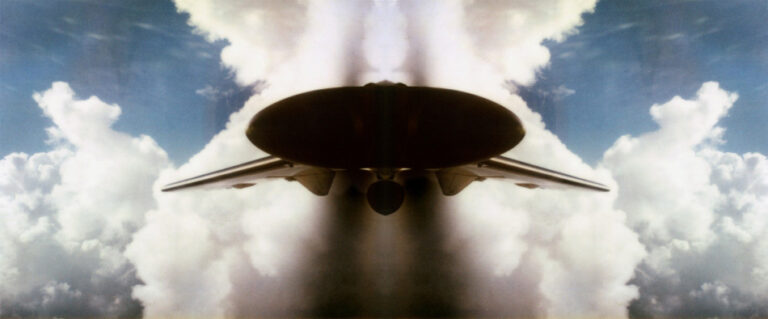
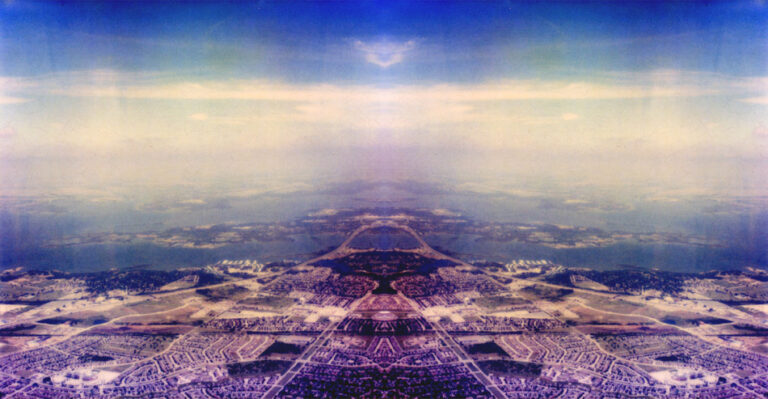
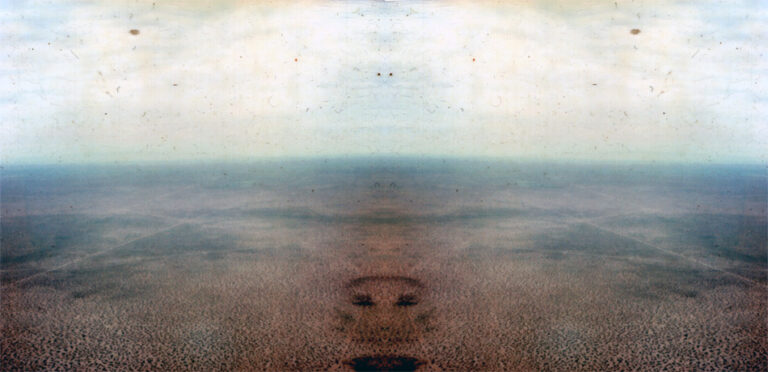
Layer Cake, 2024

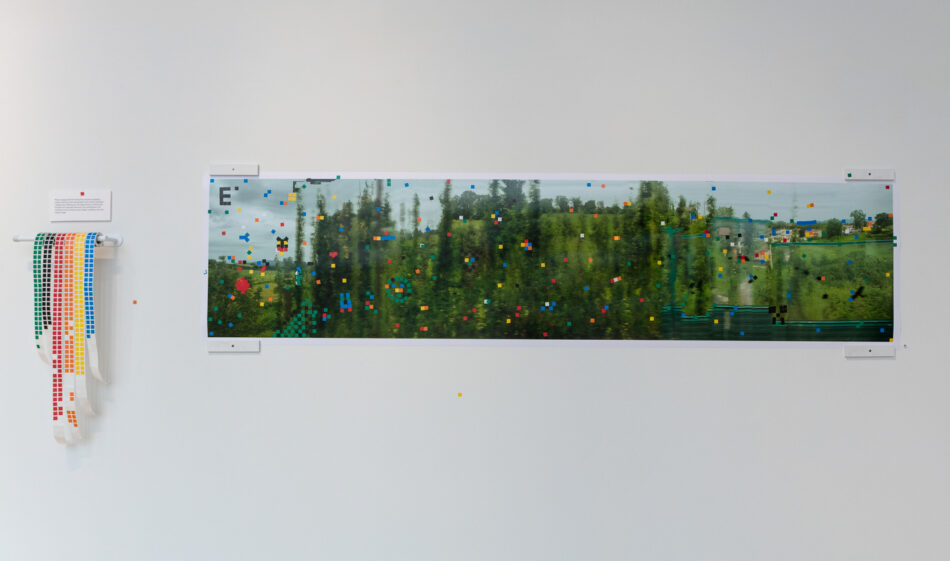
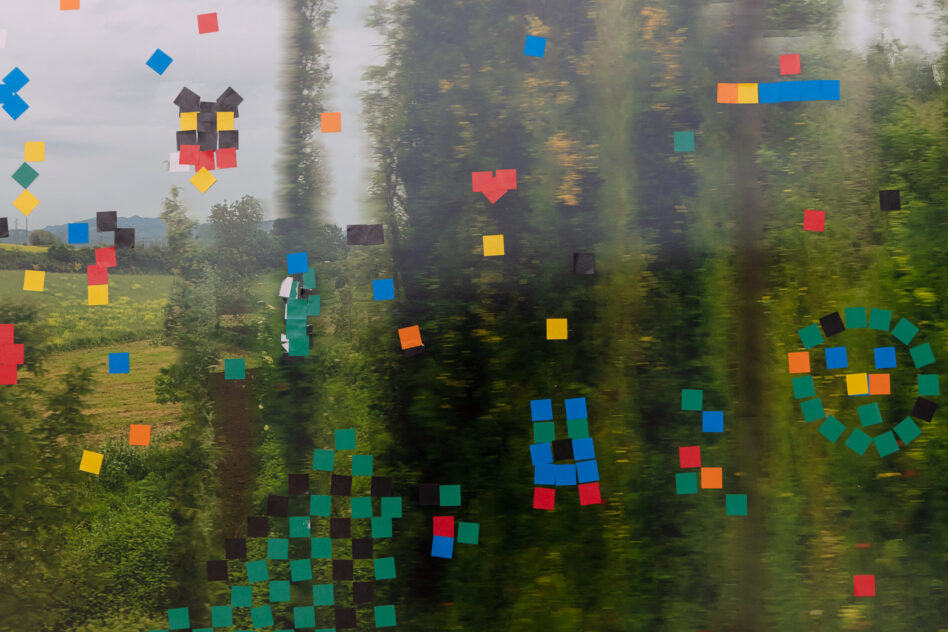
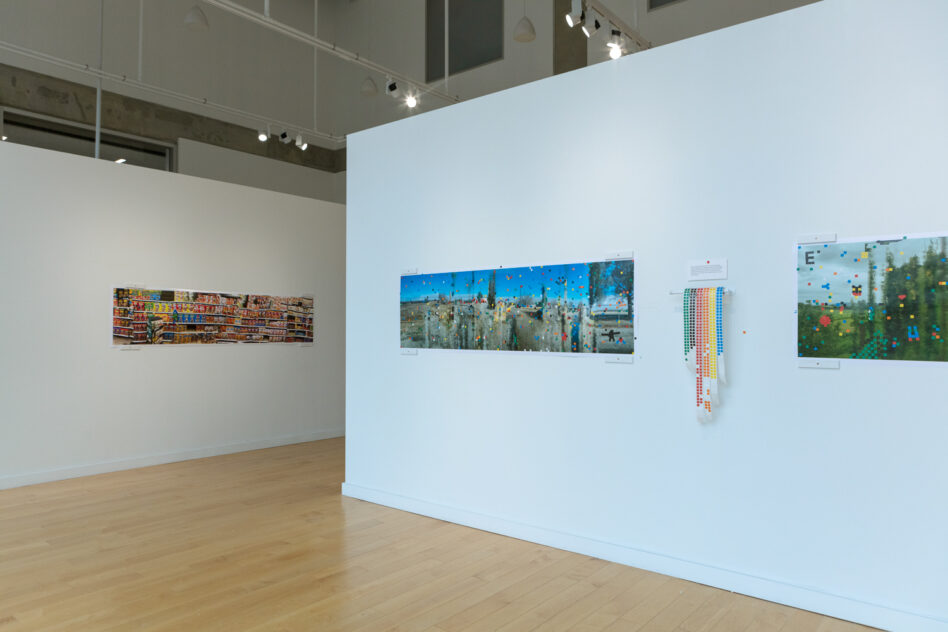
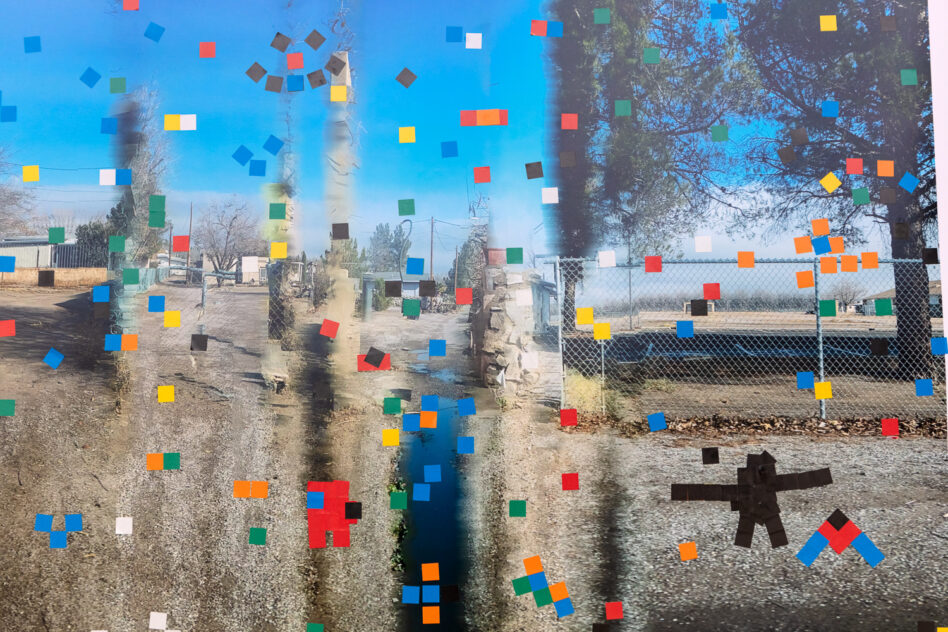
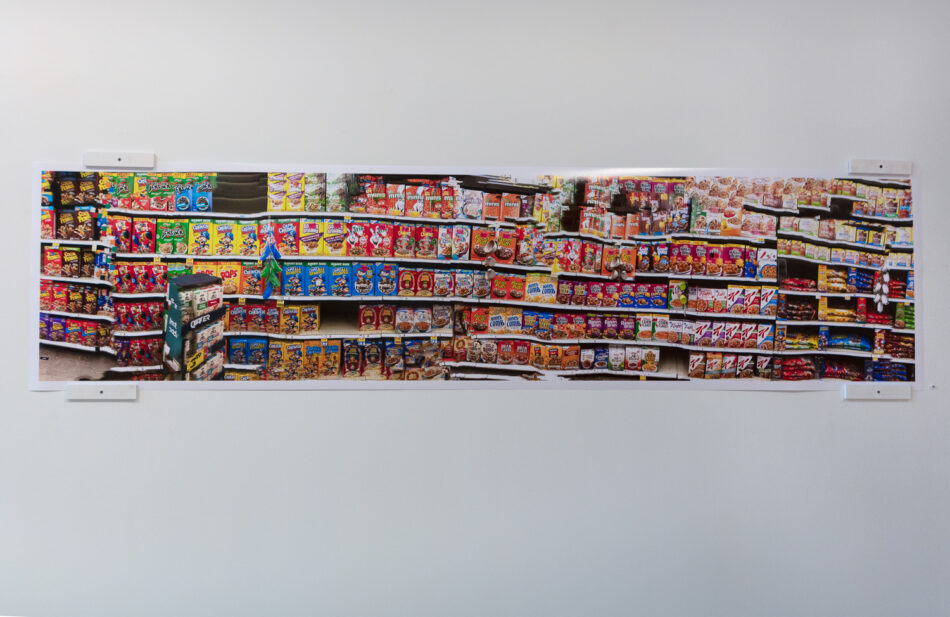
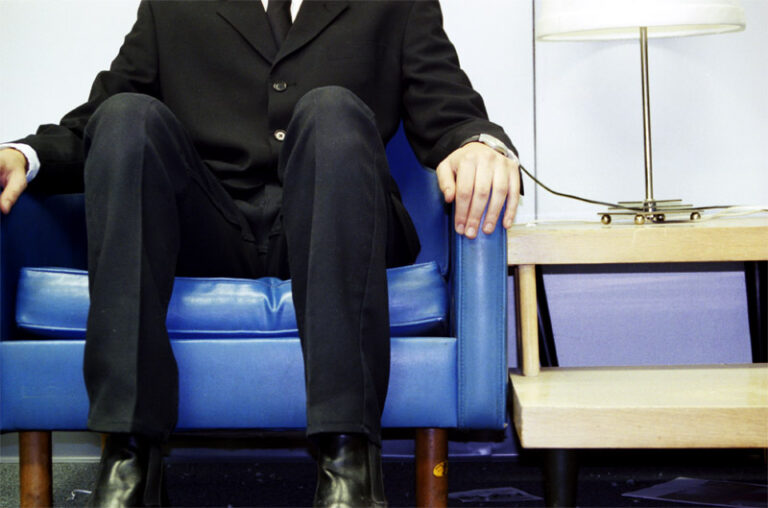
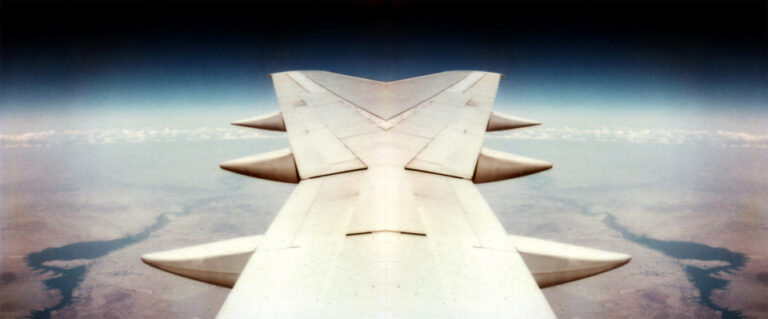
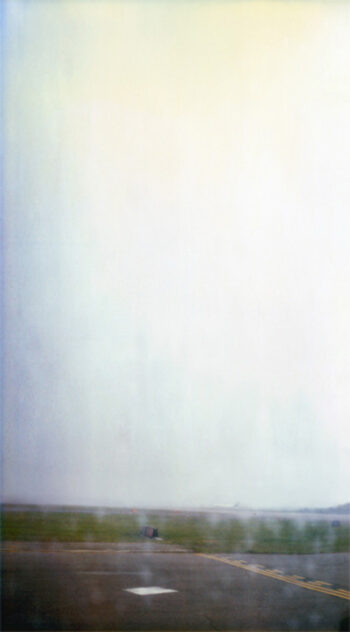
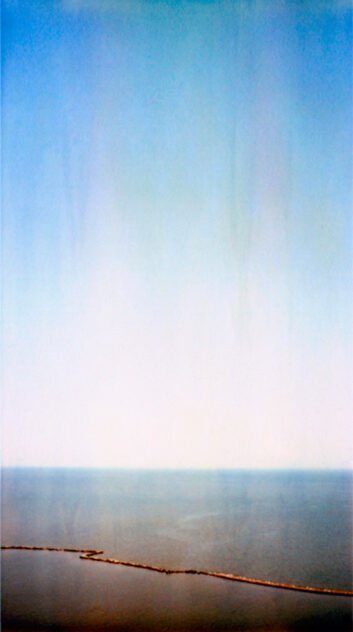
Layer Cake (San Miguel, Valmontone, & Cereal Aisle), 2024
Inkjet prints
24″ × 95″ each

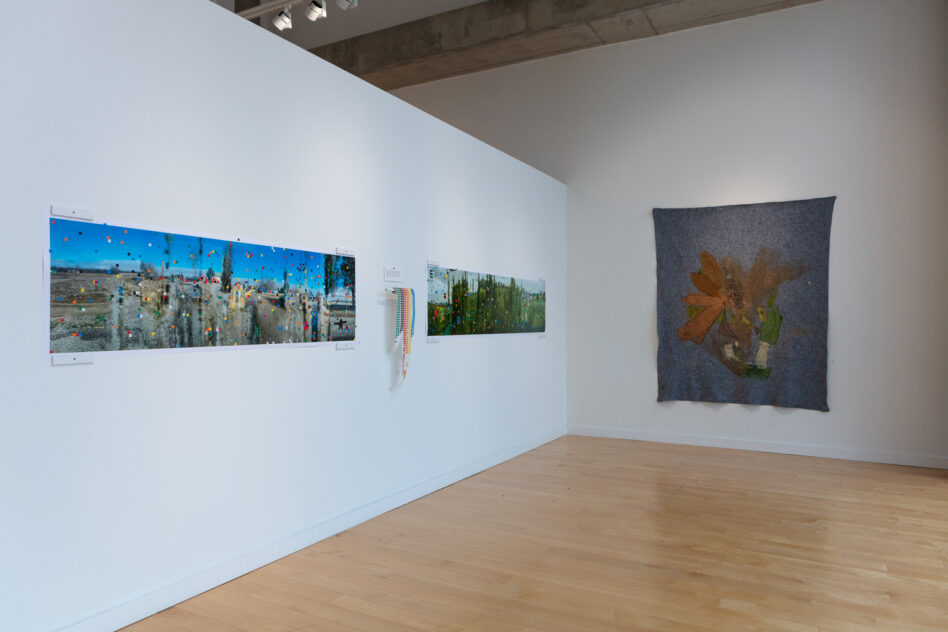
Exhibited in Layer Cake, a group exhibition with Jonathan Paul Jackson and Xochi Solis at the University Gallery, Sam Houston State University, Huntsville, Texas.

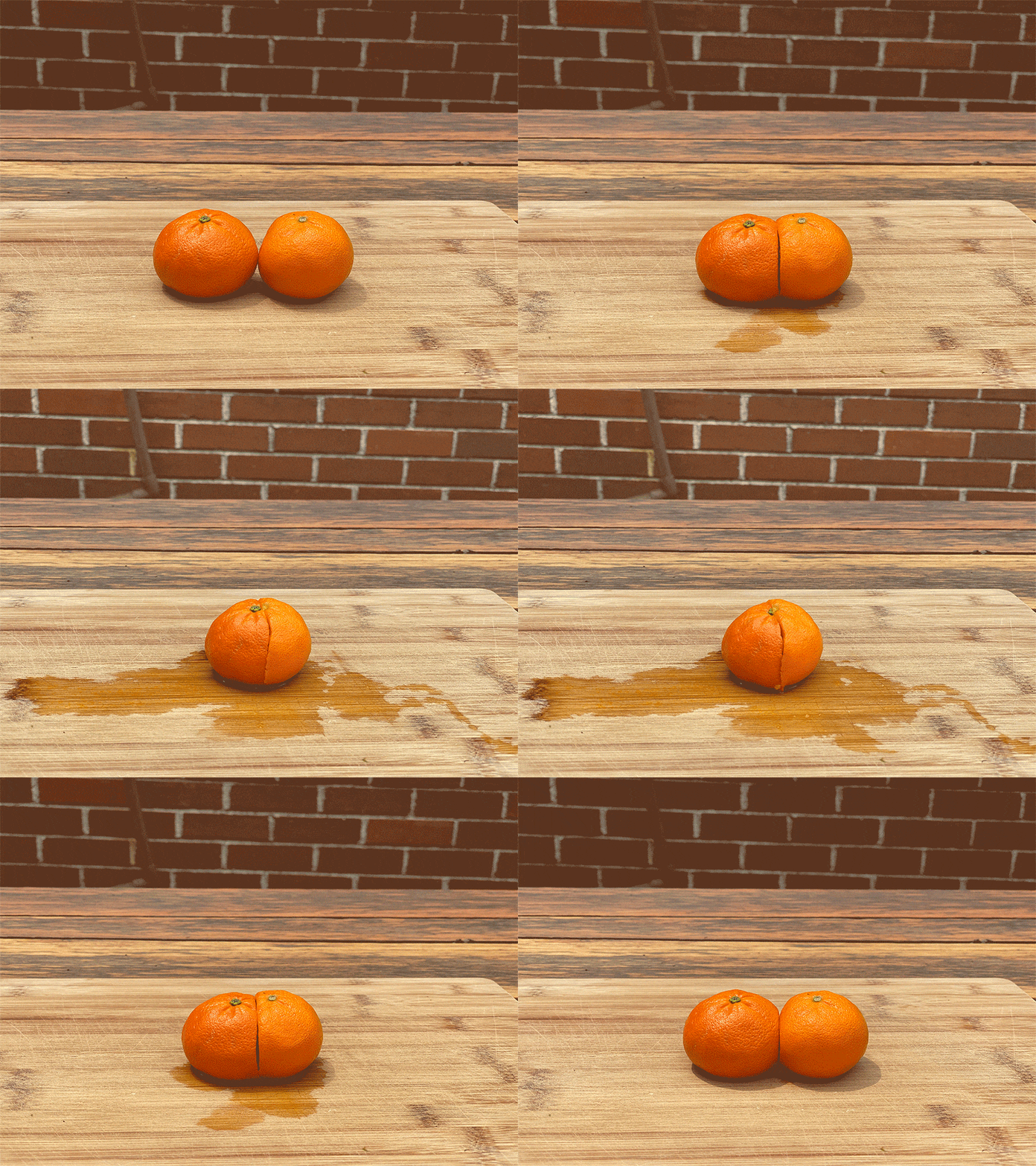
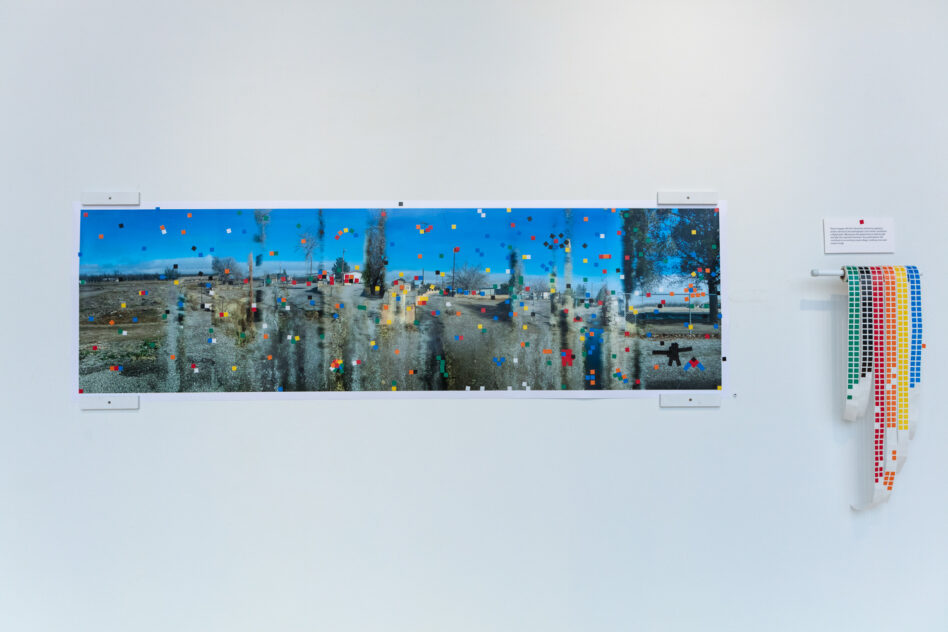
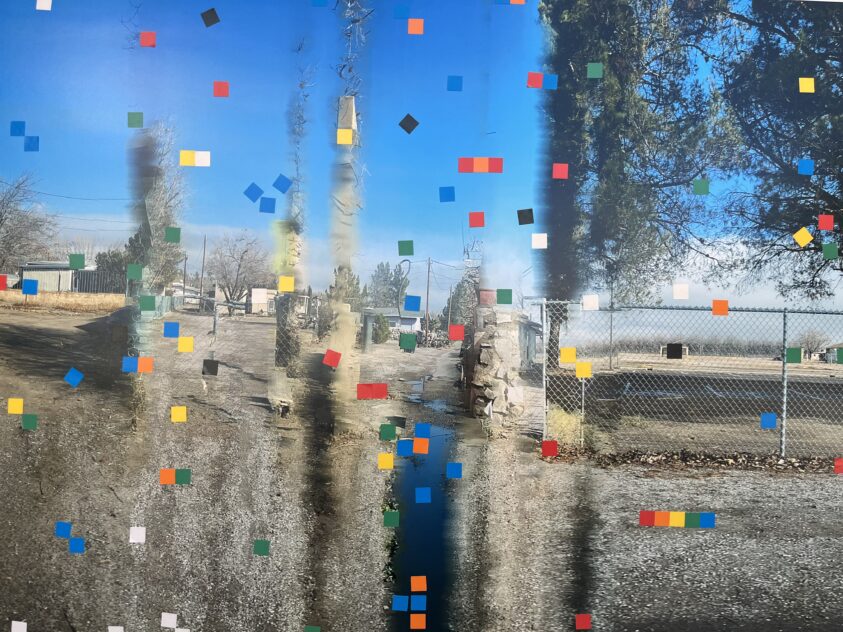
Each panorama in Layer Cake was shot on an iPhone from a moving vehicle: a train, a car, or a shopping cart. Panorama mode expects a slow, steady sweep, so the motion breaks each scene into stretched, repeated, and misaligned slices full of digital glitches and distortion.

In the gallery, the prints hang alongside spools of tiny square stickers in red, green, blue, black, and white. Each sticker is a pixel. Visitors are invited to patch and repair the glitches, but every repair adds to the abstraction, turning the camera’s errors into a shared composition.

Each person becomes a pixel, and the image reaches its best resolution only when everyone takes part.

Dopamine, 2020

Dopamine, 2020
Single-channel video
(4:20)

Dopamine was made shortly after the pandemic began from videos of moments that give a small hit of joy, an immediate sense of pleasure. Some are beautiful; others are funny, strange, or simply satisfying. These fragments preserve the feelings of noticing something wonderful before it disappears. Making the work helped me remember that even during a frightening and uncertain time, little things could still feel magical.

Impala Eardrums

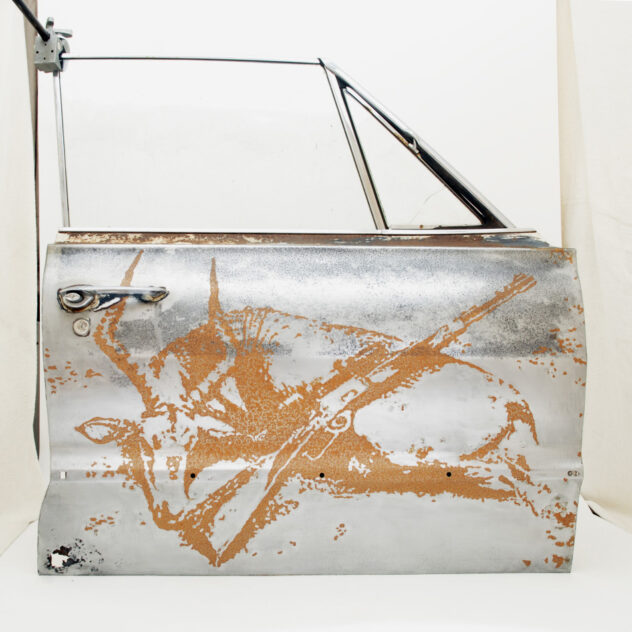
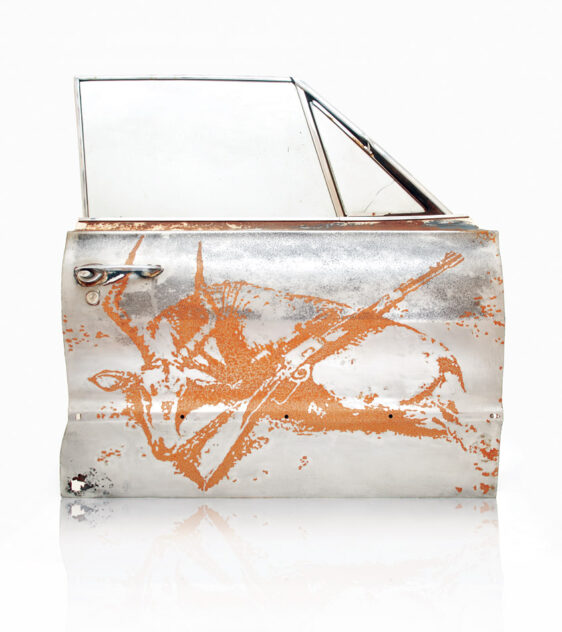
As Impala Murder, 2008
Salt water and hydrogen peroxide on car door
39.5″ x 37″

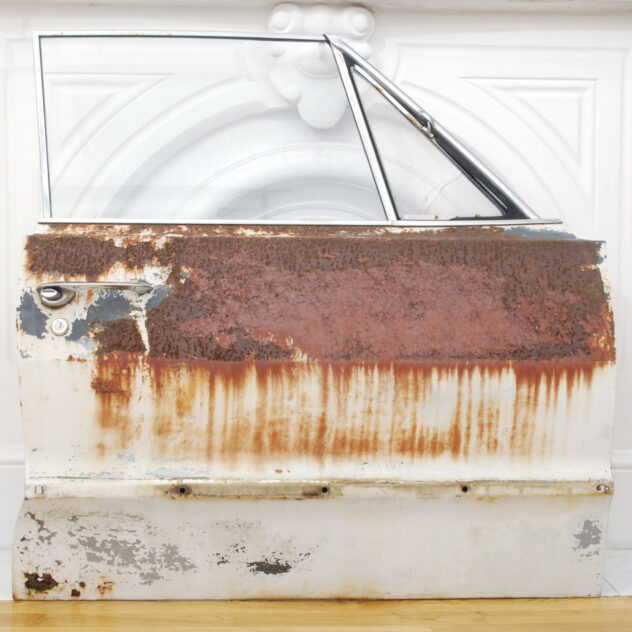
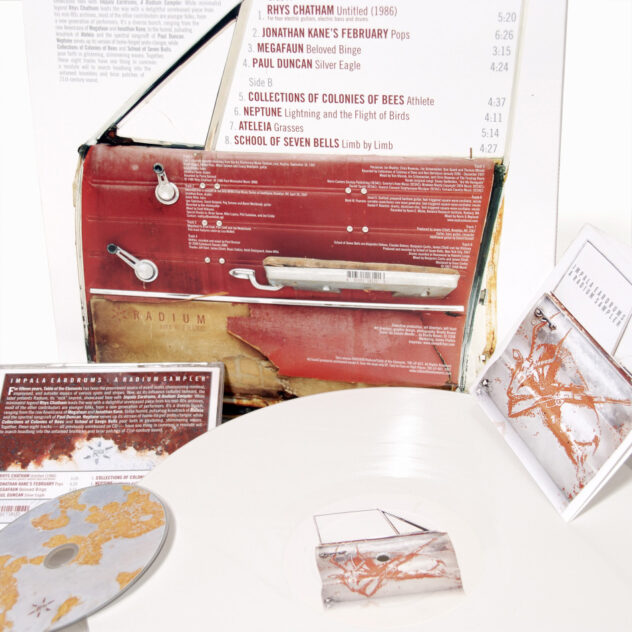
As Impala Murder is the cover art for Impala Eardrums: A Radium Sampler, a 2008 compilation from Table of the Elements’ Radium label. Both titles are anagrams of “A Radium Sampler.” Brown was also the art director, graphic designer and photographer for the release.

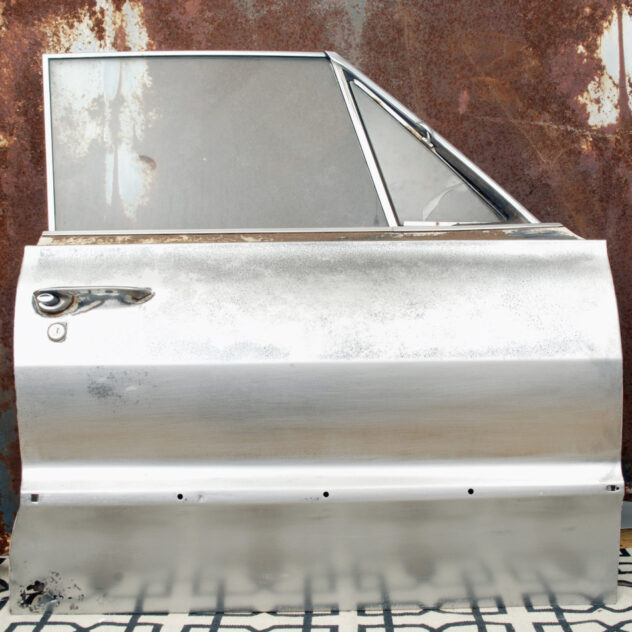
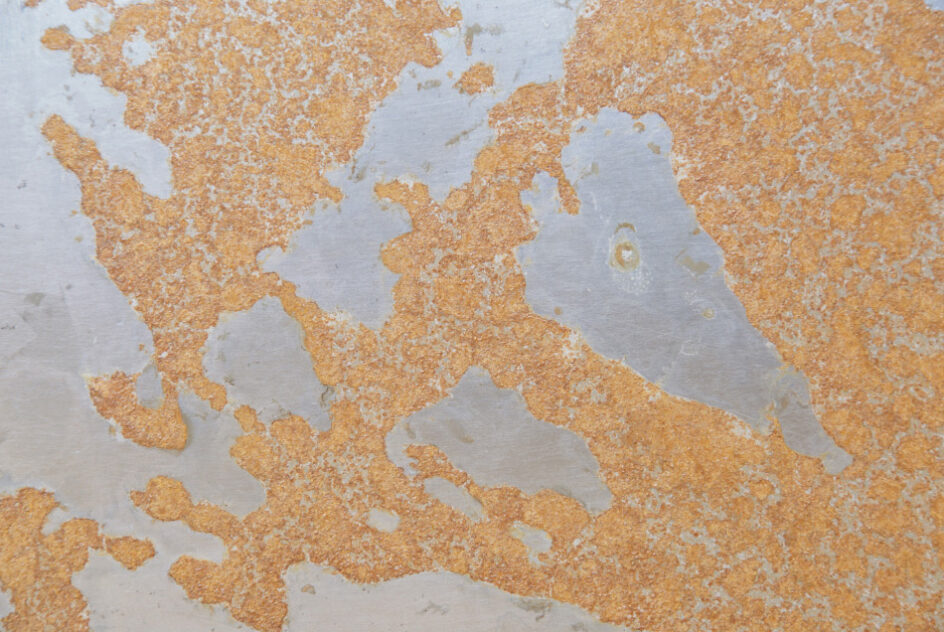
Brown found a Chevy Impala door in a Long Island junkyard and sanded it down to bare metal. He attached a stencil of a photograph to the door and sprayed it with a mix of salt water and hydrogen peroxide to cause it to rust. Once it dried, he removed the stencil, and the image was left behind formed in rust. Brown talks about the piece in this interview with KERA.

It was one of several projects Brown created through his graphic design work for the label, where several albums came with their own creative project. See also Donkey Punch and Side A.

15,540 Miles, 2002

15,540 Miles, 2002
School desks, 444 No. 2 pencils, sawdust, pencil shavings, chalkboard, cyanotype on carpet
Variable dimensions

Exhibited at Conduit Gallery, Dallas, TX, 2002. This was Brown’s first commercial gallery exhibition.

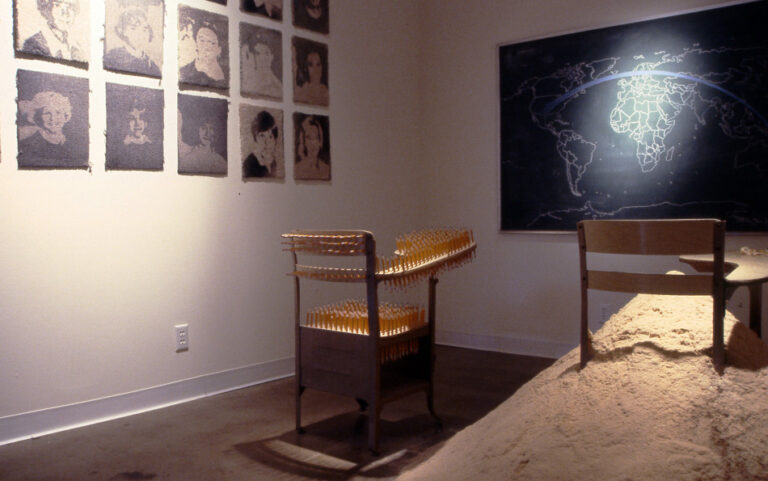
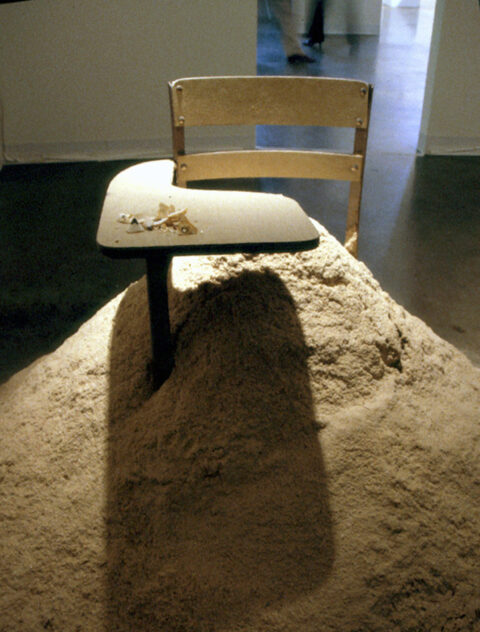
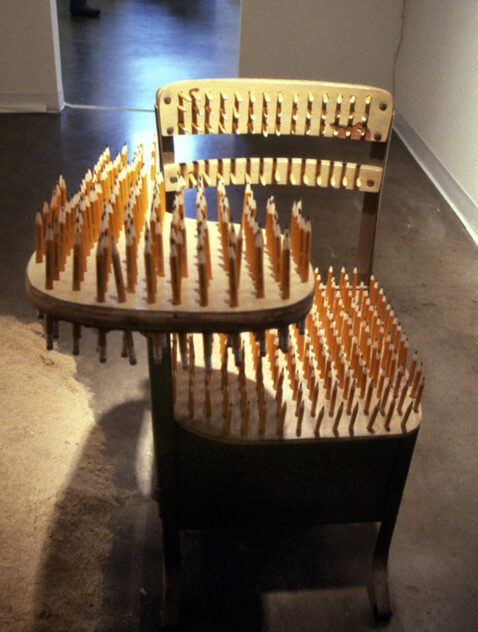
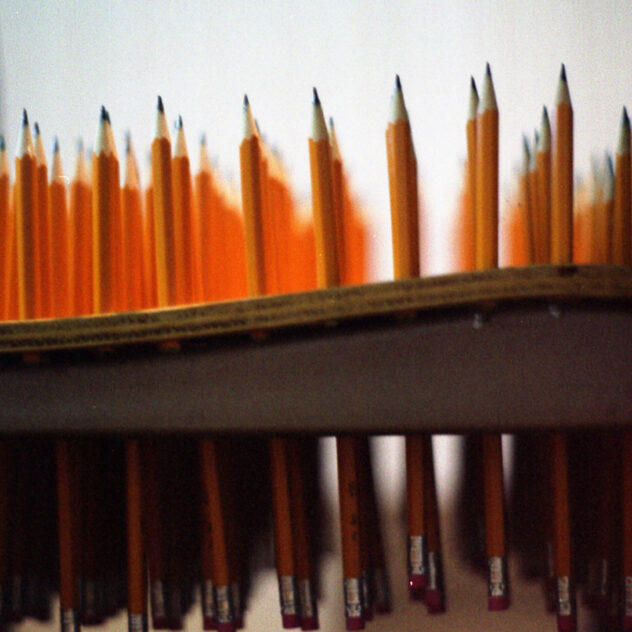
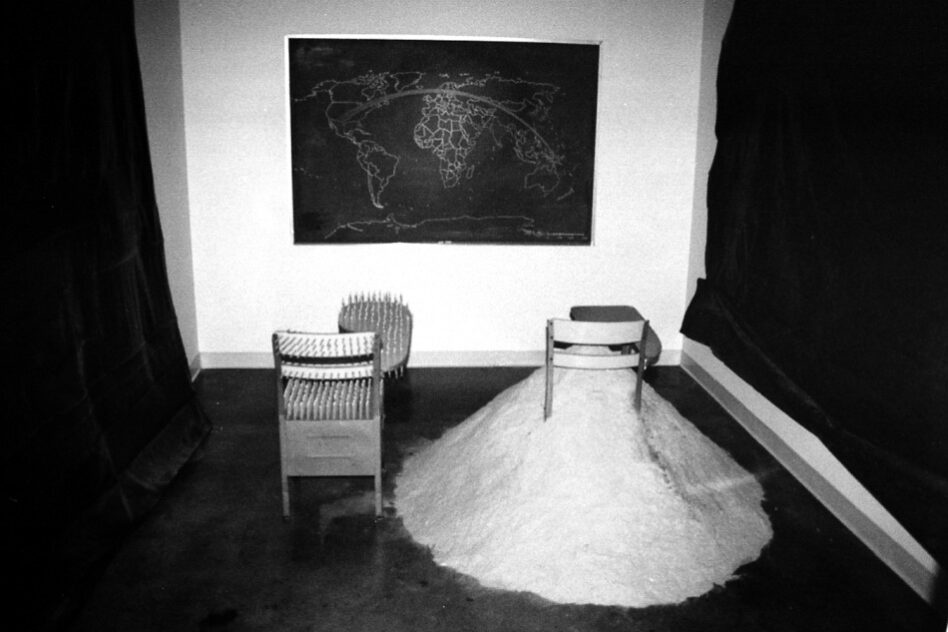
Two school desks sat in the middle of the room. One was embedded with 444 No. 2 pencils. A single No. 2 pencil can, in theory, draw a line about 35 miles long, so together the 444 pencils could draw a line 15,540 miles long. The second desk sat beside it, buried in sawdust and pencil shavings. On the wall facing the desks hung a classroom chalkboard with a world map drawn on it, and the 15,540-mile line was plotted across the map, starting in Dallas and heading east.

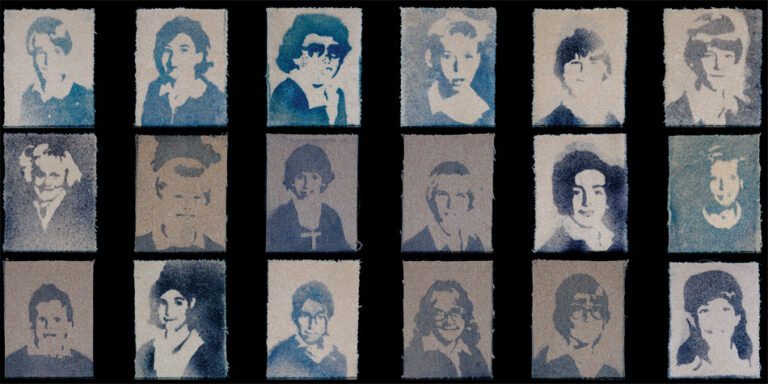
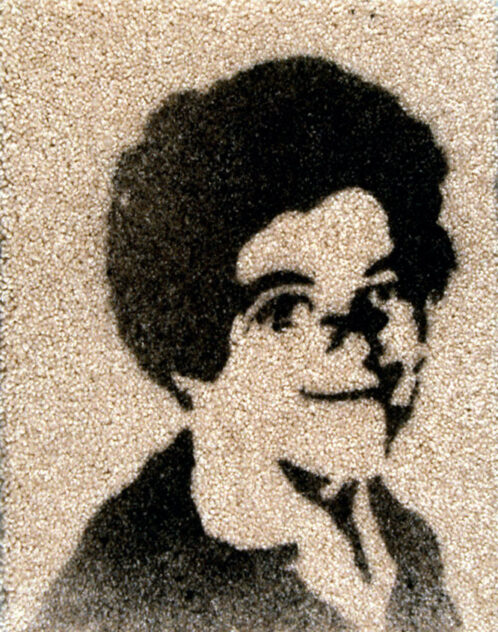
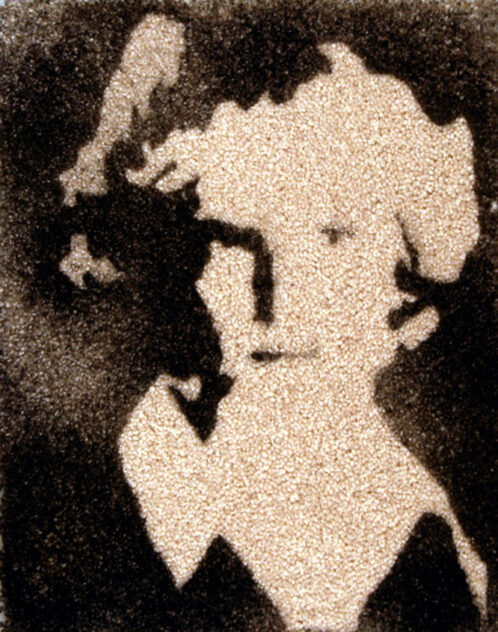
The walls to the left and right held 64 portraits, 32 on each side, of Brown’s classmates from his elementary school yearbooks. For each portrait he cut a stencil and sprayed cyanotype photo emulsion onto a piece of carpet. The portraits were hung unexposed and kept under a black tarp until the opening reception. That night the tarp came off, and over the course of the evening the faces slowly appeared on the carpet as the emulsion reacted to the light.

The installation is about fear and pressure and the two ways people respond to them. Fear can push you to move, or its weight can hold you in place. Some people adapt and excel; others get buried.

Spider Webs, 2017

Spider Webs, 2017
Cyanotype on canvas
16.5″w x 20”h

Exhibited in Image for Concept: Indirect Representation in Photography, Southeast Museum of Photography, Daytona State College, Daytona Beach, FL, 2019, and The Hand Art Center, Stetson University, DeLand, FL, 2020

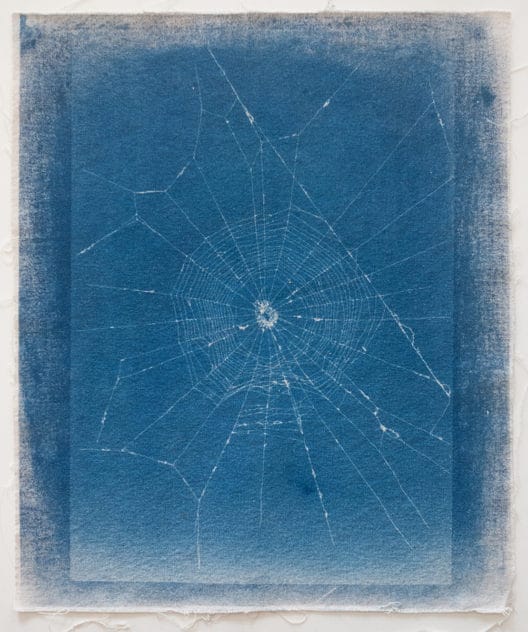
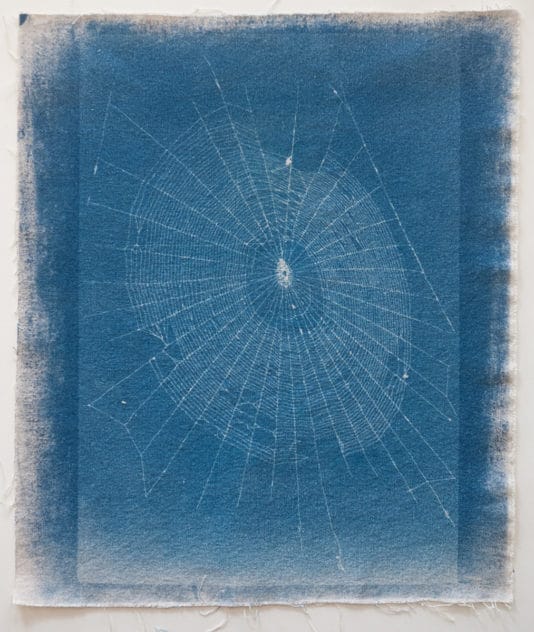
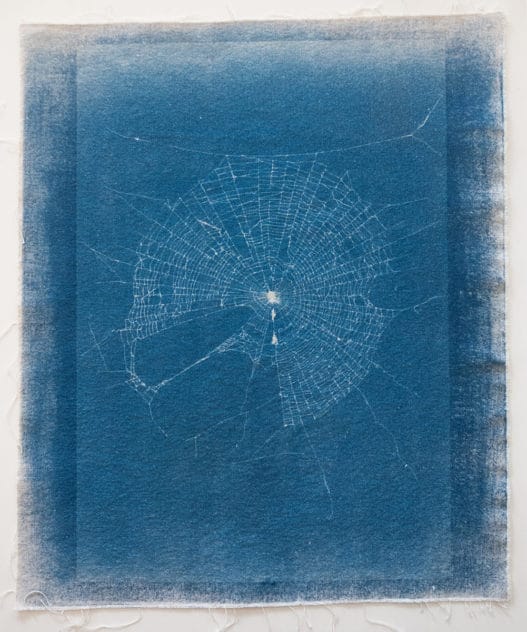
In Spider Webs, the computer monitor becomes a camera lucida. Working from photographs, Brown redraws each web by hand on screen, recognizing every thread while staying true to the original image.

The digital drawings are then printed as cyanotypes on canvas. The frayed edges of the canvas make each piece unique, yet the image itself is infinitely reproducible. Like the cliché verre, the 19th-century process of printing hand-drawn glass plates on photographic paper, the work asks how an art object is valued: what is a physical object worth compared to the digital information that defines it?

Spider Webs was made in 2017 during the North Set Residency in Houston, organized by Bea Ying Projects in a vacant commercial building that had once been a title loan office. In that setting the webs took on another meaning: they reference how title loan and other short-term lending companies can trap people in cycles of debt that are hard to escape, all in the pursuit of paradise, or the American Dream. The series was made alongside Title Loan, a group of cyanotypes on canvas from the same residency.

The series grows out of Brown’s larger interest in the blurring line between our physical and digital surroundings. Across installation, sculpture, photography and video, his work looks at how technology shapes our decisions, both enhancing and disrupting our sense of independence, and invites viewers to weigh its potential against its pitfalls and its effect on cultural and individual identity.

The web returns as a subject in UUUUUU (2023), a spiderweb hand-formed from copper wire stripped from internet cable.
Title Loan, 2017

Title Loan, 2017
Cyanotype on canvas
variable sizes

Title Loan was made during the North Set Residency, a March–May 2017 residency organized by Bea Ying Projects in Houston. Three artists, Bradly Brown, Jessica Ninci, and Eden Rae, were given a vacant commercial building at 3411 Irvington Boulevard to use as studio space for several months. The building, renamed North Set Studios, had once been a title loan office. Work made during the residency was shown at the North Set Residency Closing Exhibition on April 28, 2017.

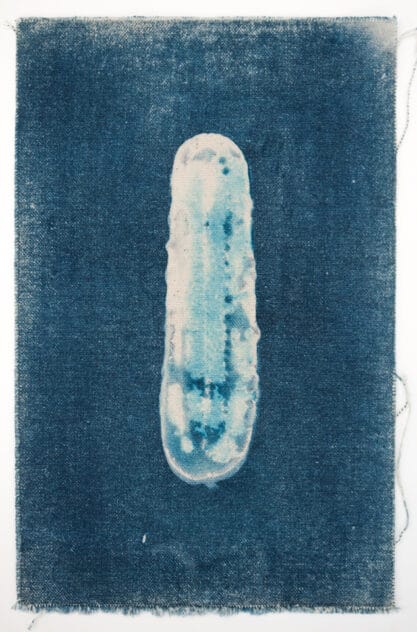
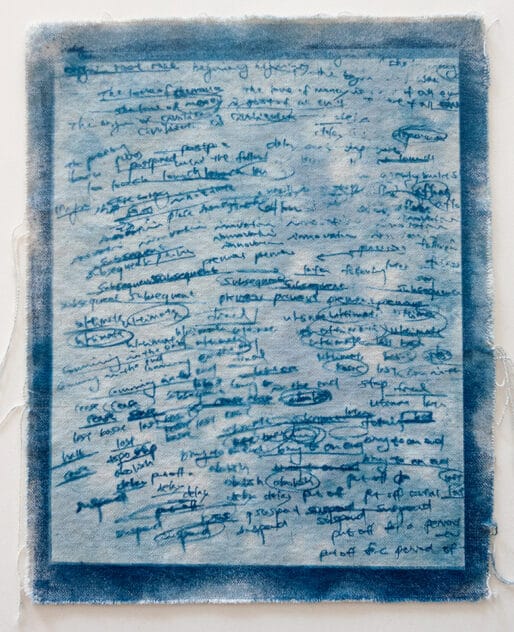
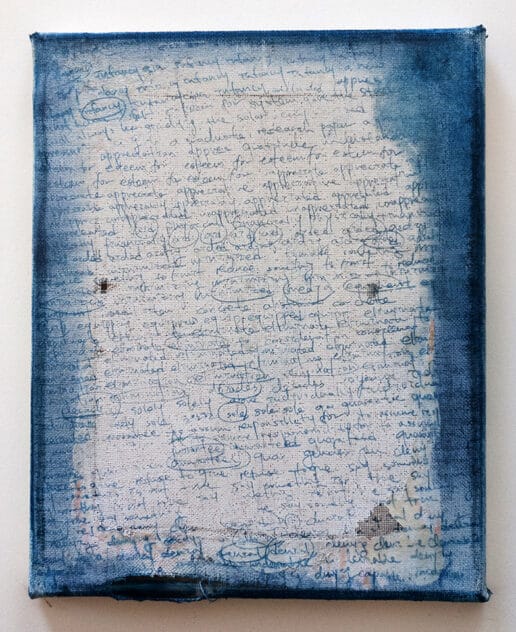
The series is a group of cyanotypes on canvas that reflect on the space they were made in. A title loan office sells the promise of a quick way forward, and the work considers the pursuit of the American Dream: how chasing it can feel like Sisyphus pushing a boulder up the hill, and how that pursuit is taken advantage of by people and businesses like short-term lenders.

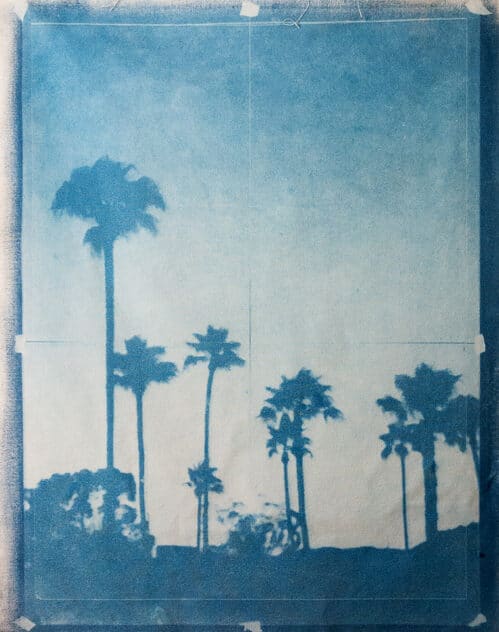
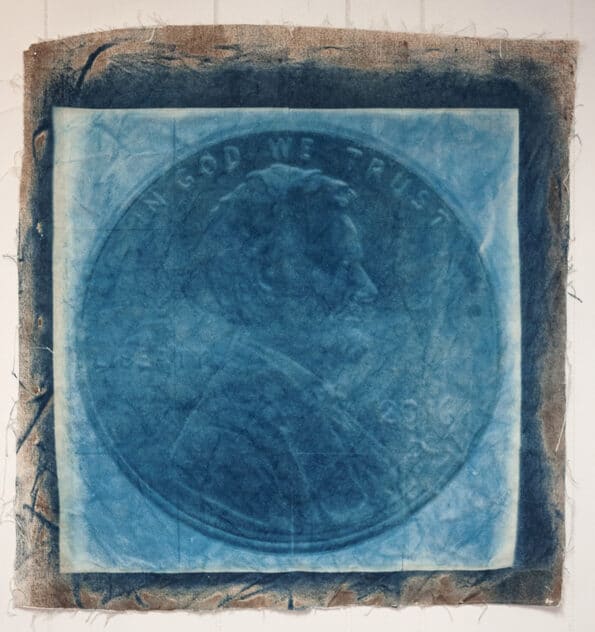
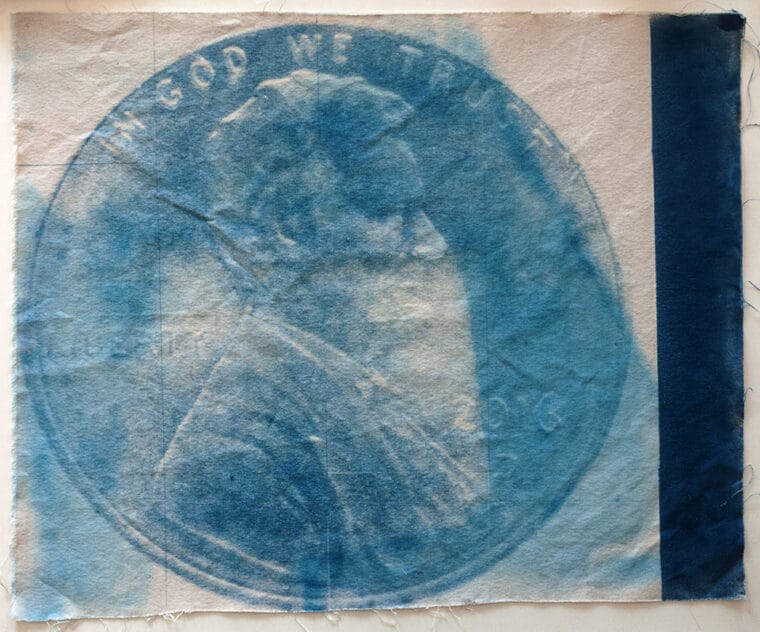
A large cyanotype of palm trees stands in for the idealized “paradise” at the end of that pursuit. Other prints are made from sheets of paper Brown pulled out of a trash can, left by someone, perhaps a student, who was learning English and had written the same words over and over as practice. The dense pages of repeated handwriting show the work and commitment it takes to chase a better life, even when that effort becomes obsessive and compulsive. Two giant cyanotype pennies on canvas offer Brown’s two cents on the pursuit of happiness and on those who profit from it.

A second series made at North Set, Spider Webs, extends the idea: the webs reference how title loan and other short-term lending companies can trap people in cycles of debt that are hard to escape. The found English-practice pages also appear in Brown’s earlier exhibitions Barnyard and Beastly Words.

The North Set Residency Zines, printed by The Center for Imaginative Cartography and Research, are available for purchase here.

Failure to Launch, 2016

Failure to Launch (excerpt), 2016
Single-channel video
(01:41:18)

Exhibited in how2magpie, Lawndale Art Center, Houston, TX, 2016

Filmed at Challenger Seven Memorial Park in Houston, Failure to Launch follows a bag of ice tied to seven helium balloons. The plan was simple: as the ice melted, the bag would become light enough for the balloons to lift it off the ground and carry it into the sky. That never happened.

Instead of rising, the bag was pushed by the wind into the grass, where the balloons popped one by one. In a park dedicated to the seven astronauts lost aboard the Space Shuttle Challenger, the result carries a dark poignancy the original plan never could have. The title is an honest account: not what was planned, but what happened.

Shown in full on a vertical monitor, the video runs more than an hour and a half and offers no promise of a payoff. Viewers decide for themselves how long to wait for a takeoff the title suggests may never come.

Press:
“Escaping the Narrative Trap of Video Art: David Politzer and Bradly Brown”,
Brandon Zech, Glasstire, May 21, 2016

Failure to Launch (excerpt) from Bradly Brown on Vimeo.

Side A, 2016

Side A, 2016
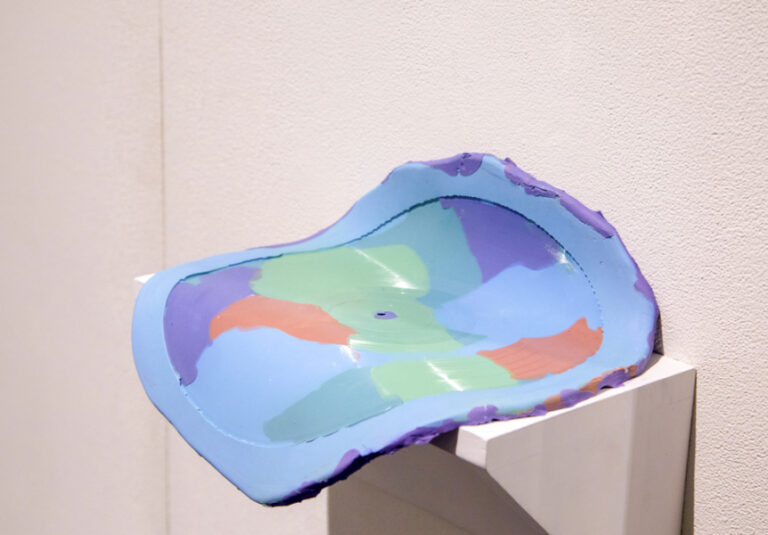
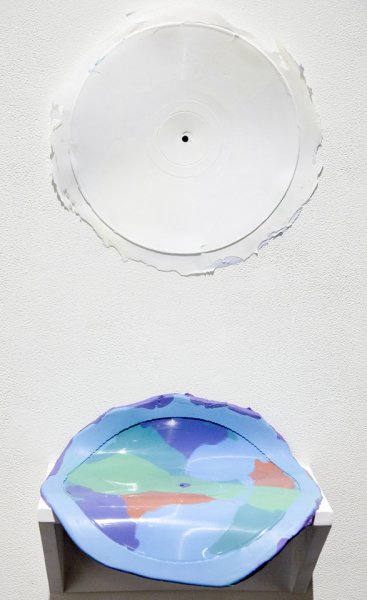
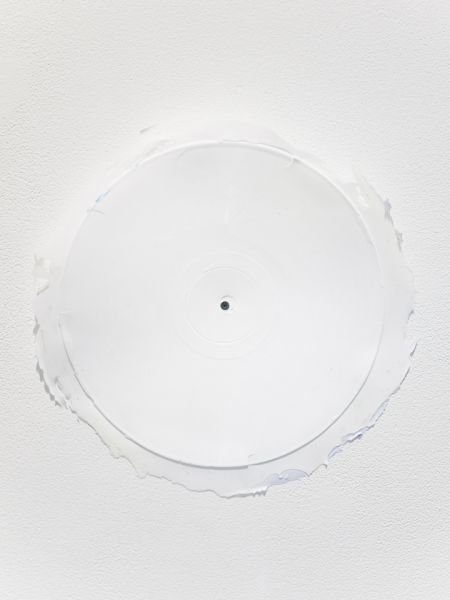
Silicone mold, and unique resin cast LP. Each color of silicone signifies a different vinyl record used to create the mold. 
14” x 14” each

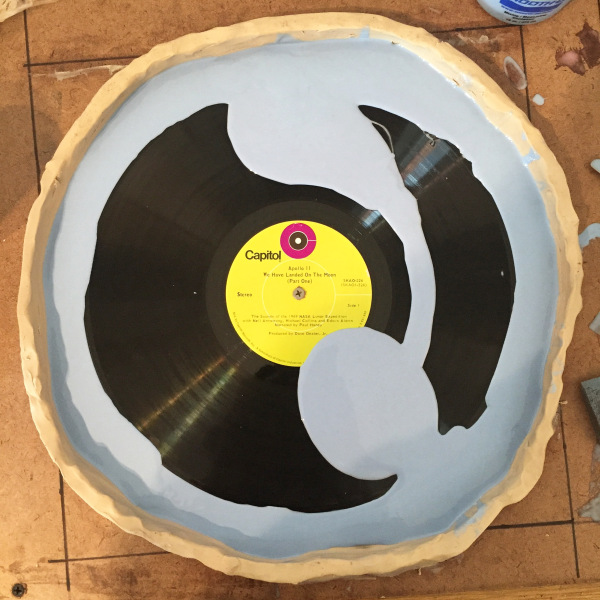
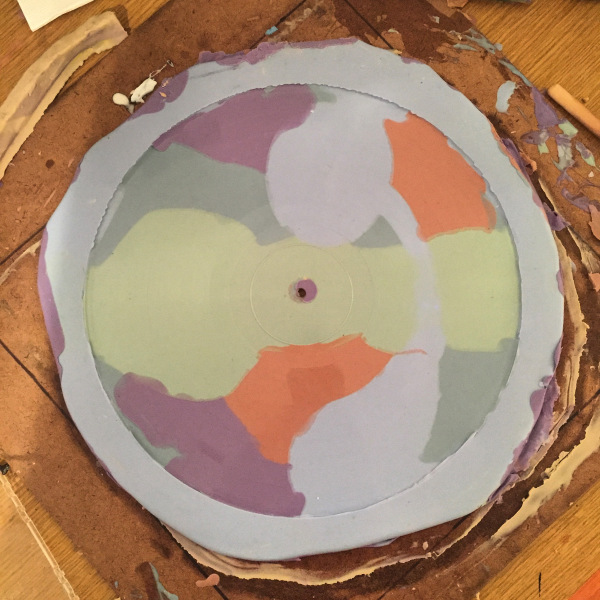
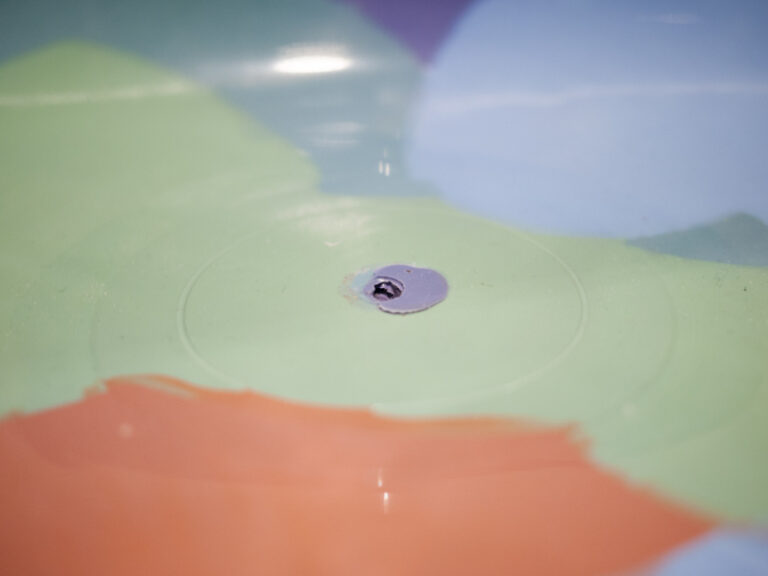
Side A is a single silicone mold cast from five different vinyl LPs. Silicone was poured over one record, peeled away, and laid onto the next, building up layer by layer, with each color of silicone marking a different record.

Resin records cast from the mold carry that layered information and can be played. The five LPs melt into one another, an abstraction of both image and sound, so the record sounds different depending on where the needle drops.

The piece grew out of Brown’s graphic design work for the experimental music label Table of the Elements, where every release came with its own creative project: silkscreens made from rust on car doors (see Impala Eardrums), record titles carved into guitars for Rhys Chatham’s Guitar Trio Is My Life!, and an album cover drawn on a chalkboard and photographed for Megafaun’s Bury the Square (see Donkey Punch). The work never stopped at the music. In the video Rowdy Rubber Records, Brown walks through the process.

Matchbooks, 2010

Matchbooks, 2010
Digital prints from film scans
Dimensions variable

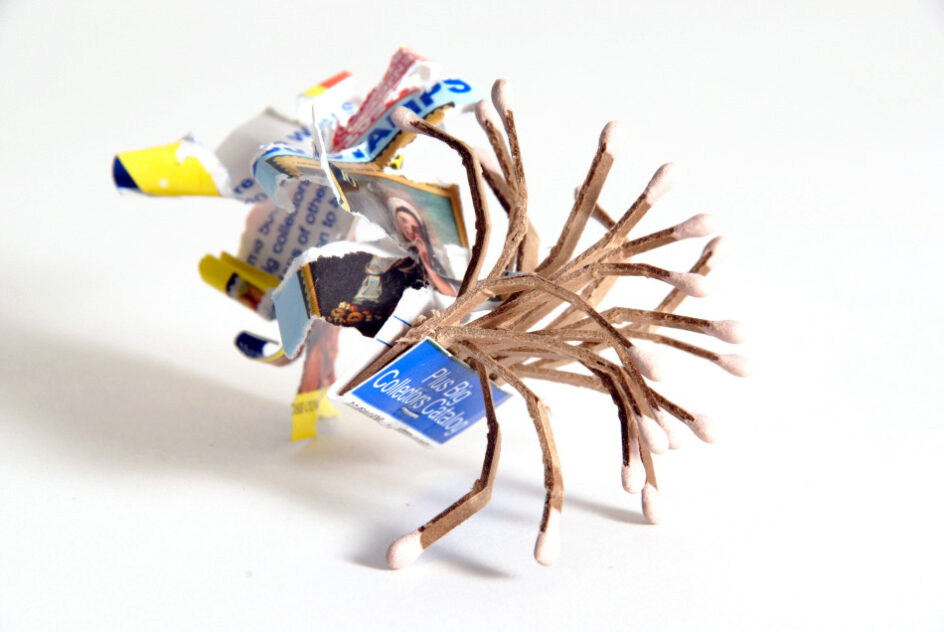
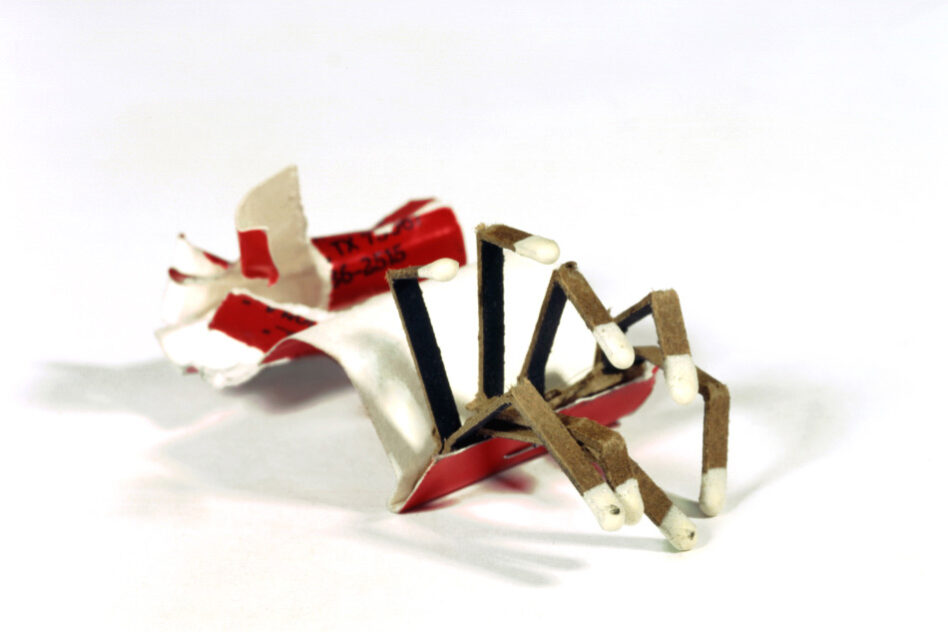
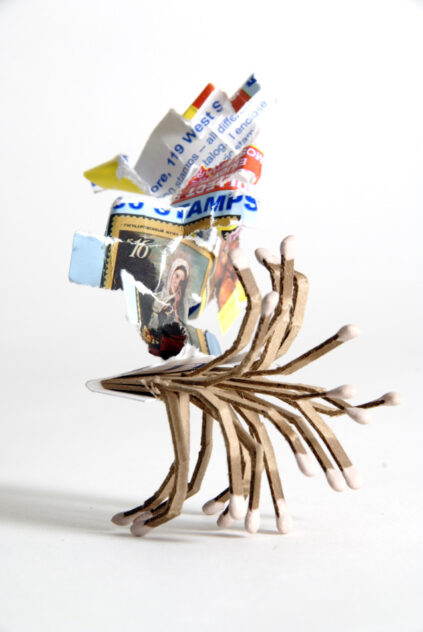
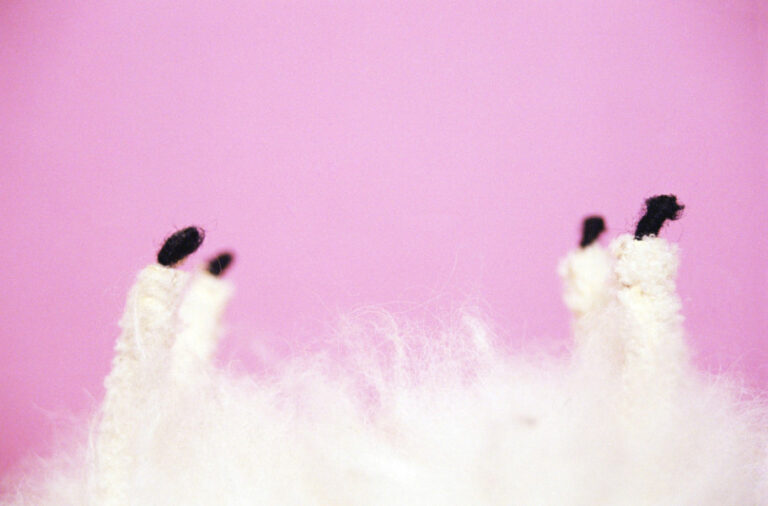
Matchbooks is a series of miniature sculptures made from ordinary paper matchbooks, photographed on film and printed at a large scale. Bent, folded, and torn, the matches and covers become small creatures with many legs, suggesting sea life, crustaceans, or insects. Enlarged in the photographs, objects that fit in the palm of a hand take on a gigantic, living presence.
The series is an exercise in taking a banal, everyday object and recontextualizing it as something whimsical or otherworldly. Like much of Brown’s work, it asks viewers to adjust their perspective and let go of their assumptions about what they are looking at.
The pieces also lend themselves to a formal reading of shape, form, color, and composition. Brown works with the graphics already printed on each matchbook, so every sculpture becomes a kind of three-dimensional collage, which the photograph then flattens back into two dimensions.

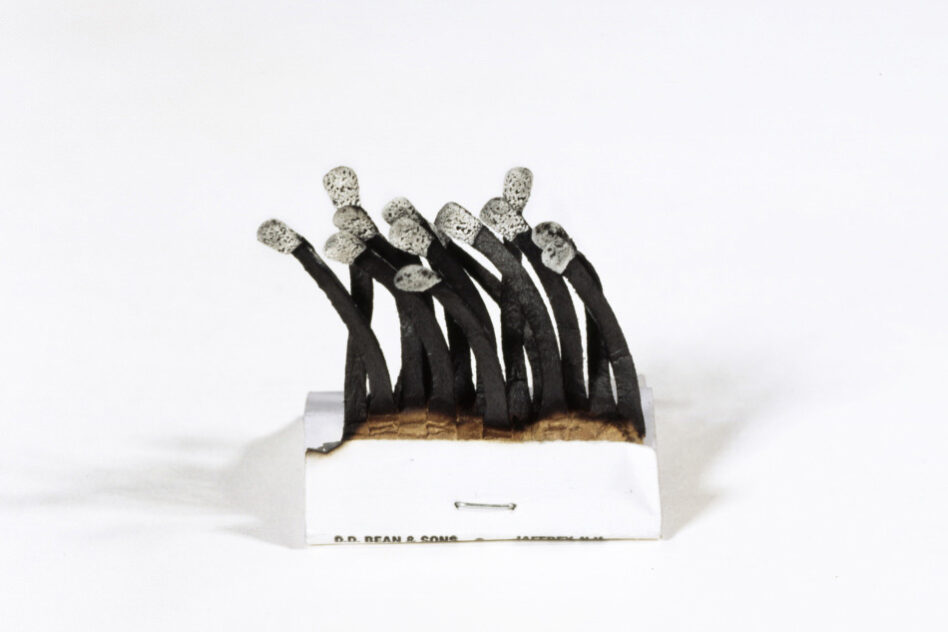
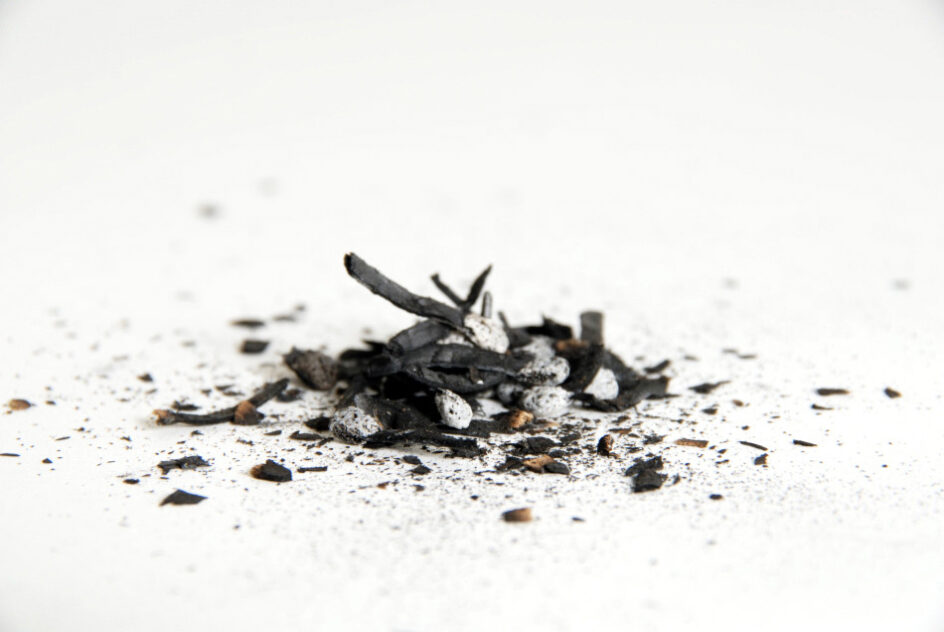
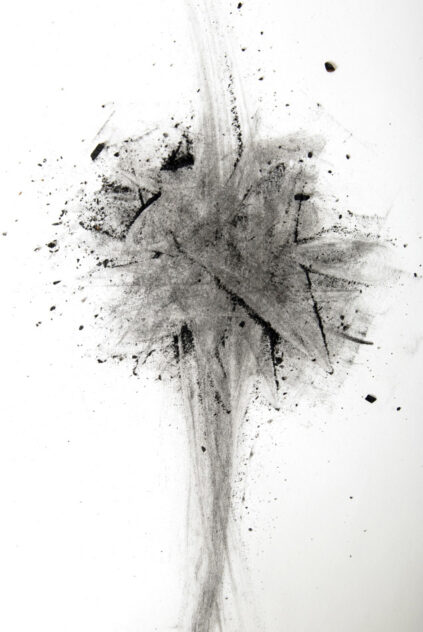
A related sequence follows the matches from material to application. Burned matches still standing in their matchbook read like a bouquet of flowers or long grass bending in the wind. The same burnt matches are then crushed into a pile of ash, and finally that ash is dragged across a page the way charcoal is used to make a drawing.

The sequence ties directly to Brown’s piece Several Ways to Start a Fire, which considers how the discovery and control of fire shaped human evolution and the development of art, writing, storytelling, and even language.

Beastly Words, 2007

Road Agent, Dallas, TX • 09.07

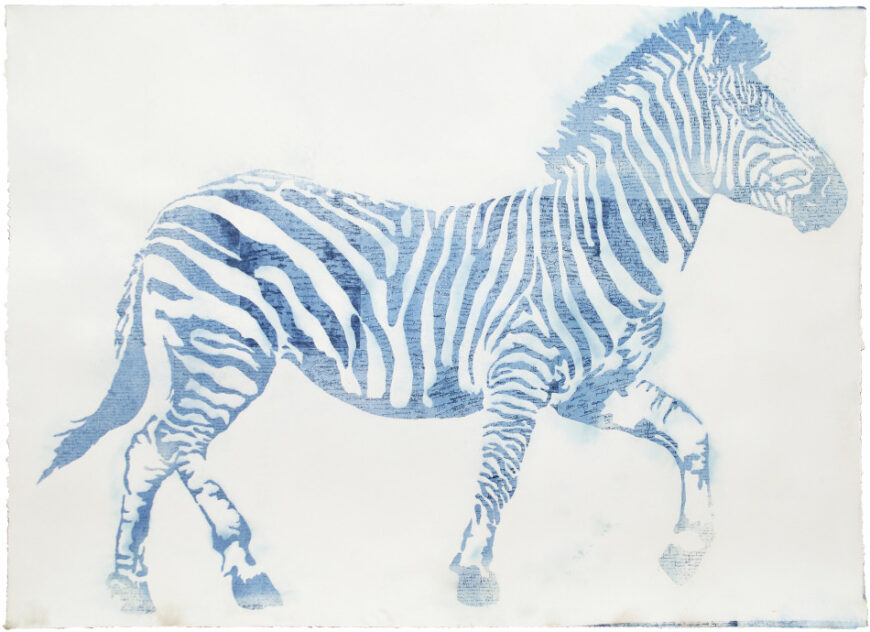
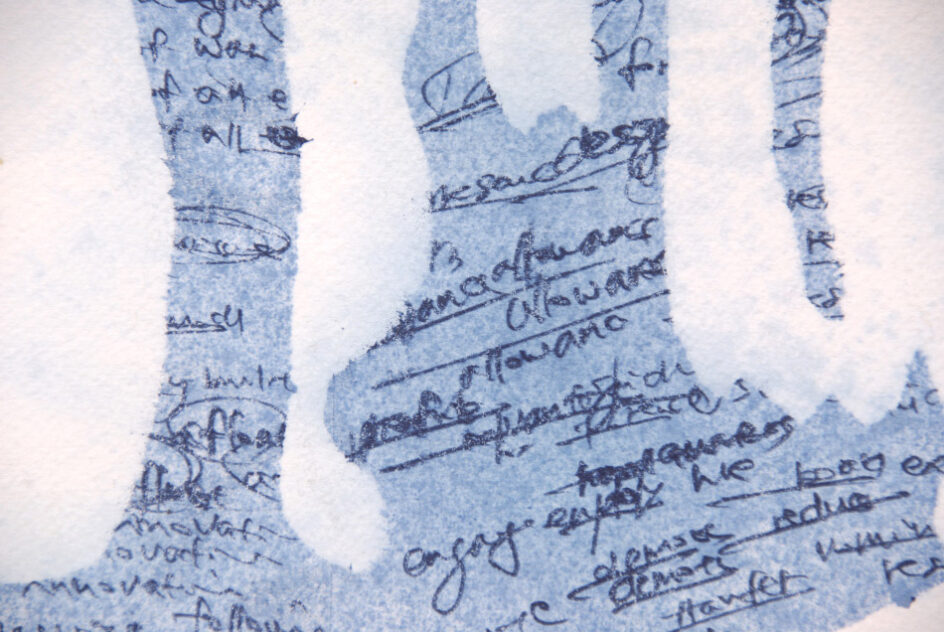
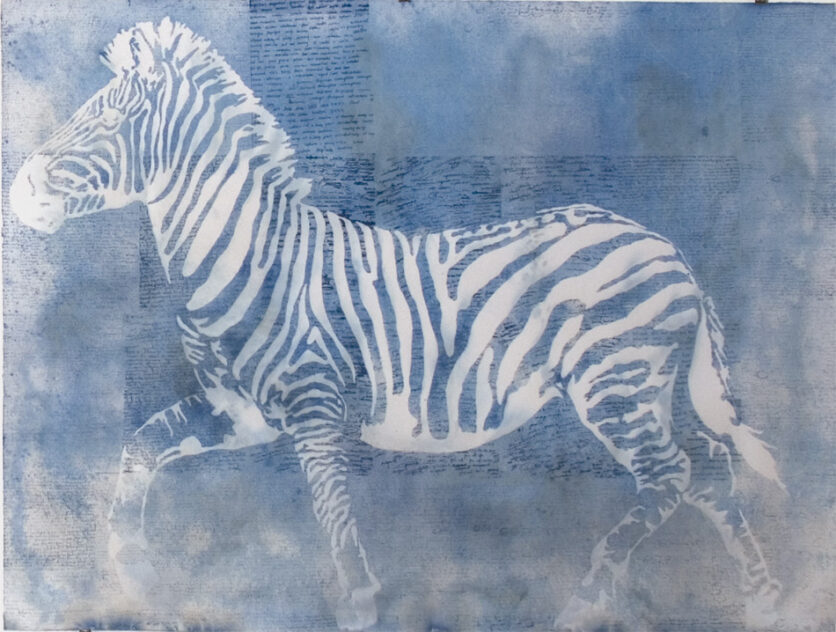
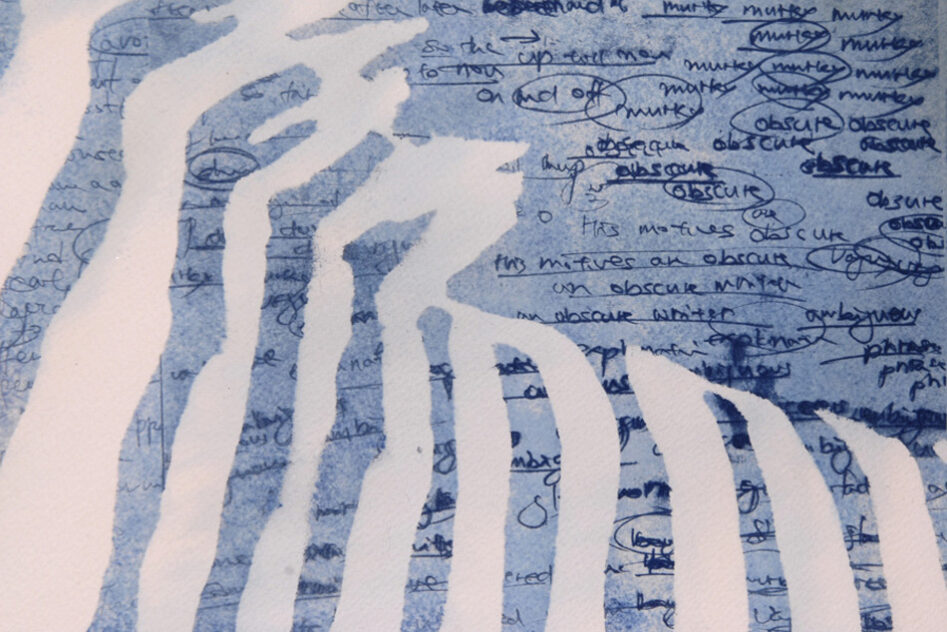
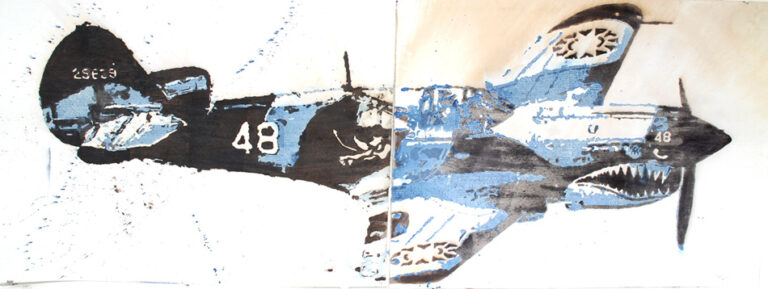
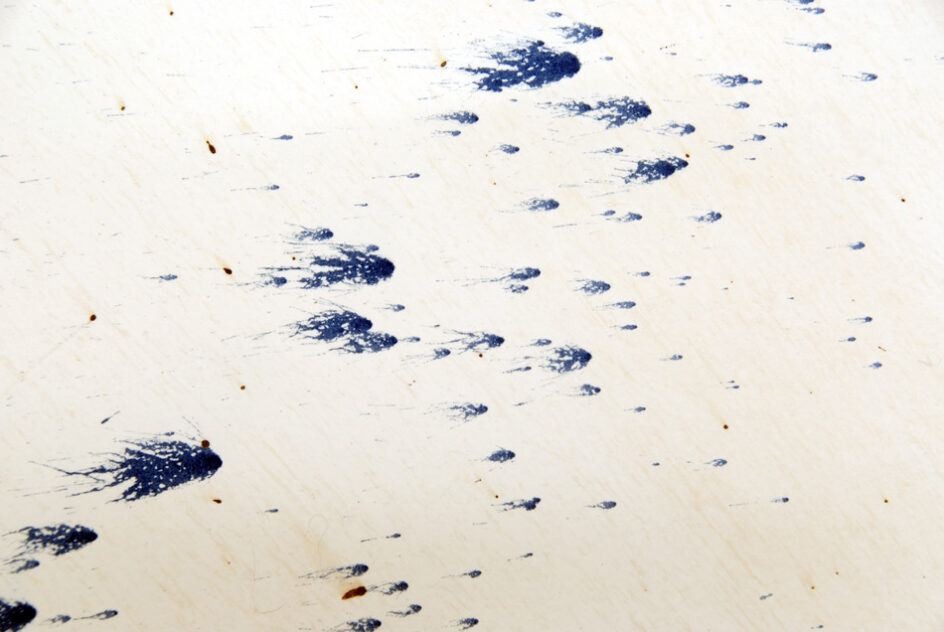
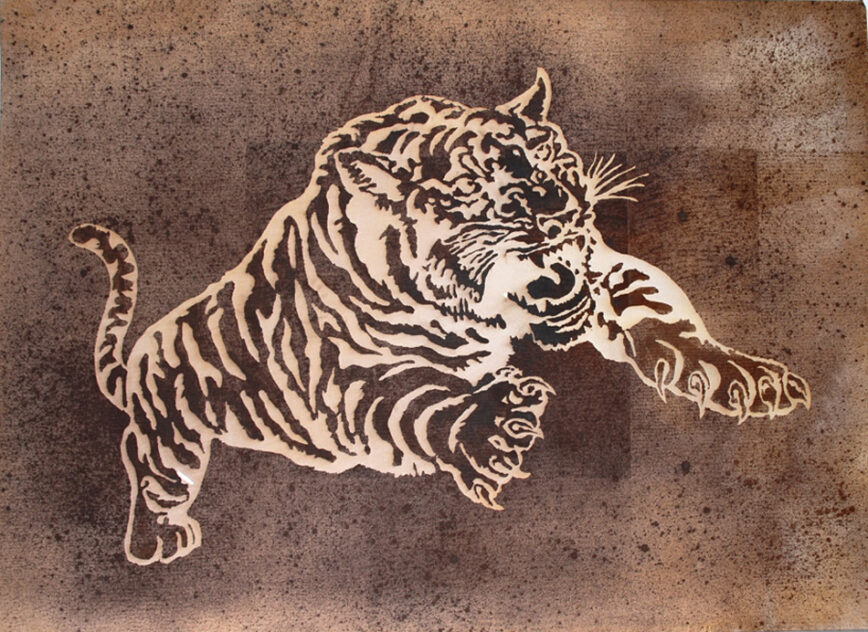
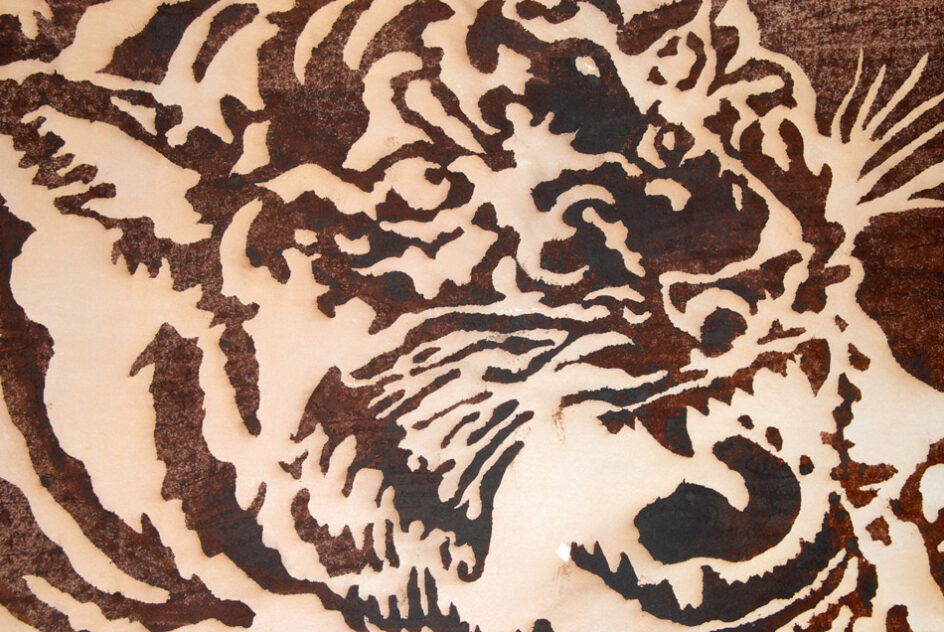
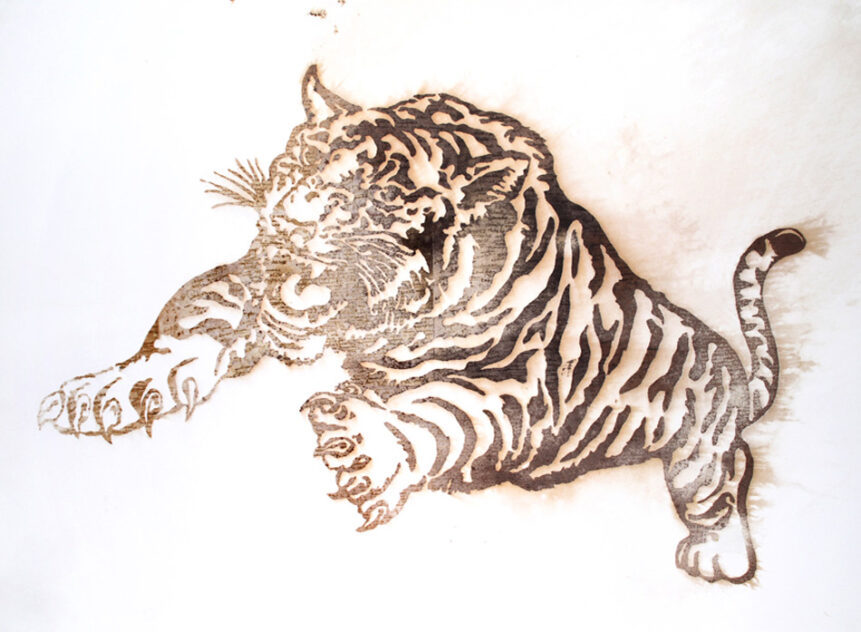
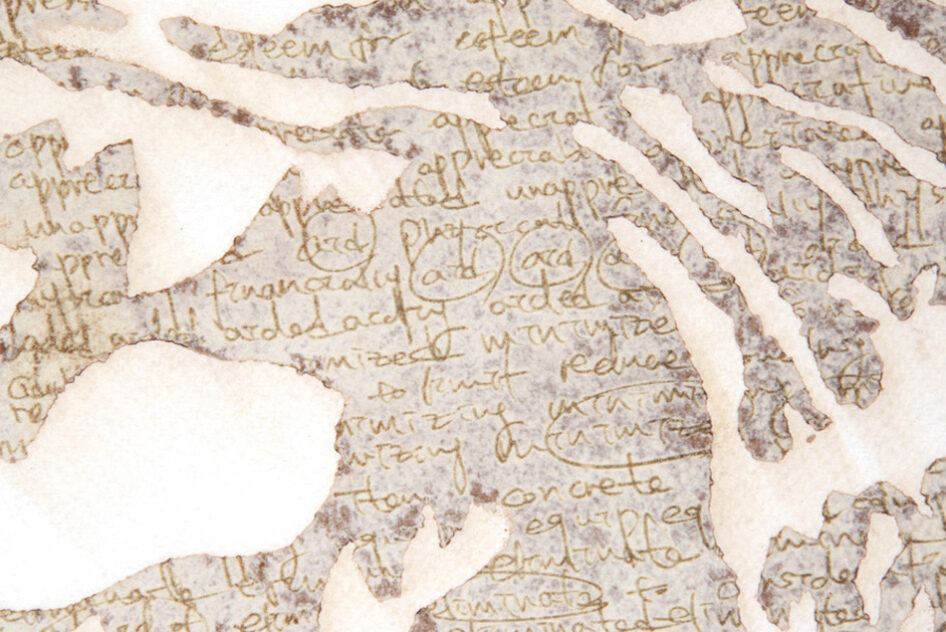
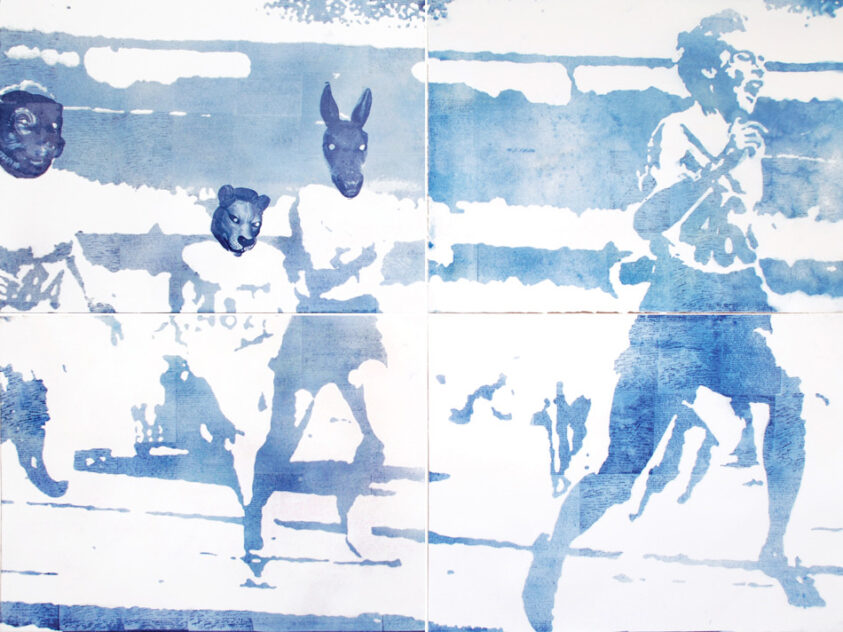
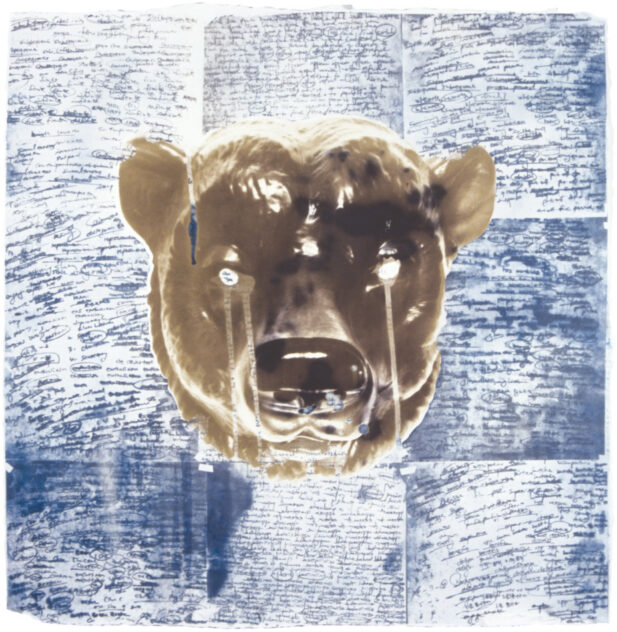
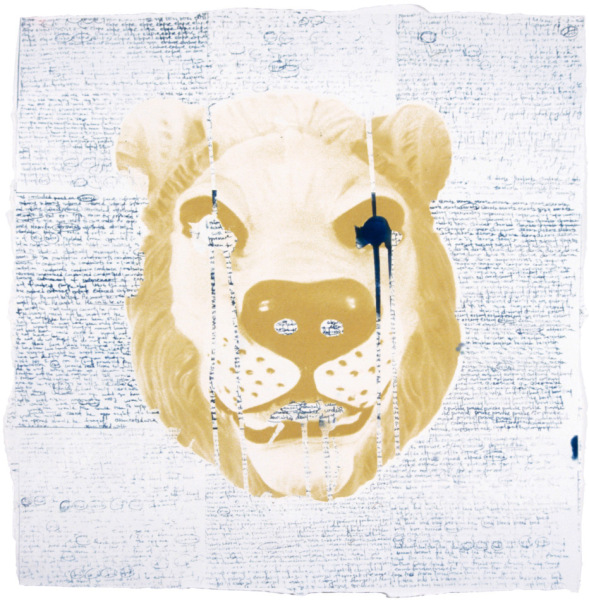
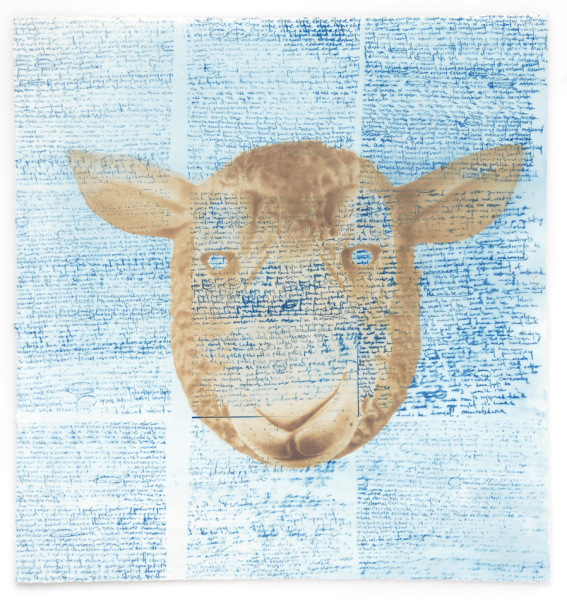
Beastly Words explores the fundamental flaw of language as an expression of our deepest selves, and the contradictions of language as image. Pained, repetitive words and phrases are subdued and channeled into new forms, given life as watery zebras, muscular tigers, an anthropomorphized WWII fighter plane, and breathless track runners.

Brown first creates film negatives from mysterious scrawlings recovered from a university library trash can—the aching and robotic exercises of an unknown author. Brown’s subsequent use of older photographic techniques to recontextualize the images, through Cyanotype and Van Dyke processes, naturally limits his palette to a calming range of organic browns and blues, fading or deepening depending on exposure to light. He imposes a more natural and visceral world on the underlying fumbling language, as well as foiling the hyper-Photoshopped slickness of our mass-media world.

Barnyard, 2006

Road Agent, Dallas, TX • 04.06

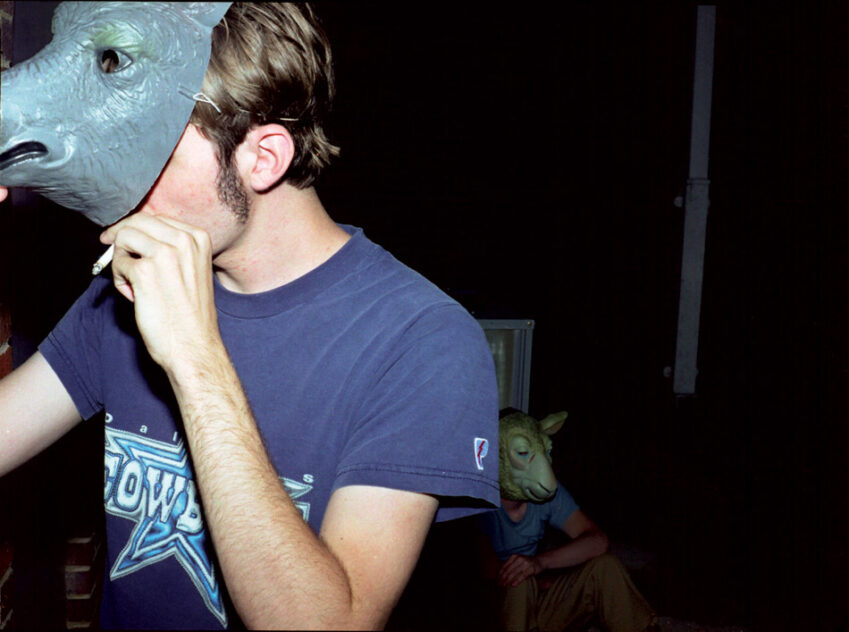
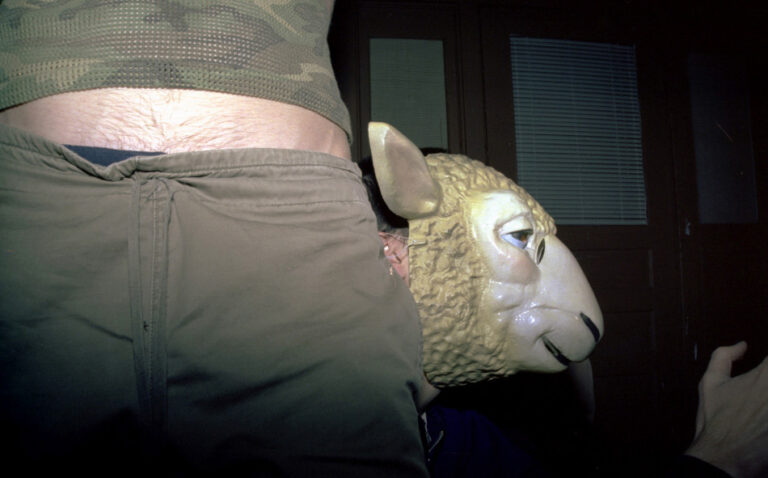
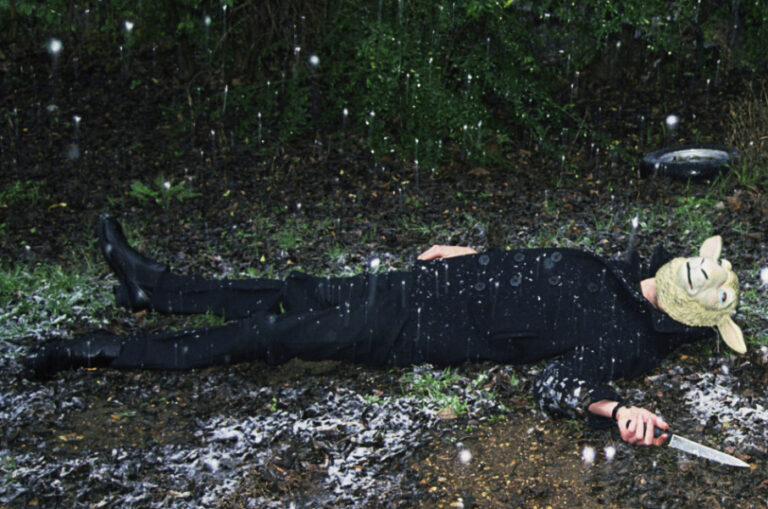
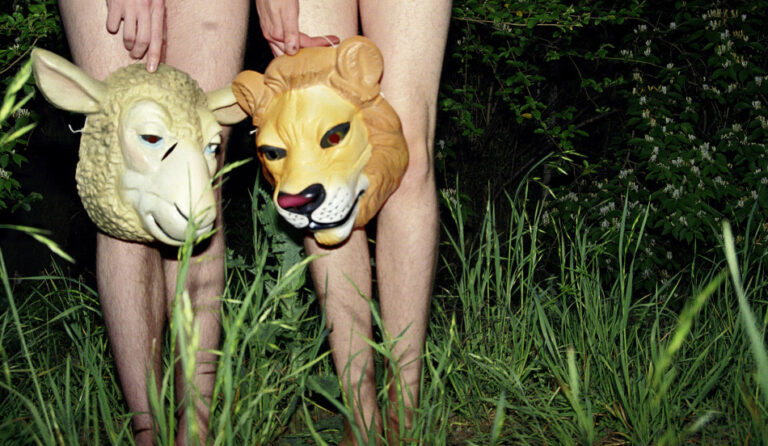
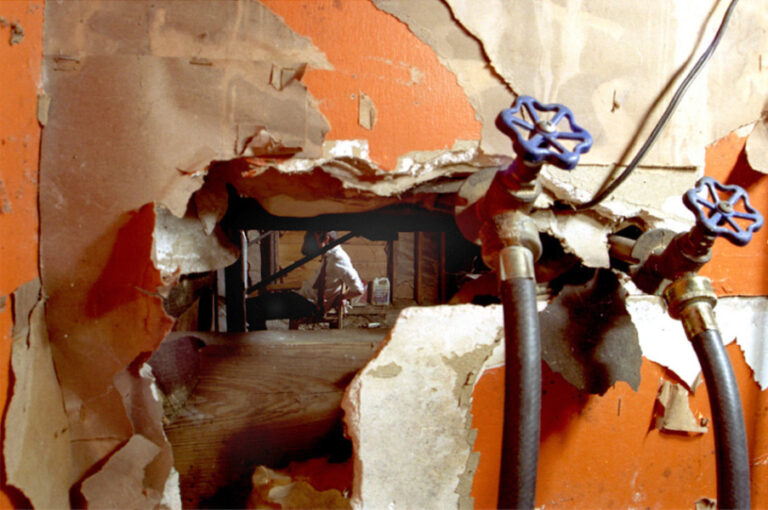
“Boys will be boys”— or so the saying goes. In Bradly Brown’s first exhibit at Road Agent, he offers theatrical photographs that toy with questions of how young men construct their identities as they gradually mature into adulthood. In several of Brown’s photographs the artist and his friends playact with plastic animal masks hiding their faces. An Arcadian narrative unfolds, juxtsposing homoerotic yearnings with a suggestive menance. The most striking photo of the show, however, extends beyond a beautifully rendered, but simply conceived drama. Dominated by rich orange hues, a fractured and deteriorating wall opens into a small room that houses a solitary schoolboy, hands tied to a chair. This luxuriously colored photograph and the threatening mystery it encapsulates is as viscerally enticing as it is emotionally unsettling.

—Flash Art Magazine, Matthew Bourbon

THE INTERVIEW

Interview Etiquette Before the Interview

1.  Your hair should be trim, clean and combed.
2.  Nails should be clean and trimmed.
3.  Be conservative and err on the side of caution.  If the company does not have a dress code, remember that its better to overdress than underdress.
4.  Arrive at least 10 minutes before your interview.  The extra minutes will also give time to fill out any forms or applications that might be required.
5.  Turn off your cell phone or pager.
6.  Don’t assume that whoever greets you is the receptionist.

Interview Etiquette During the Interview

1.  Make a positive and professional first impression by being assertive and giving a firm handshake to each interviewer and addressing each interviewer by name.
2.  Reinforce your professionalism and your ability to communicate effectively by speaking clearly and avoiding “uhs”, “you knows”, and slang.
3.  Use appropriate wording.  You won’t receive extra points for each word that has more than 10 letters.  Use technical terms only when appropriate to the question.

Interview Etiquette After the Interview

1.  Shake each interviewer’s hand and thank each interviewer by name.
2.  Send a thank you note as soon after the interview as soon as possible.