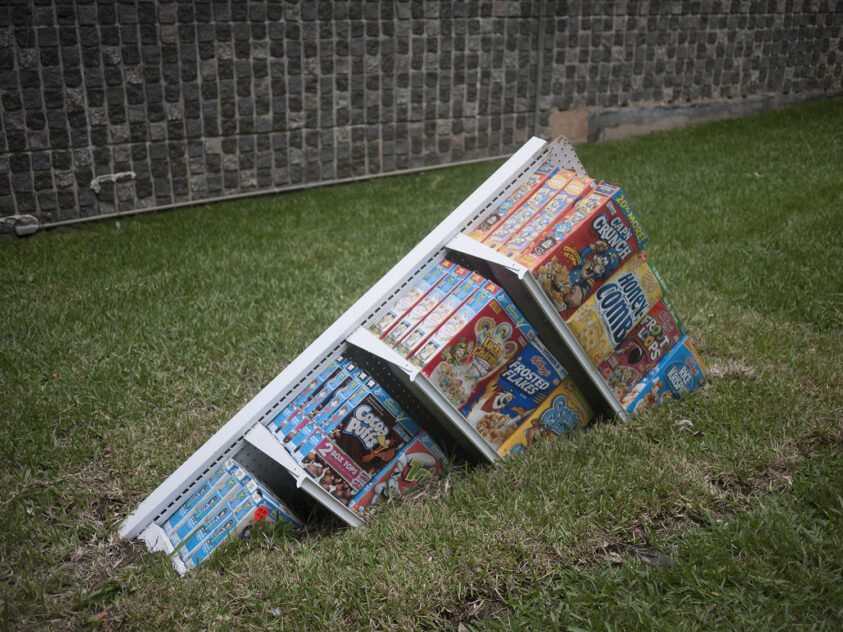
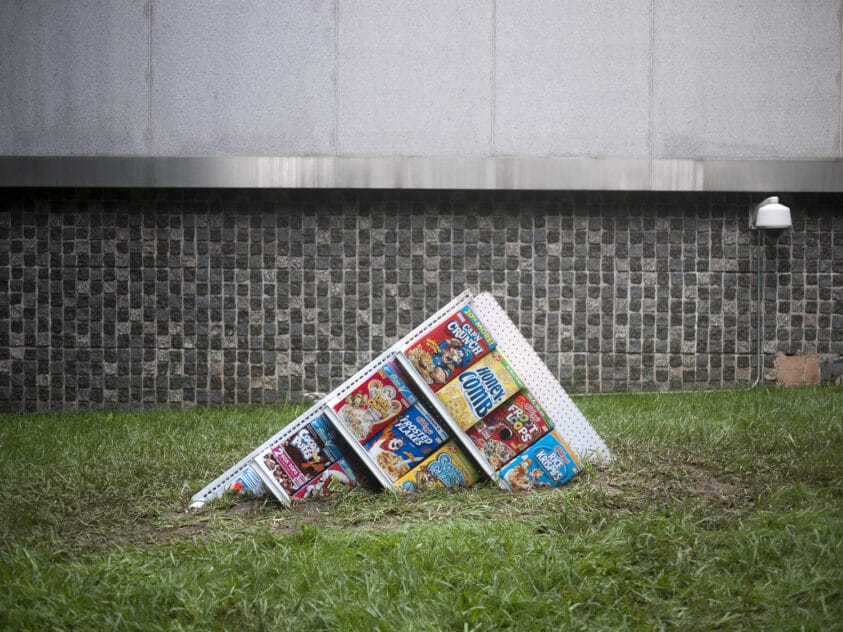
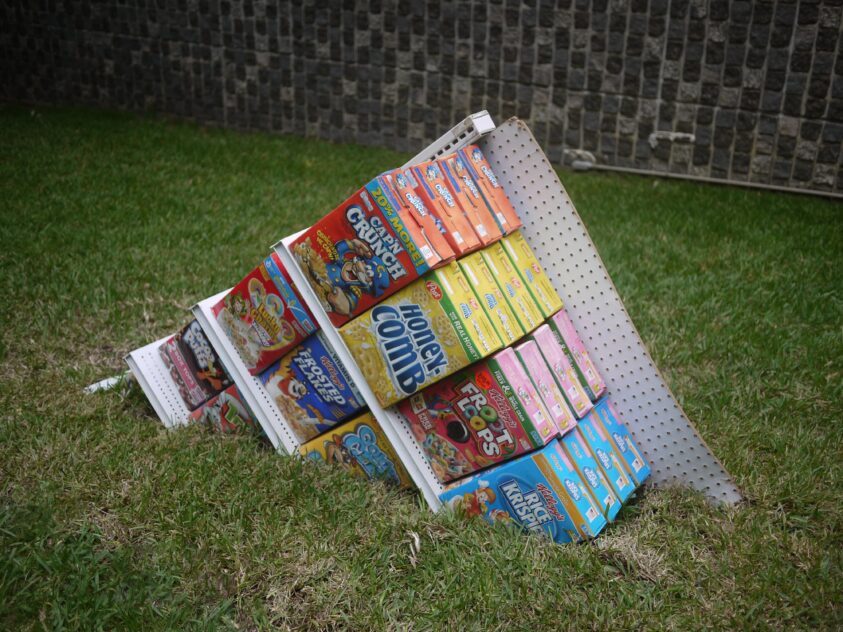
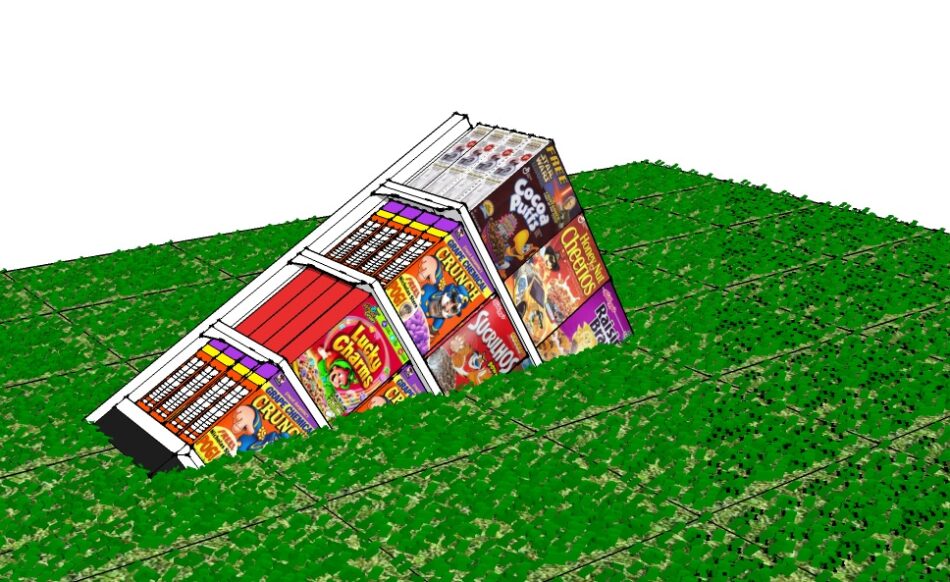
Partially Buried Cereal Aisle

Partially Buried Cereal Aisle, 2013
Gondola shelving, cereal boxes, concrete, and hardware
48″ × 60″ × 24″

A single unit of grocery store shelving, tipped back and partially sunk into the ground, holds roughly forty boxes of cereal. Each box has been emptied and refilled with concrete. The cereal aisle, among the most ordinary sites of everyday choice, becomes a monument to the sheer volume of decisions contemporary life demands.
Faced with dozens of nearly identical products, even a trivial decision can become weighty, and the fear of choosing wrong can leave us unable to choose at all. Here, that paralysis takes physical form: the boxes can no longer be lifted, compared, or taken home. They have stopped moving, and in stopping, they have begun to settle into the earth like fossils.

The work references Robert Smithson’s Partially Buried Woodshed (1970), for which Smithson piled earth onto a shed until its central beam cracked, then left the structure to decay. Partially Buried Cereal Aisle is likewise half-claimed by the ground and meant to change over time. Exposed to sun, rain, and wind, the printed cardboard fades, softens, and falls away. Eventually, only a spare geometric structure of metal and concrete remains: a relic of the present, and the skeleton of an aisle built around choice.

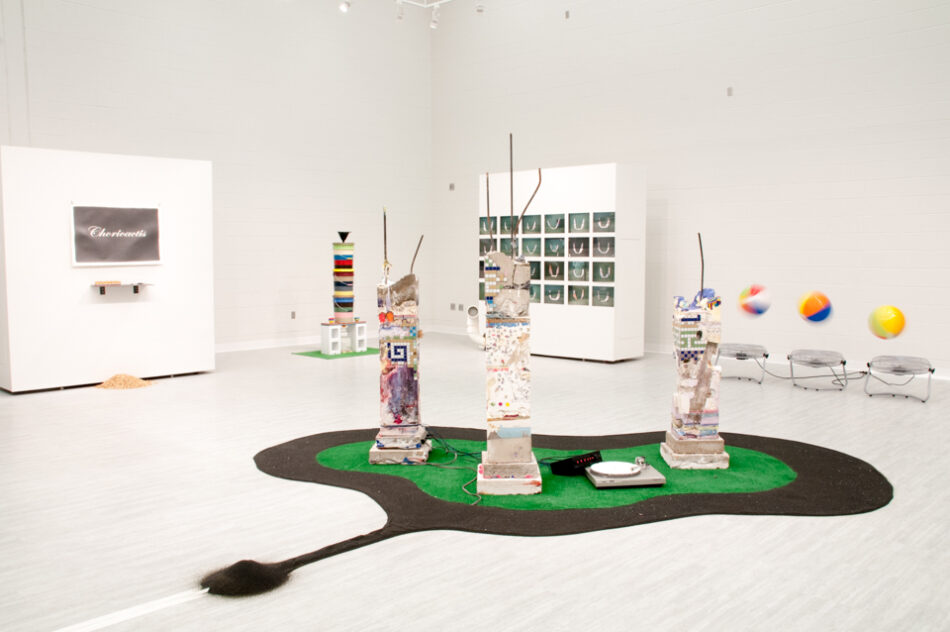
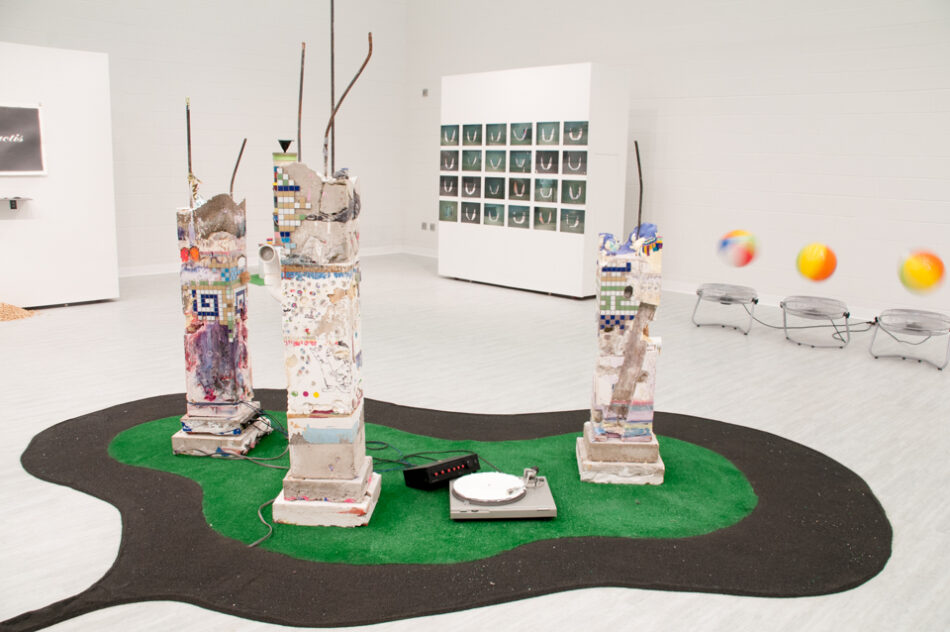
Columns


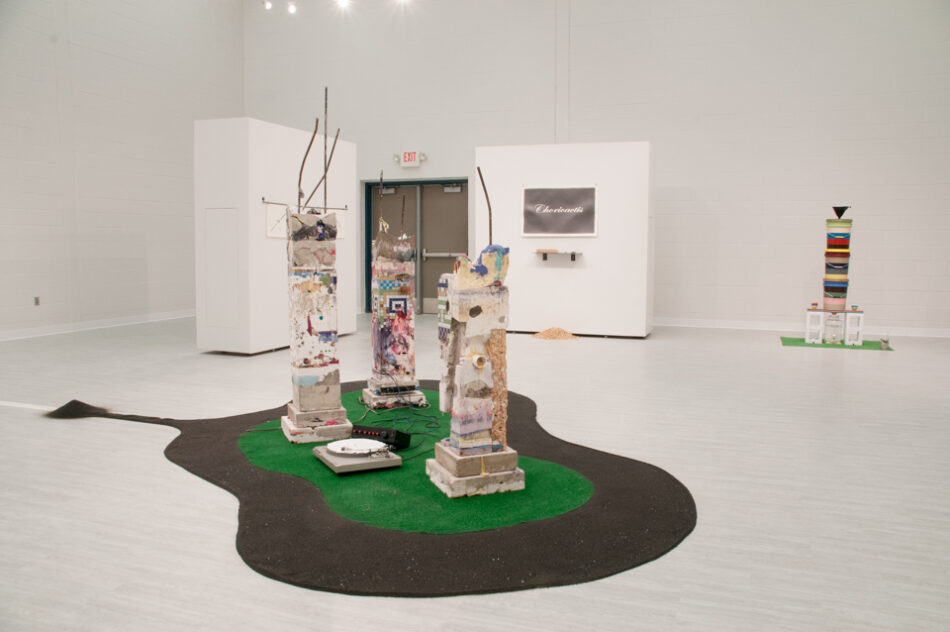
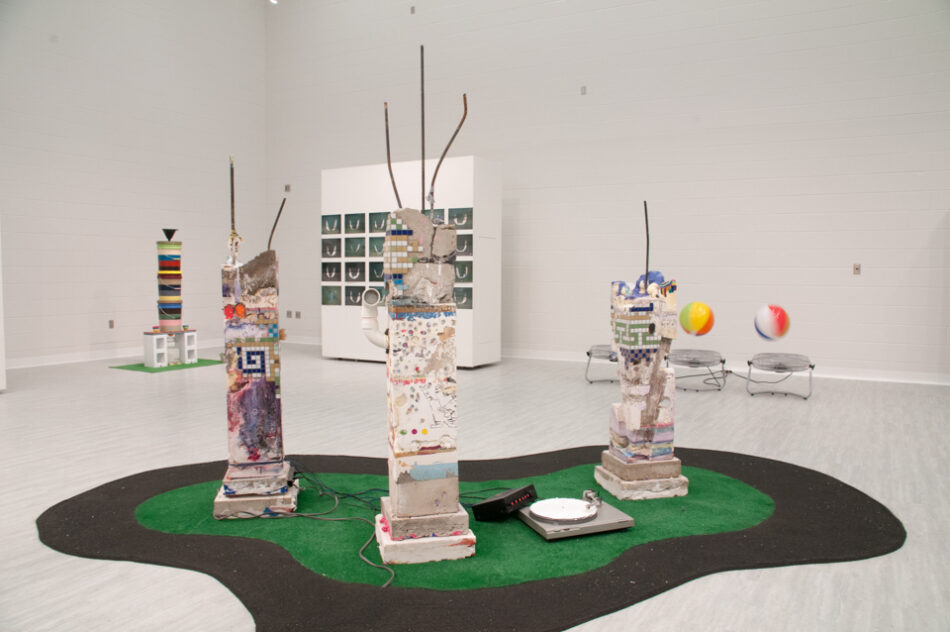
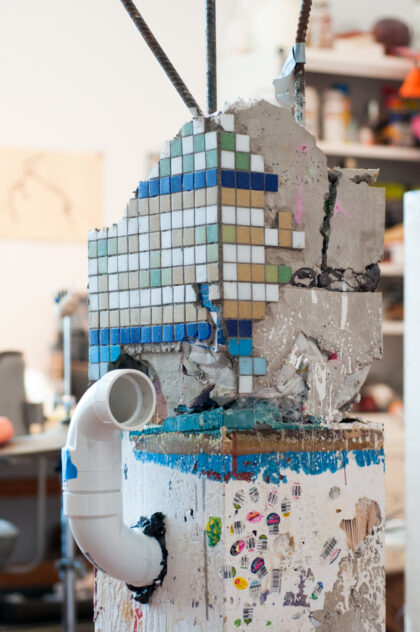
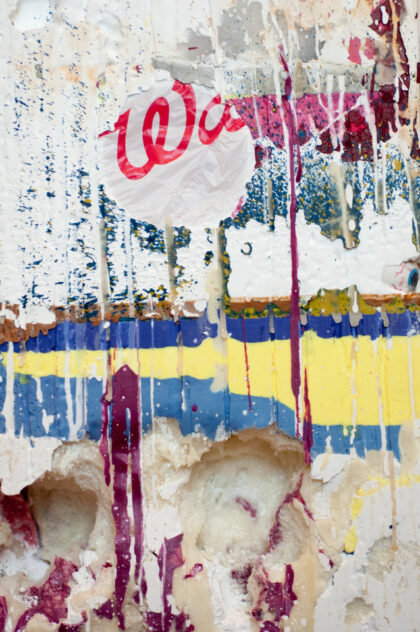
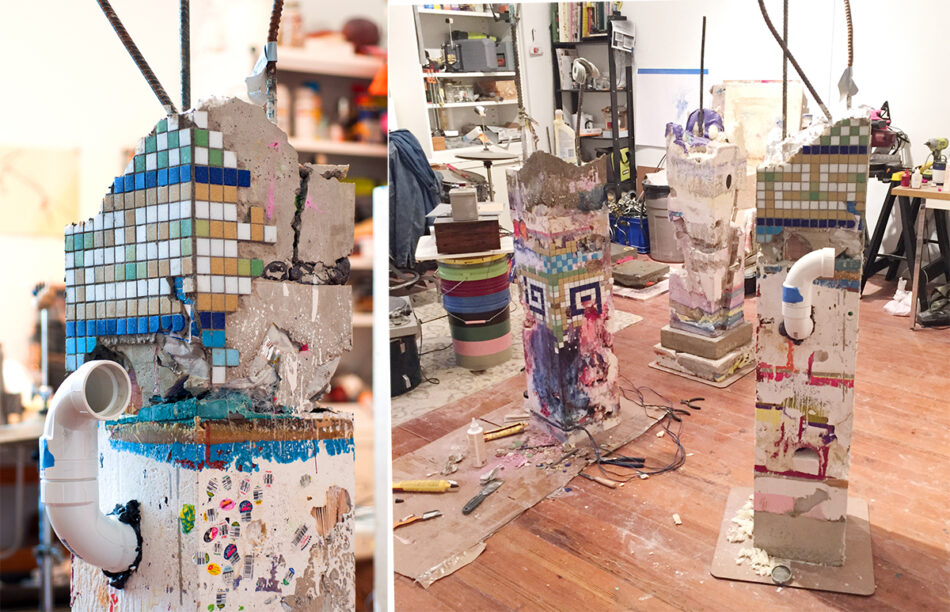
Act III: Columns (1-3), 2015-2016
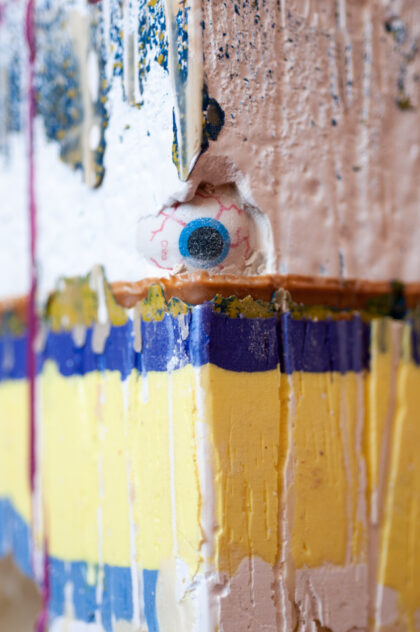
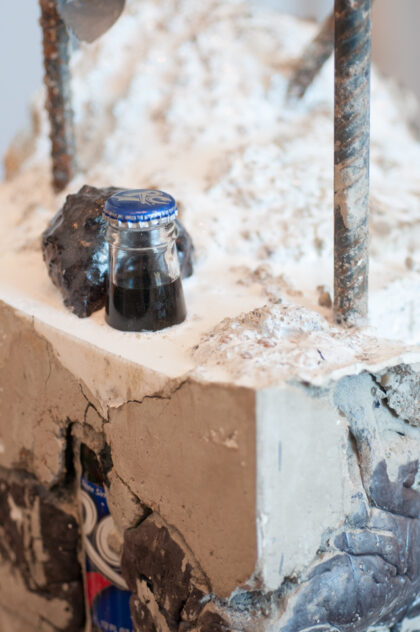
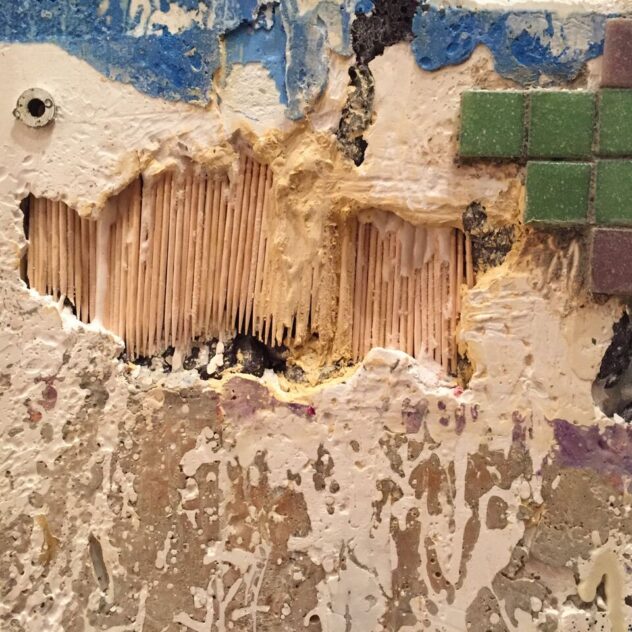
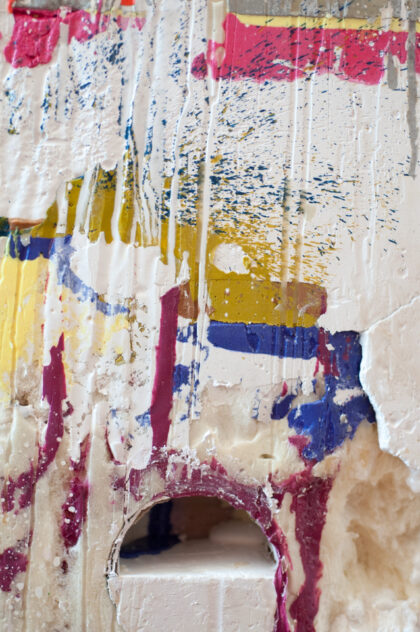
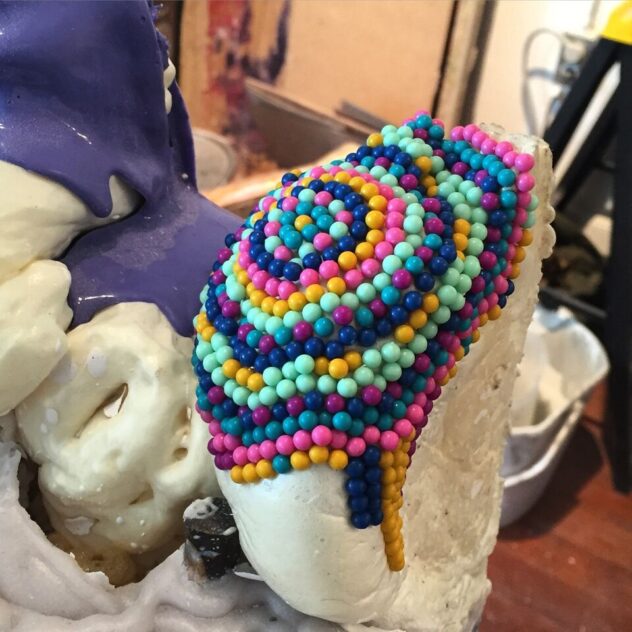
Artificial turf, black beauty abrasive, plaster, cement, wax, chocolate, bacon fat, Vaseline, clay, resin, foam, glass, ink, debris, found objects, speakers, and record player
Dimensions variable

Damemoto


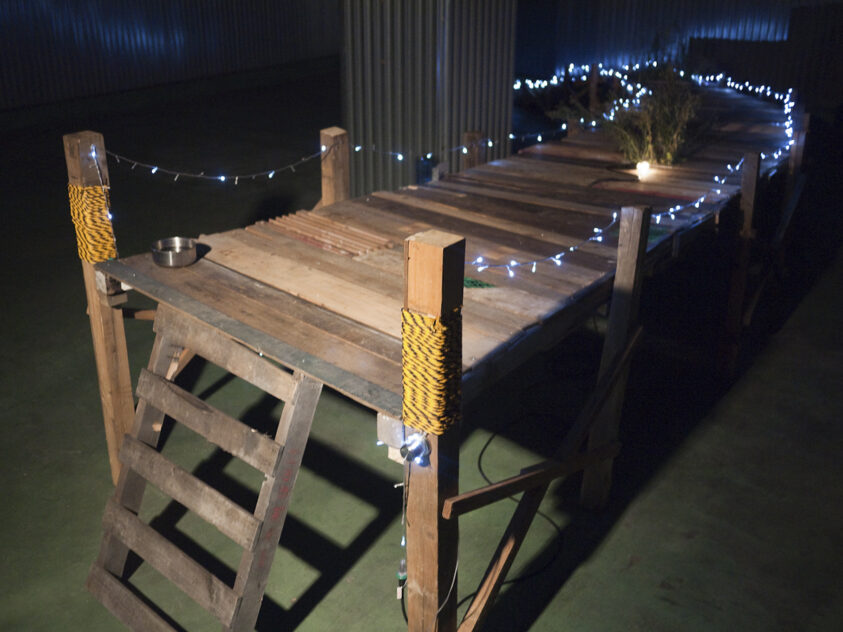
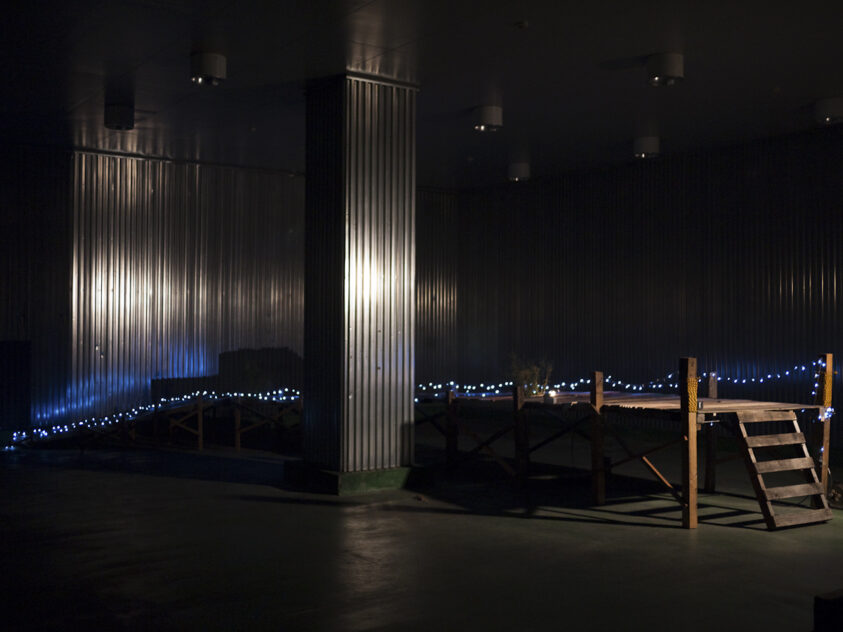
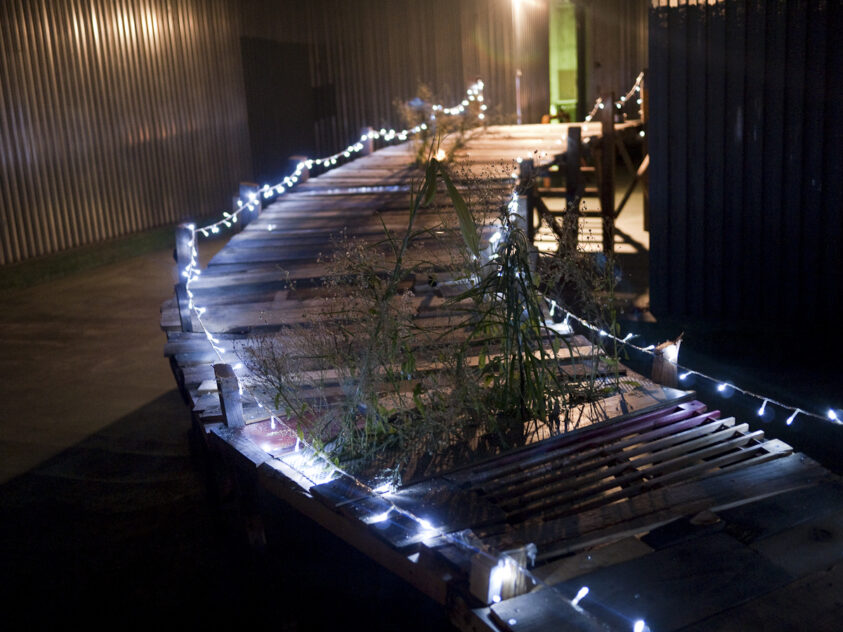
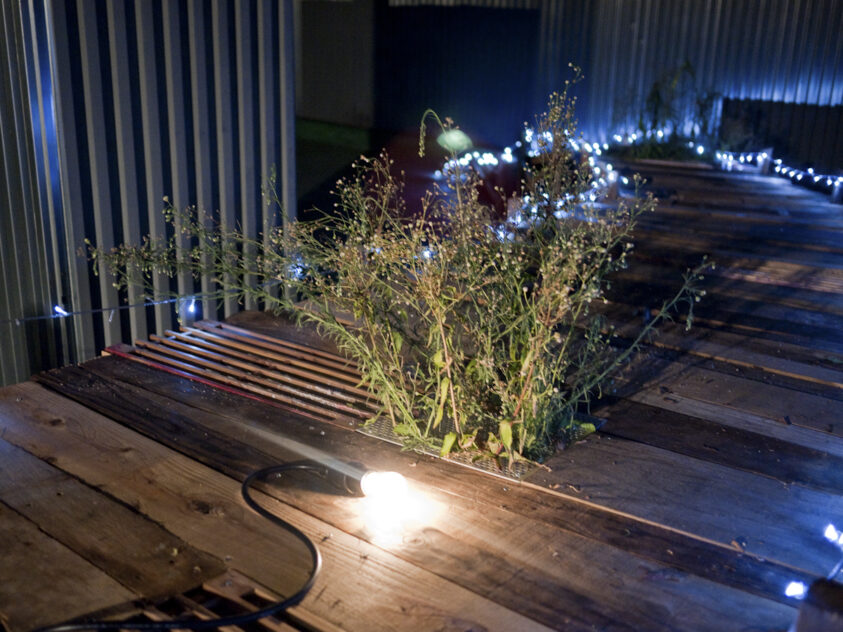
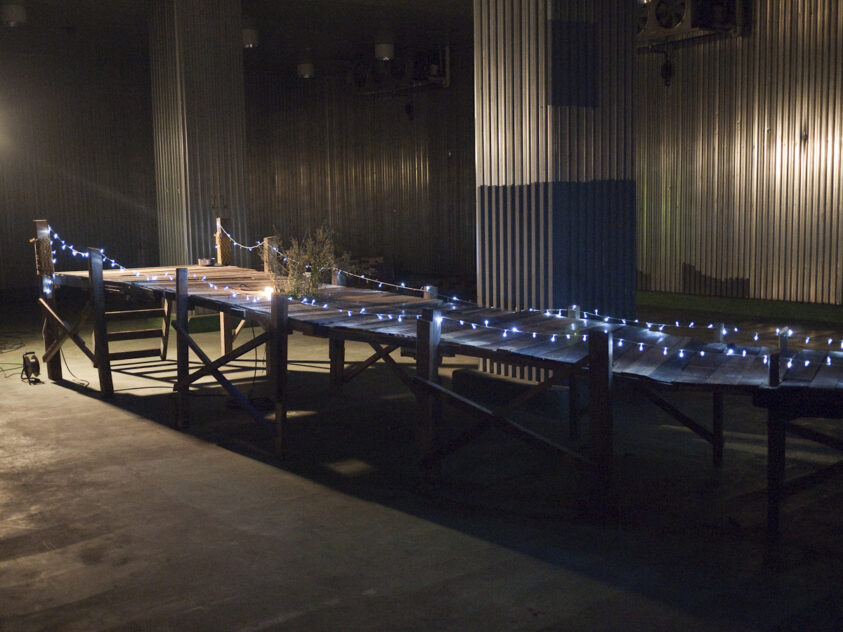
Damemoto, 2012
Reclaimed wood, weeds, lights, hardware 

Transpacific

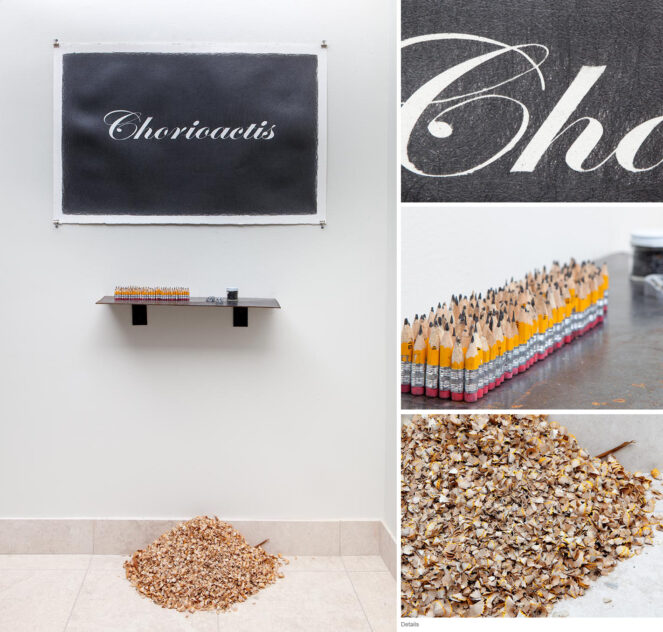
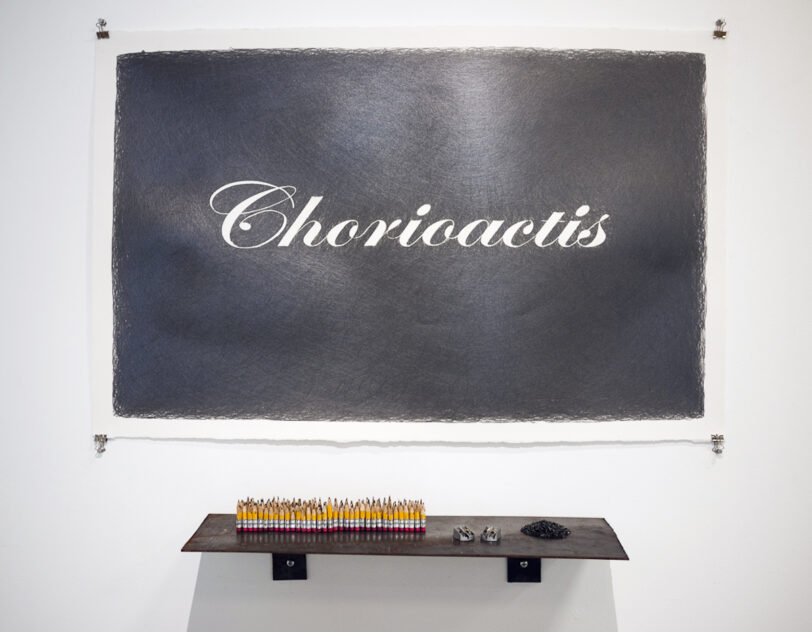
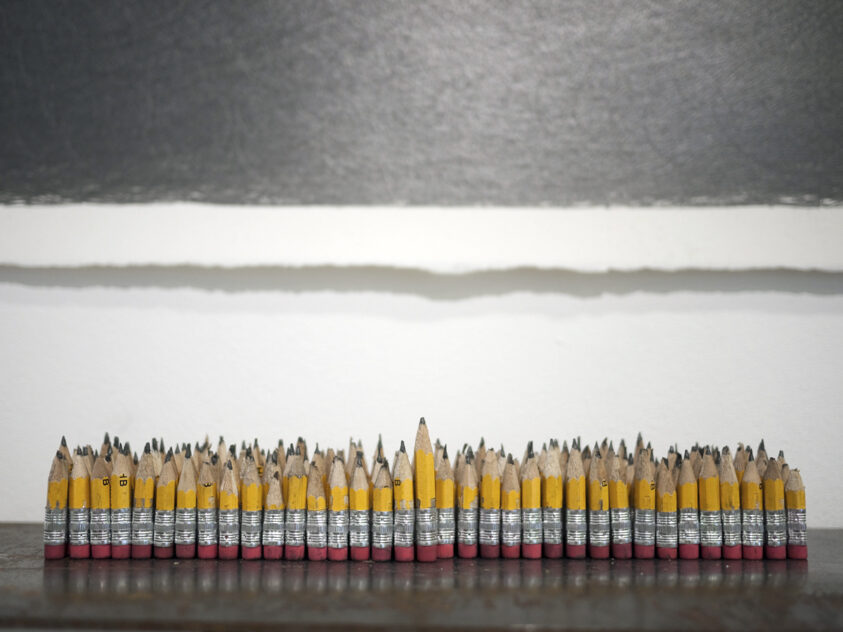
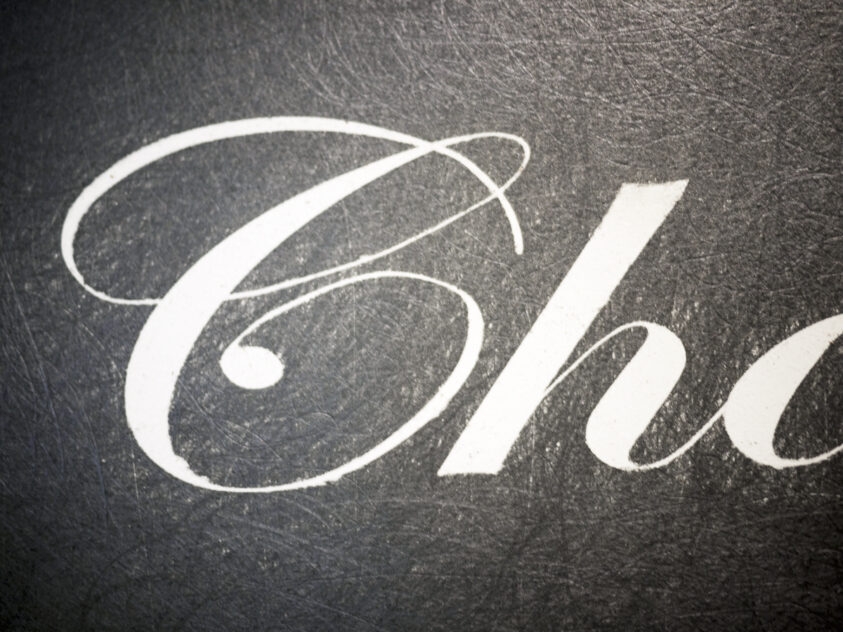
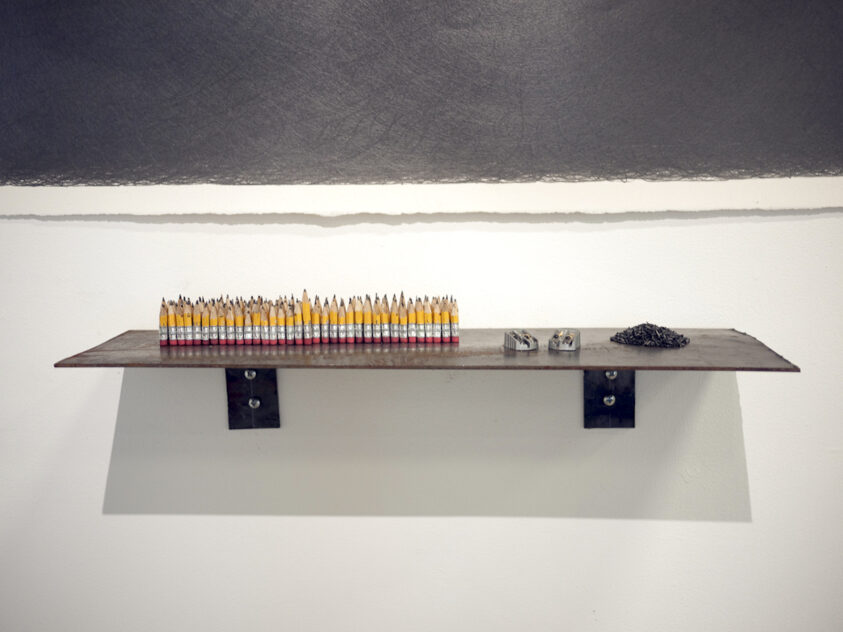
Transpacific (a line drawn from Texas to Japan), 2012
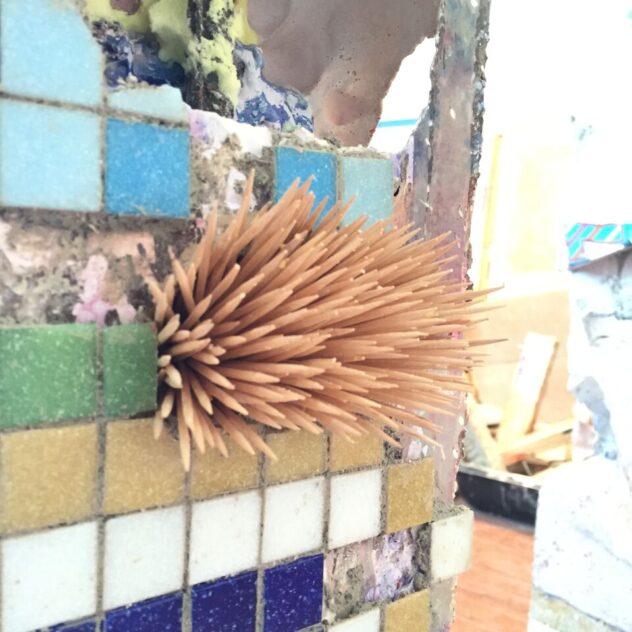
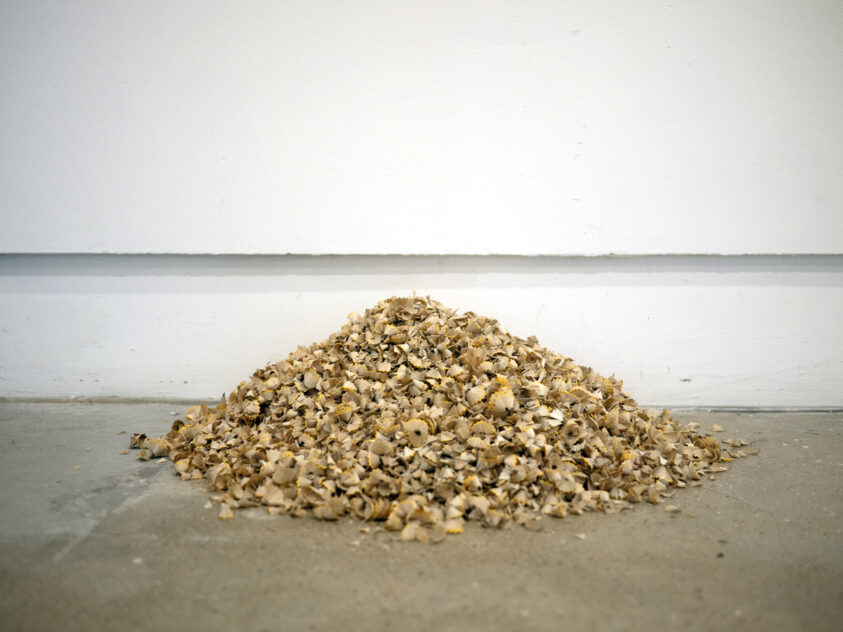
194 #2 pencils, paper, steel, pencil sharpeners
40″w x 72″h

Beastly Words

Road Agent, Dallas, TX • 09.07

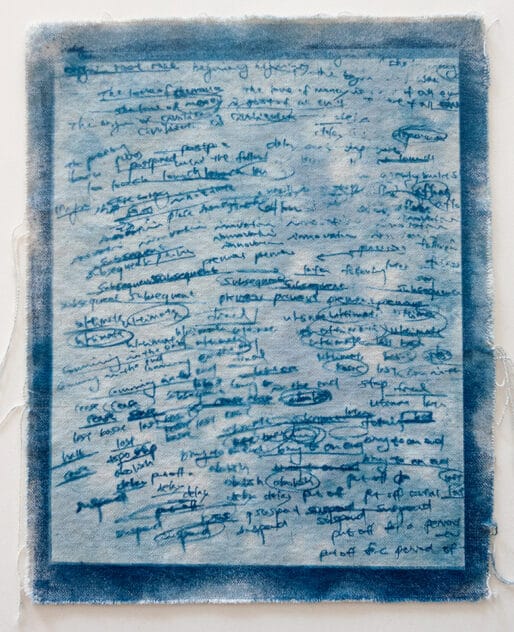
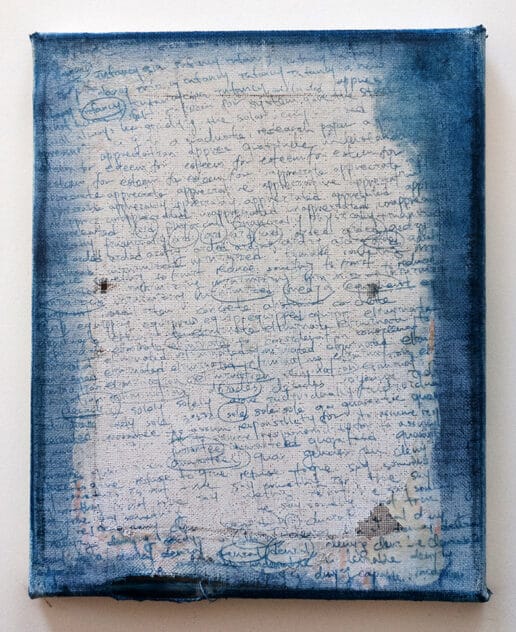
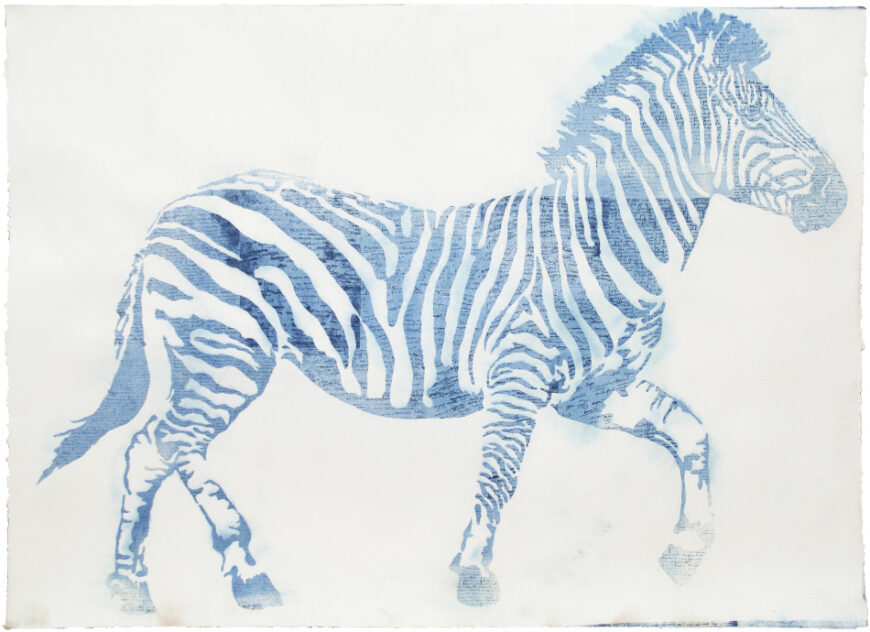
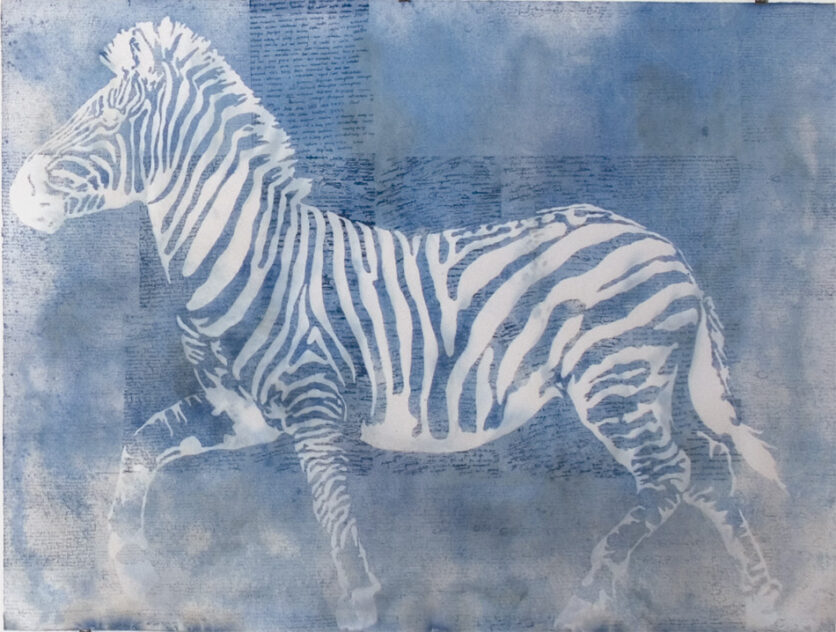
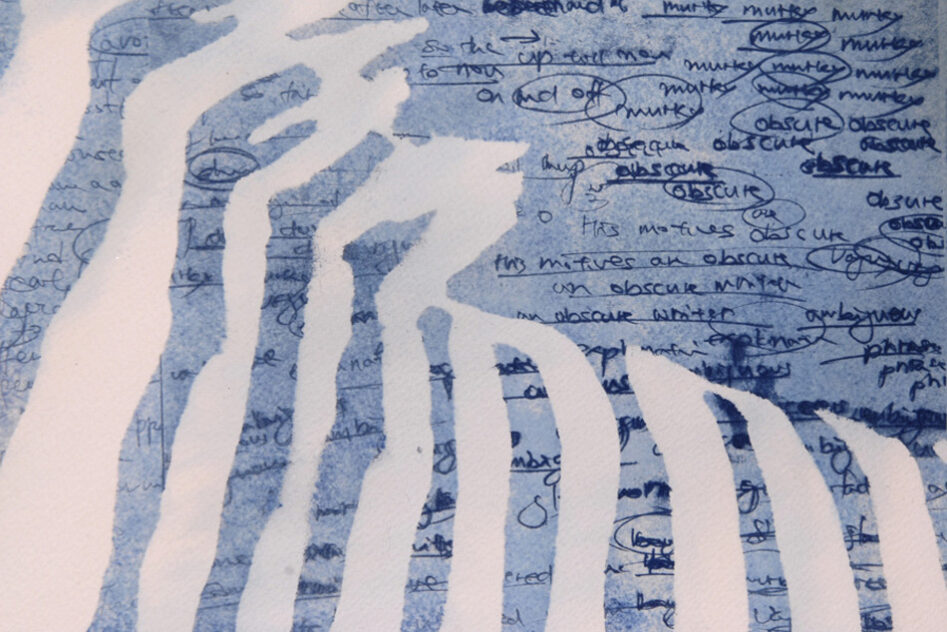
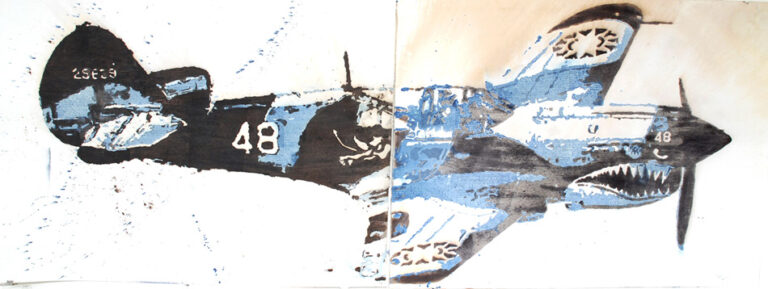
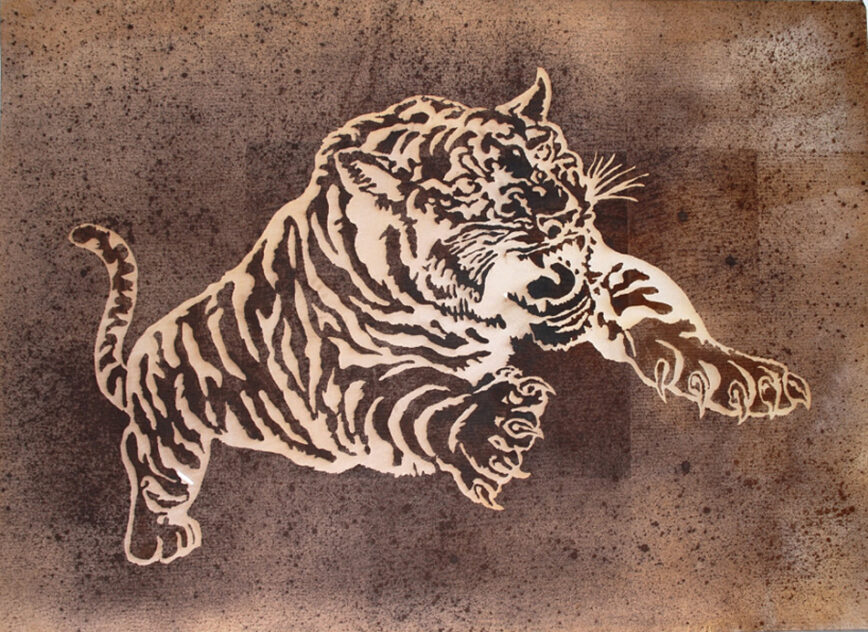
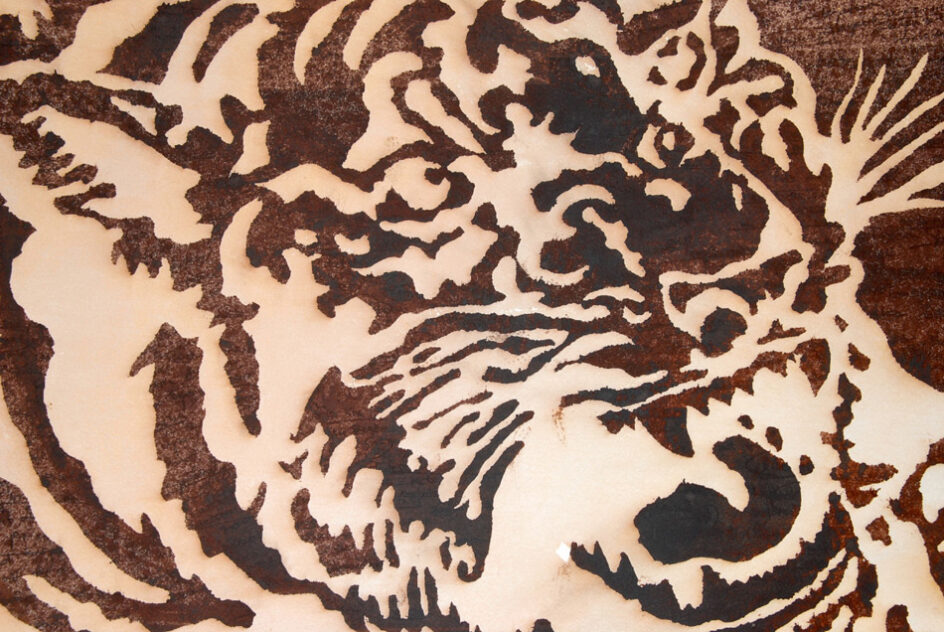
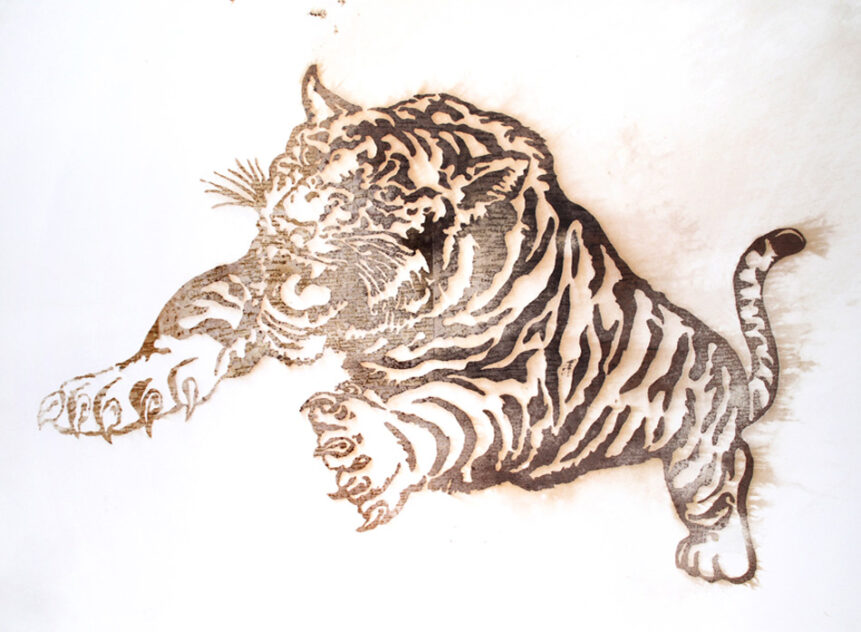
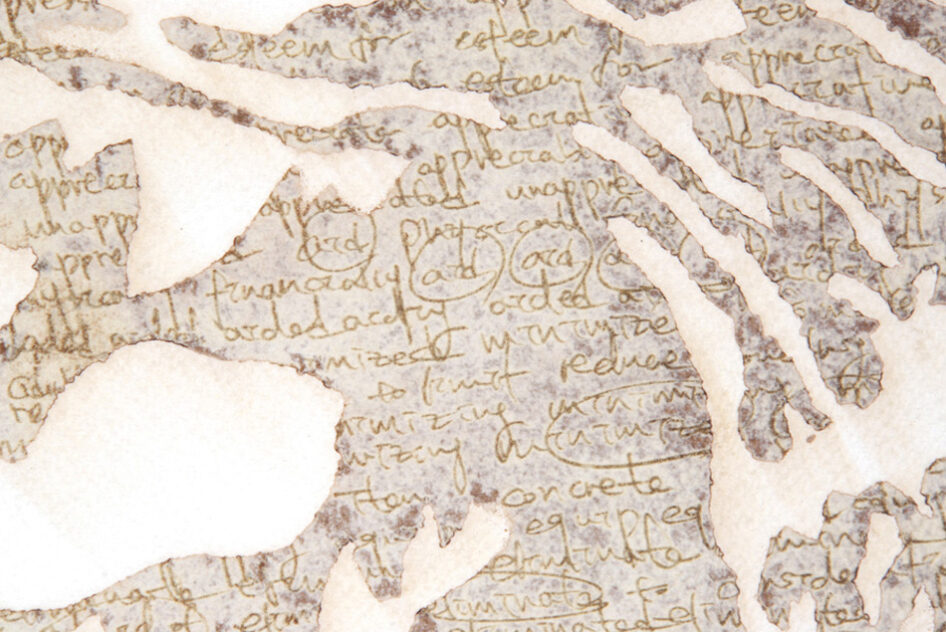
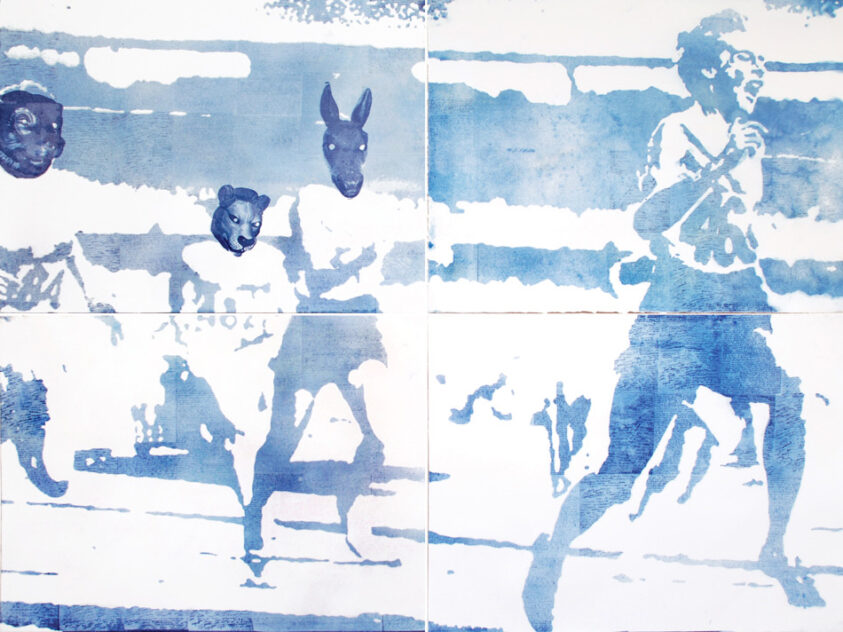
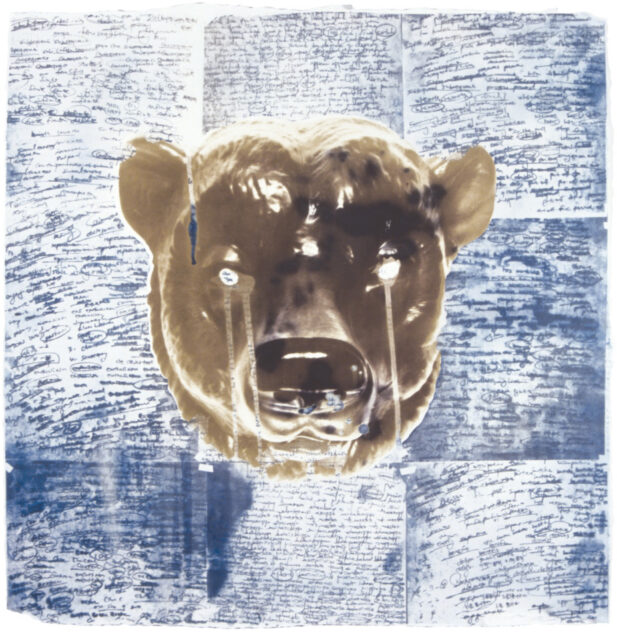
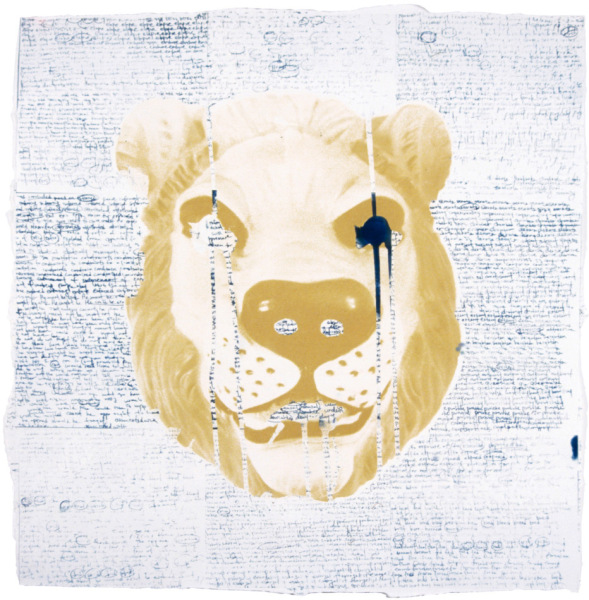
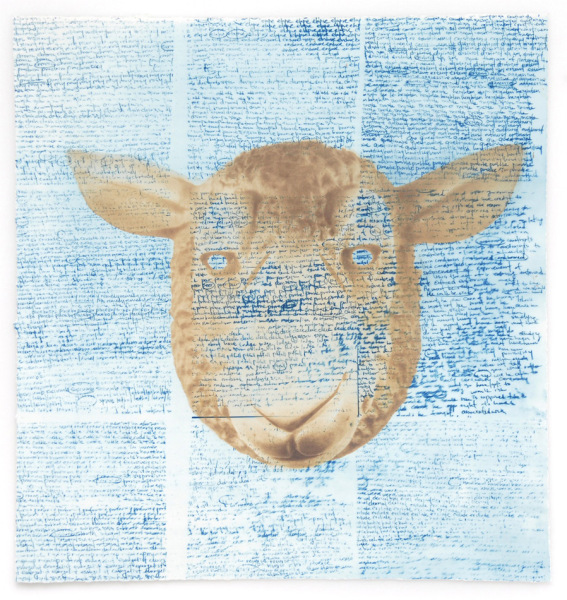
Beastly Words explores the fundamental flaw of language as an expression of our deepest selves, and the contradictions of language as image. Pained, repetitive words and phrases are subdued and channeled into new forms, given life as watery zebras, muscular tigers, an anthropomorphized WWII fighter plane, and breathless track runners.

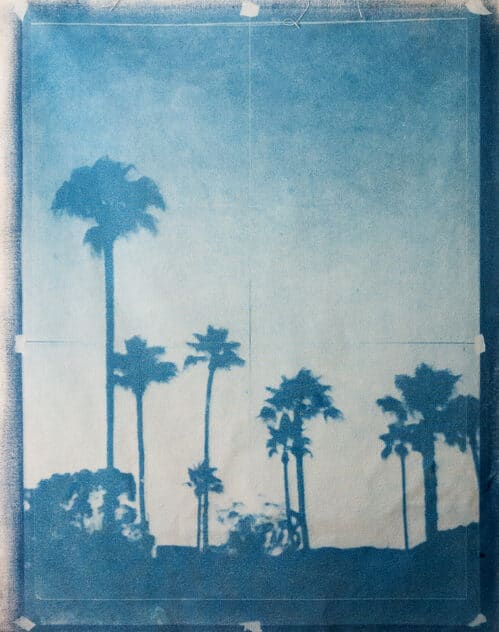
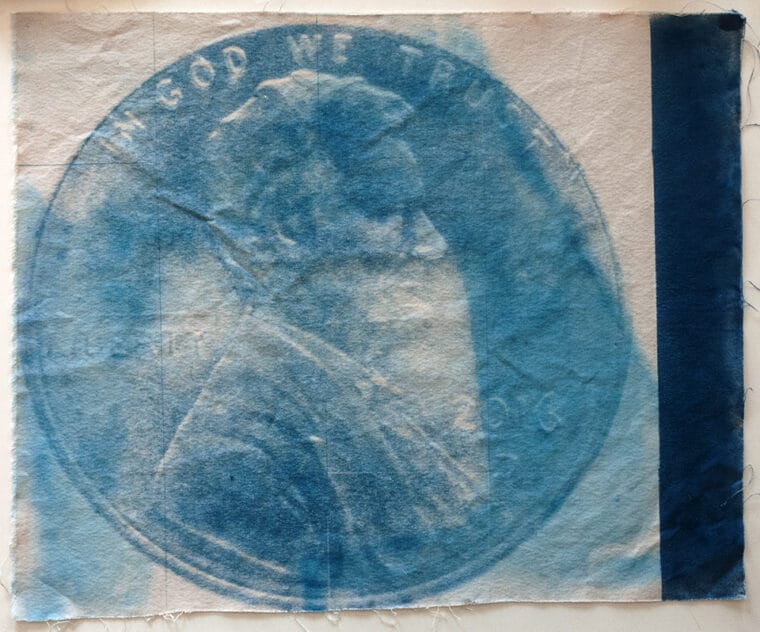
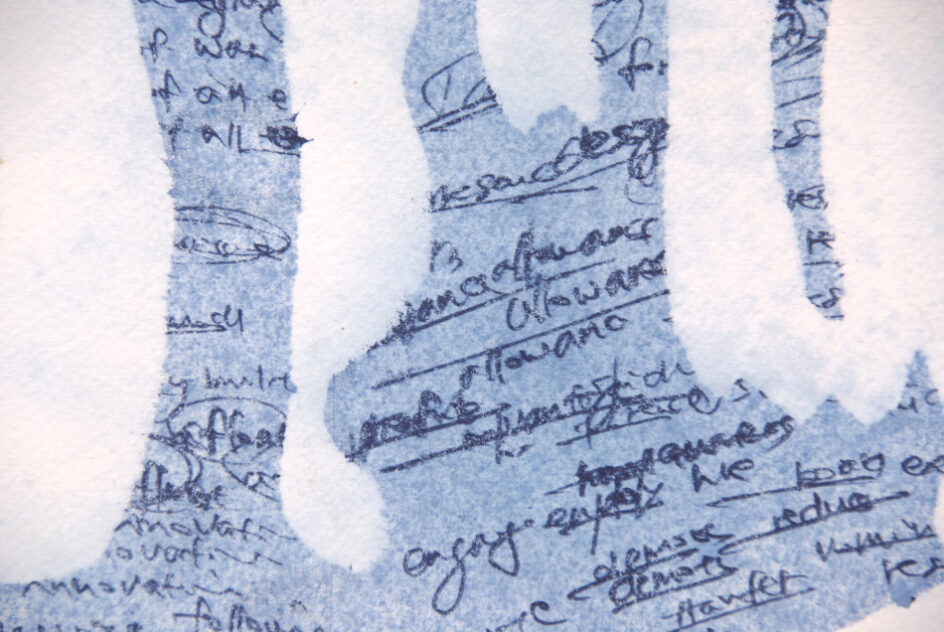
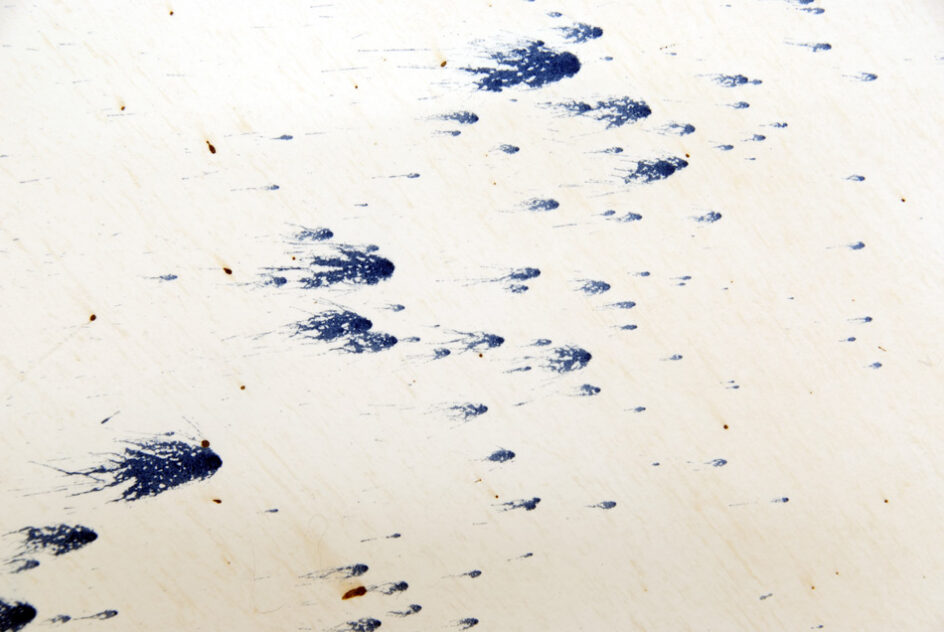
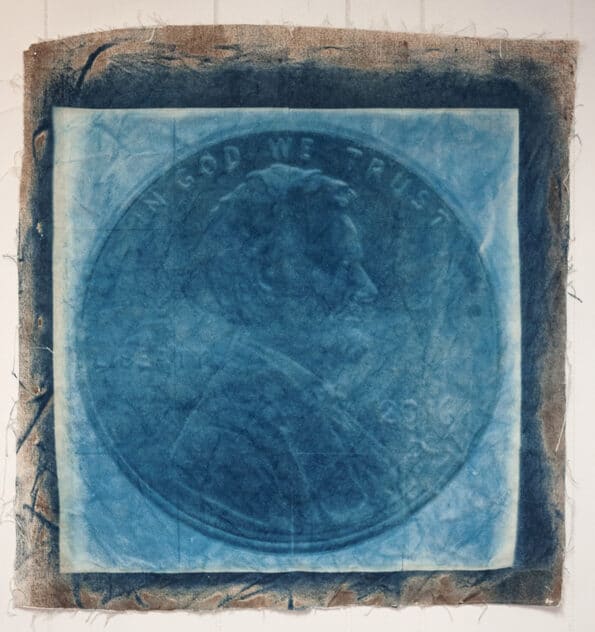
Brown first creates film negatives from mysterious scrawlings recovered from a university library trash can—the aching and robotic exercises of an unknown author. Brown’s subsequent use of older photographic techniques to recontextualize the images, through Cyanotype and Van Dyke processes, naturally limits his palette to a calming range of organic browns and blues, fading or deepening depending on exposure to light. He imposes a more natural and visceral world on the underlying fumbling language, as well as foiling the hyper-Photoshopped slickness of our mass-media world.

Barnyard

Road Agent, Dallas, TX • 04.06

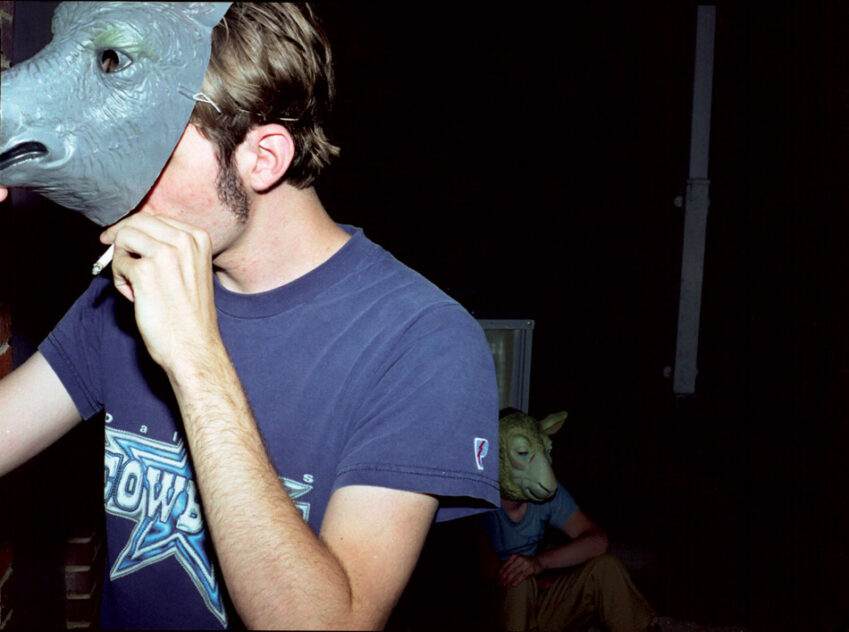
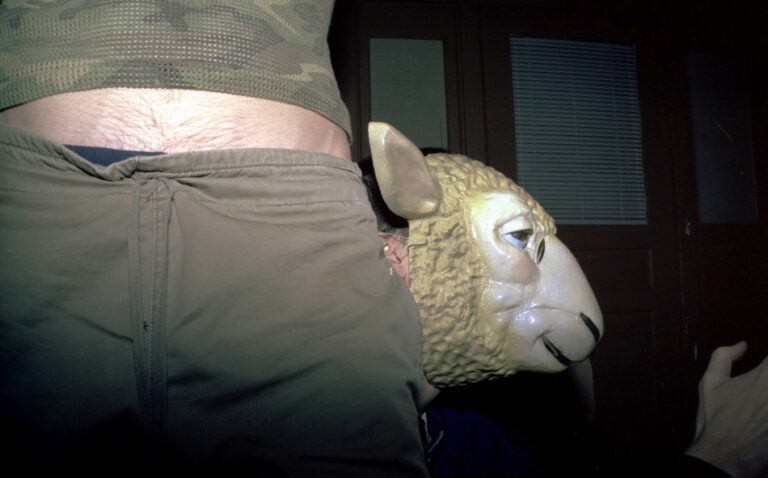
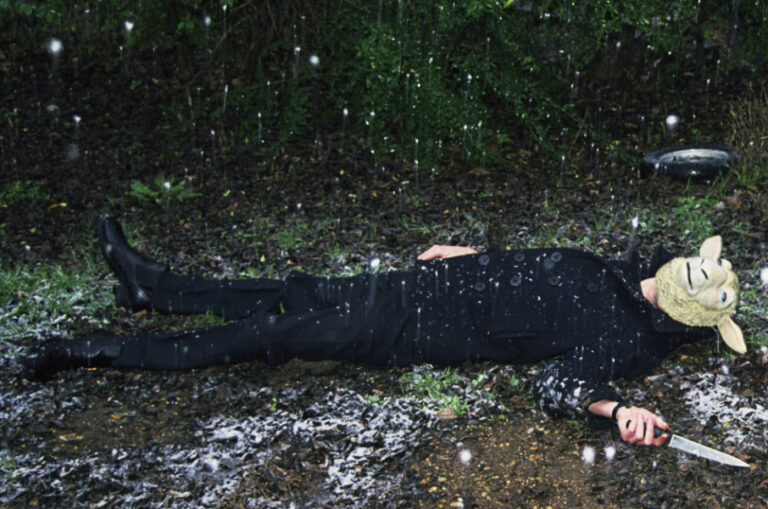
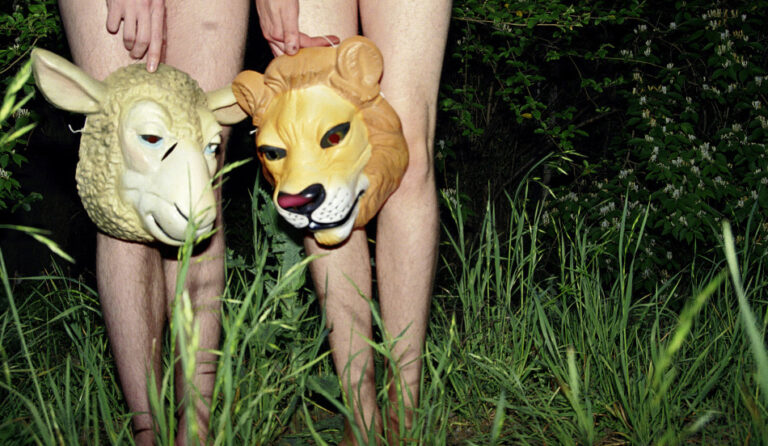
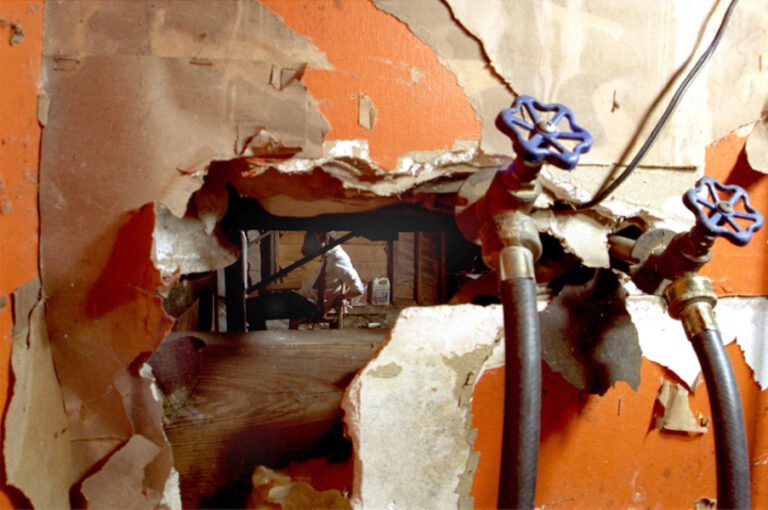
“Boys will be boys”— or so the saying goes. In Bradly Brown’s first exhibit at Road Agent, he offers theatrical photographs that toy with questions of how young men construct their identities as they gradually mature into adulthood. In several of Brown’s photographs the artist and his friends playact with plastic animal masks hiding their faces. An Arcadian narrative unfolds, juxtsposing homoerotic yearnings with a suggestive menance. The most striking photo of the show, however, extends beyond a beautifully rendered, but simply conceived drama. Dominated by rich orange hues, a fractured and deteriorating wall opens into a small room that houses a solitary schoolboy, hands tied to a chair. This luxuriously colored photograph and the threatening mystery it encapsulates is as viscerally enticing as it is emotionally unsettling.

—Flash Art Magazine, Matthew Bourbon

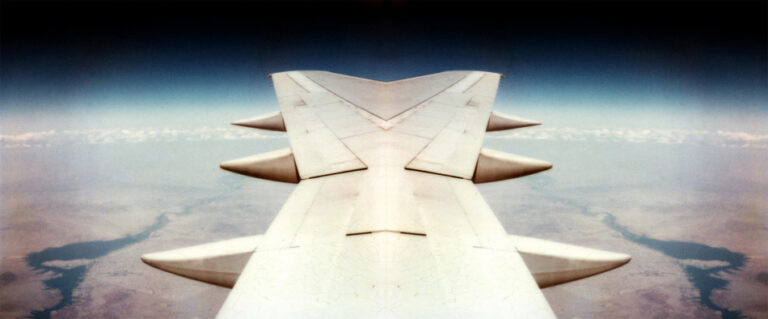
ON LEAPING FROM AIRPLANES

On Leapig from Airplanes, 2006
Splashlight Studio, New York, NY • 01.06