15,540 Miles, 2002

15,540 Miles, 2002
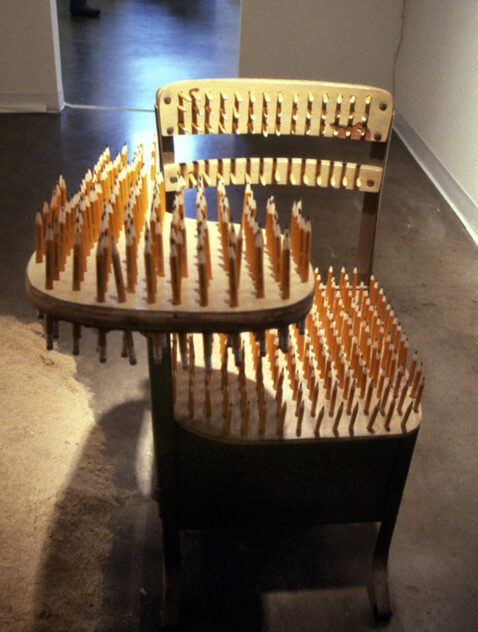
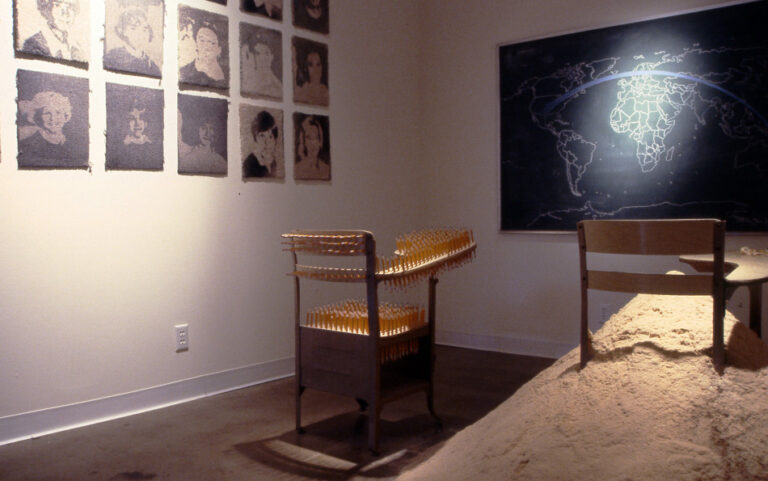
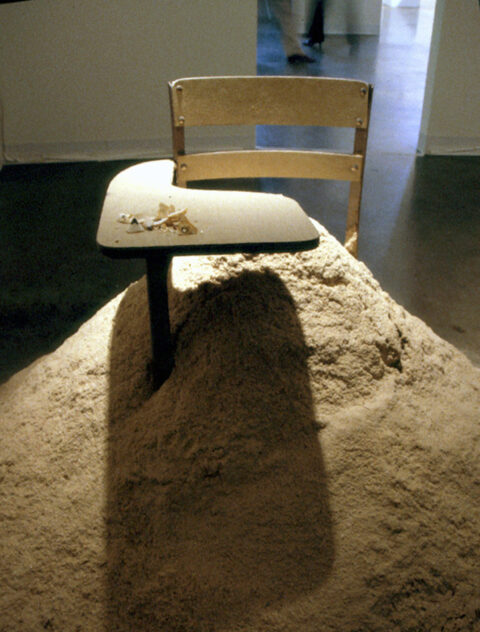
School desks, 444 No. 2 pencils, sawdust, pencil shavings, chalkboard, cyanotype on carpet
Variable dimensions

Exhibited at Conduit Gallery, Dallas, TX, 2002. This was Brown’s first commercial gallery exhibition.

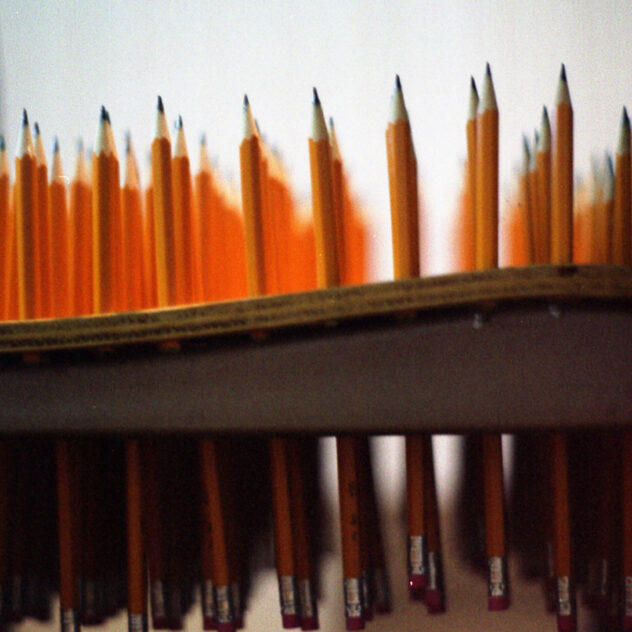
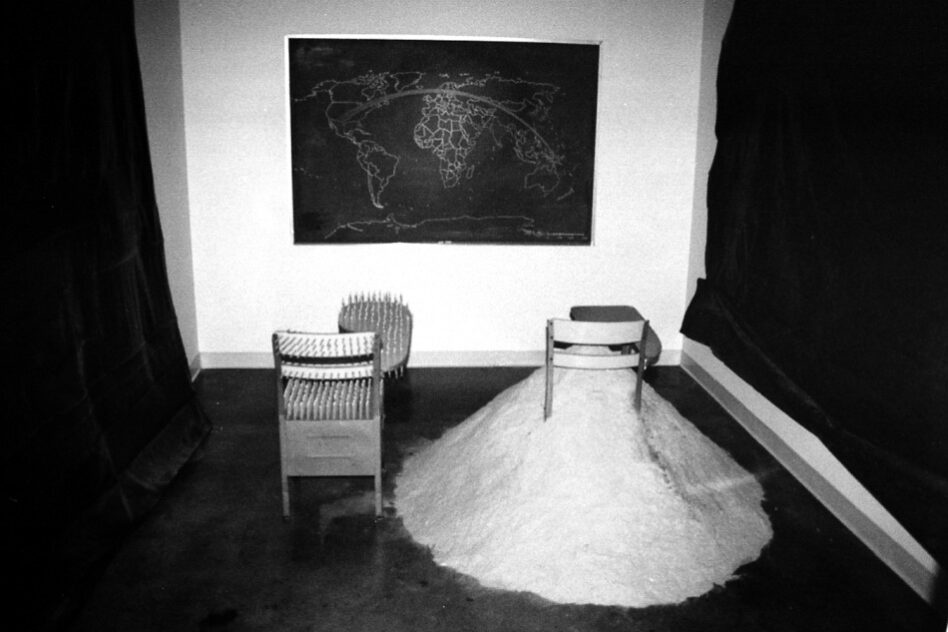
Two school desks sat in the middle of the room. One was embedded with 444 No. 2 pencils. A single No. 2 pencil can, in theory, draw a line about 35 miles long, so together the 444 pencils could draw a line 15,540 miles long. The second desk sat beside it, buried in sawdust and pencil shavings. On the wall facing the desks hung a classroom chalkboard with a world map drawn on it, and the 15,540-mile line was plotted across the map, starting in Dallas and heading east.

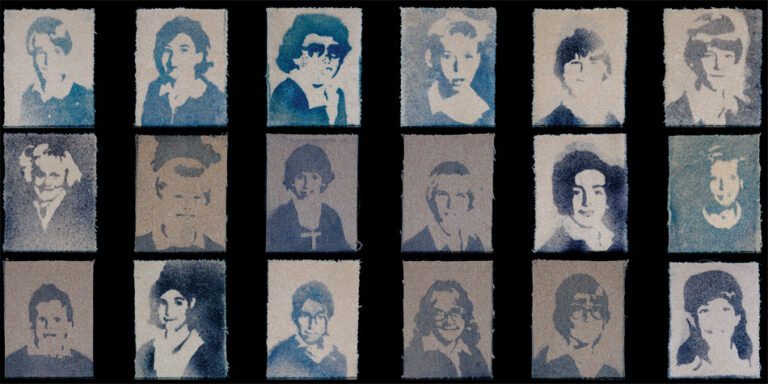
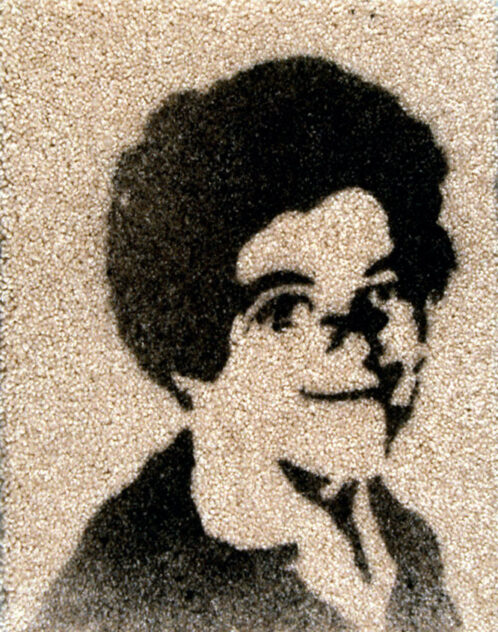
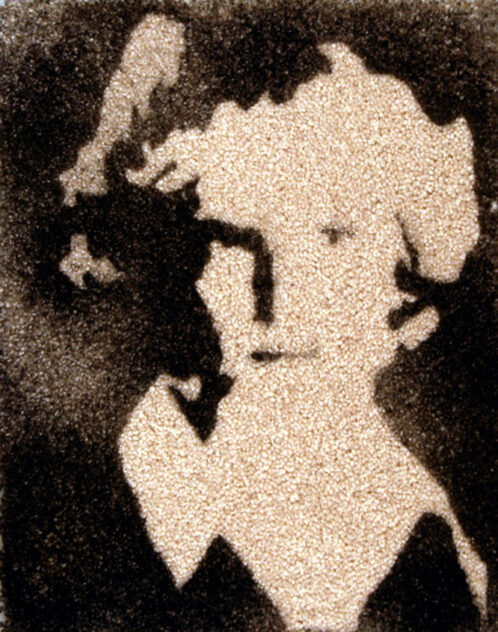
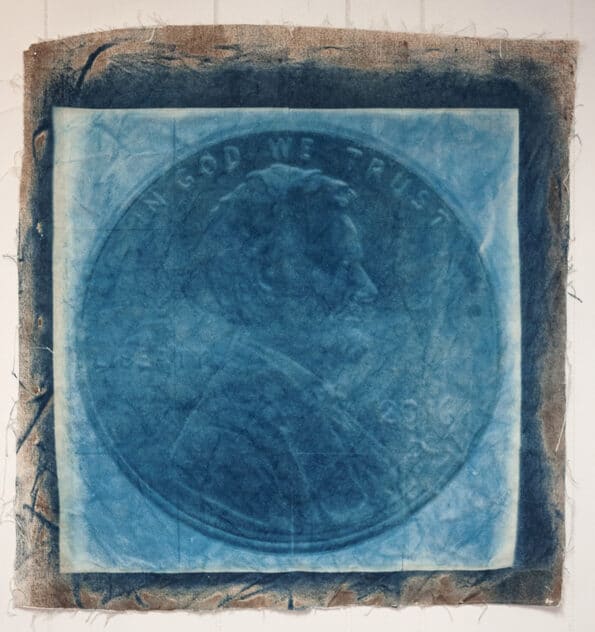
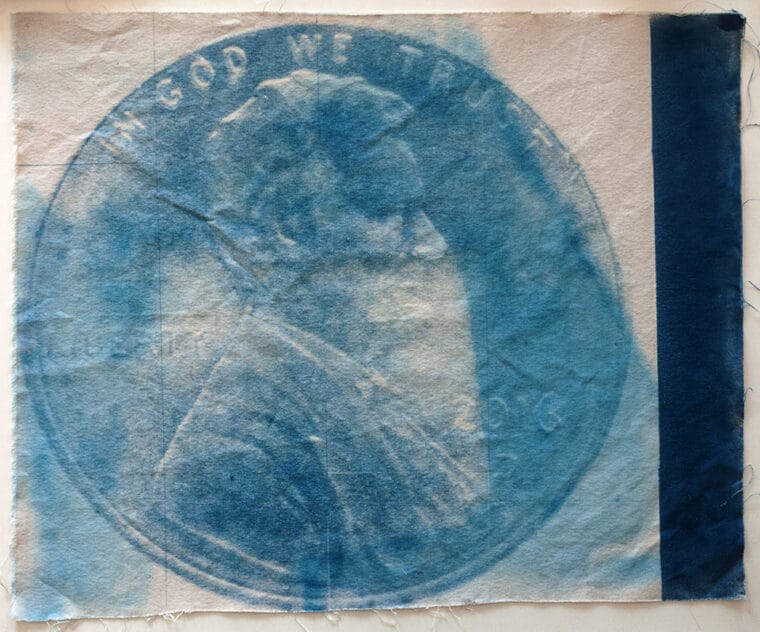
The walls to the left and right held 64 portraits, 32 on each side, of Brown’s classmates from his elementary school yearbooks. For each portrait he cut a stencil and sprayed cyanotype photo emulsion onto a piece of carpet. The portraits were hung unexposed and kept under a black tarp until the opening reception. That night the tarp came off, and over the course of the evening the faces slowly appeared on the carpet as the emulsion reacted to the light.

The installation is about fear and pressure and the two ways people respond to them. Fear can push you to move, or its weight can hold you in place. Some people adapt and excel; others get buried.
Spider Webs, 2017

Spider Webs, 2017
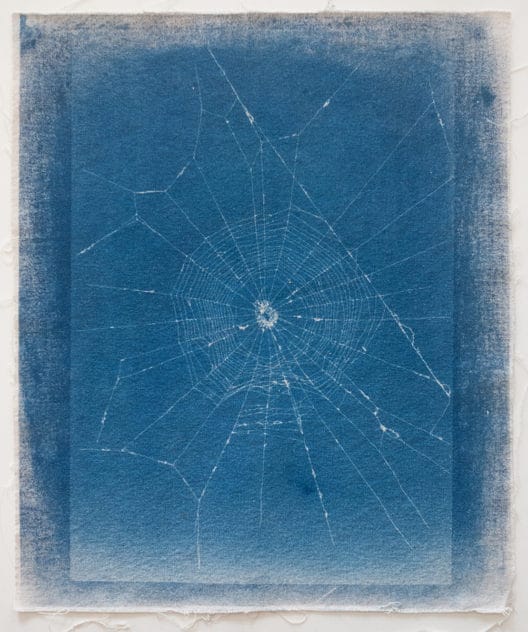
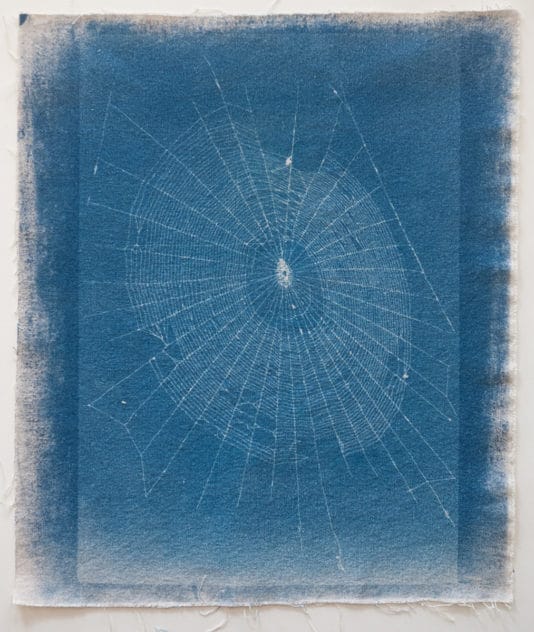
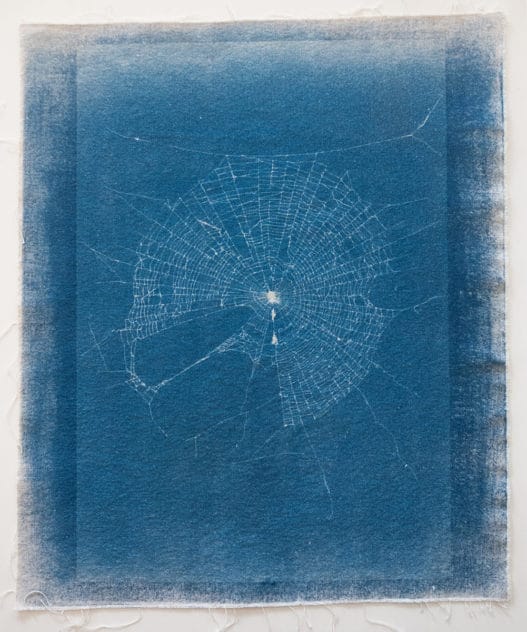
Cyanotype on canvas
16.5″w x 20”h

Exhibited in Image for Concept: Indirect Representation in Photography, Southeast Museum of Photography, Daytona State College, Daytona Beach, FL, 2019, and The Hand Art Center, Stetson University, DeLand, FL, 2020

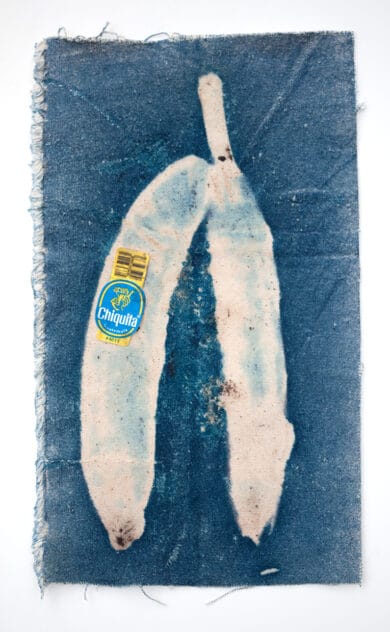
In Spider Webs, the computer monitor becomes a camera lucida. Working from photographs, Brown redraws each web by hand on screen, recognizing every thread while staying true to the original image.

The digital drawings are then printed as cyanotypes on canvas. The frayed edges of the canvas make each piece unique, yet the image itself is infinitely reproducible. Like the cliché verre, the 19th-century process of printing hand-drawn glass plates on photographic paper, the work asks how an art object is valued: what is a physical object worth compared to the digital information that defines it?

The series grows out of Brown’s larger interest in the blurring line between our physical and digital surroundings. Across installation, sculpture, photography and video, his work looks at how technology shapes our decisions, both enhancing and disrupting our sense of independence, and invites viewers to weigh its potential against its pitfalls and its effect on cultural and individual identity.

The web returns as a subject in UUUUUU (2023), a spiderweb hand-formed from copper wire stripped from internet cable.

Beastly Words, 2007

Road Agent, Dallas, TX • 09.07

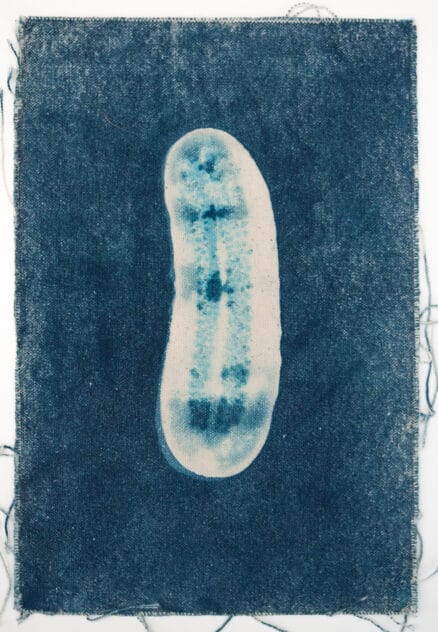
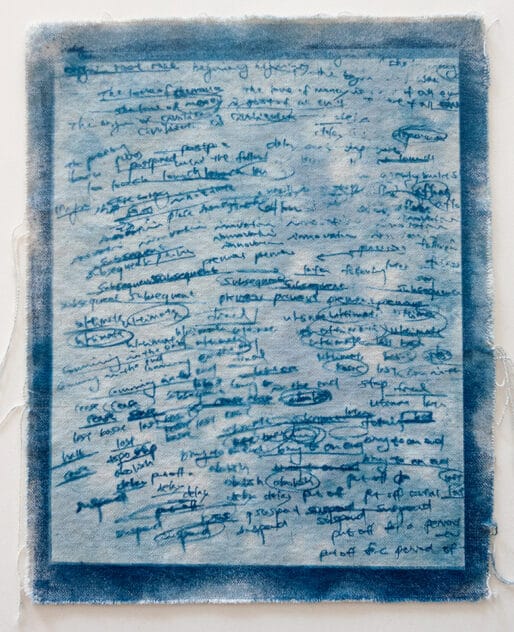
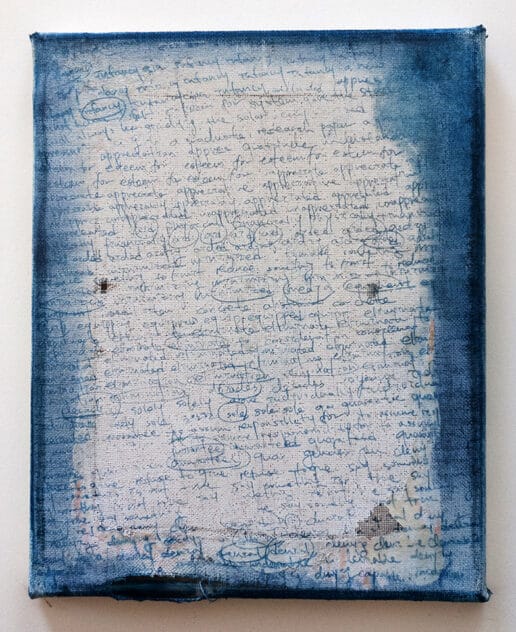
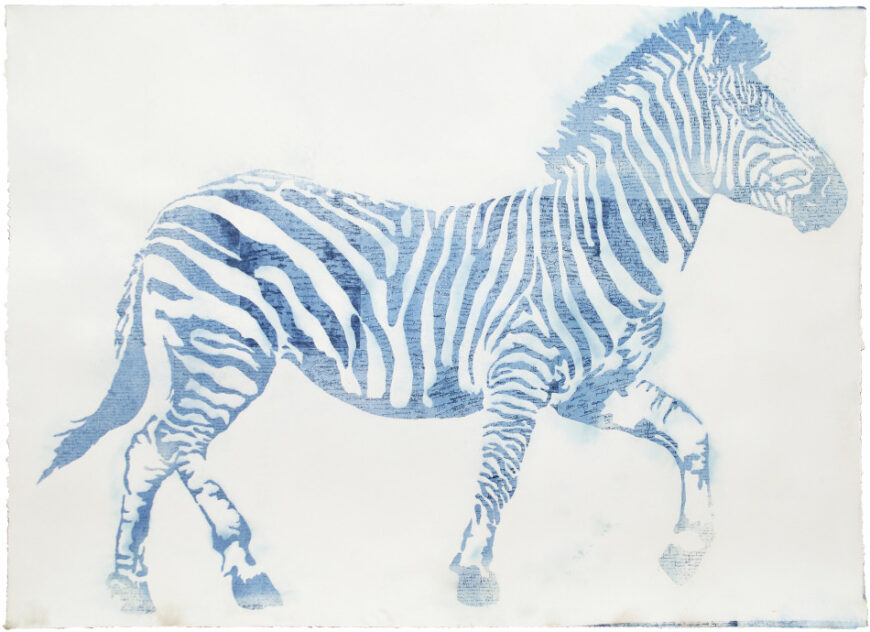
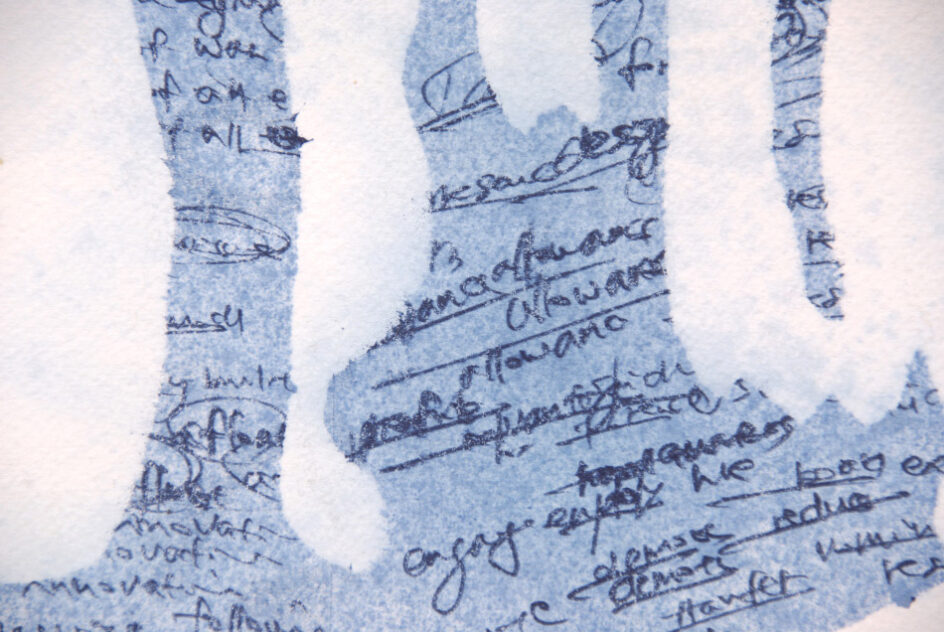
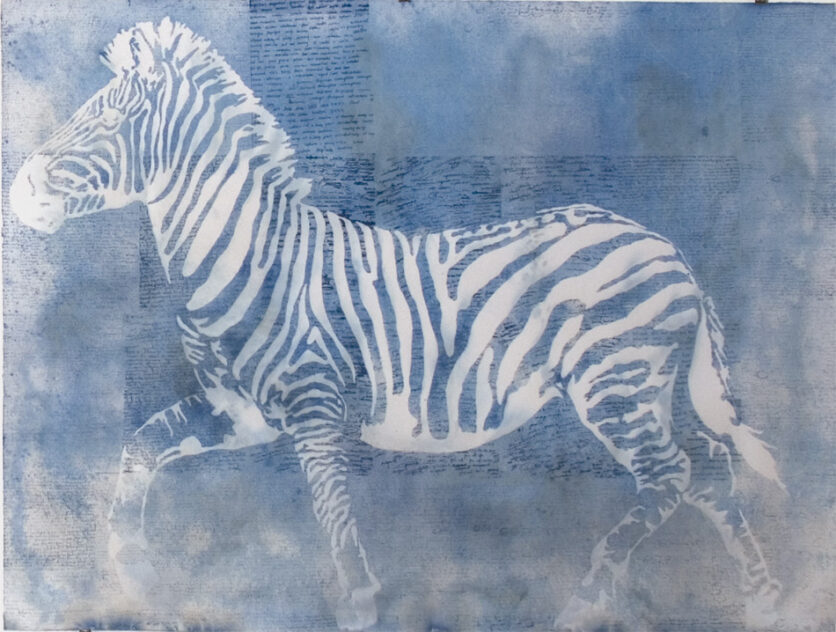
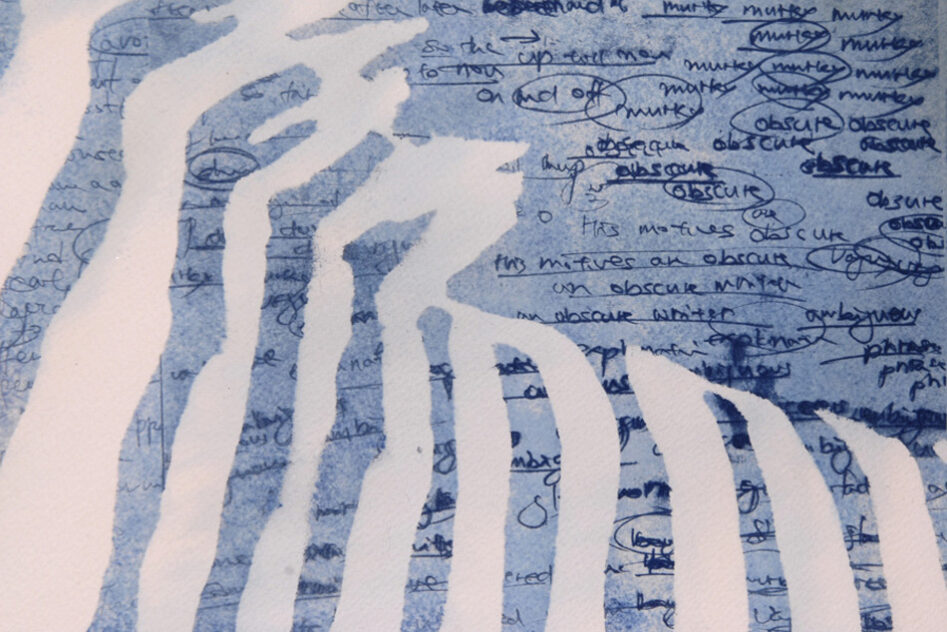
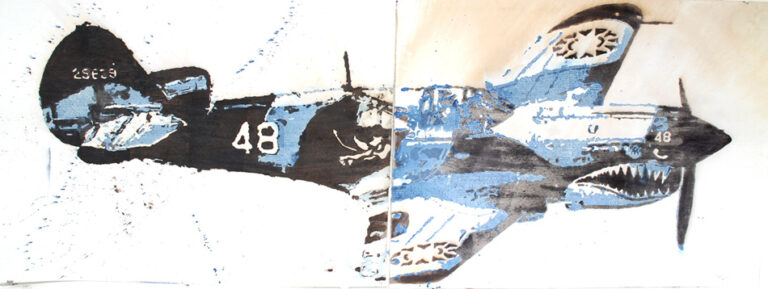
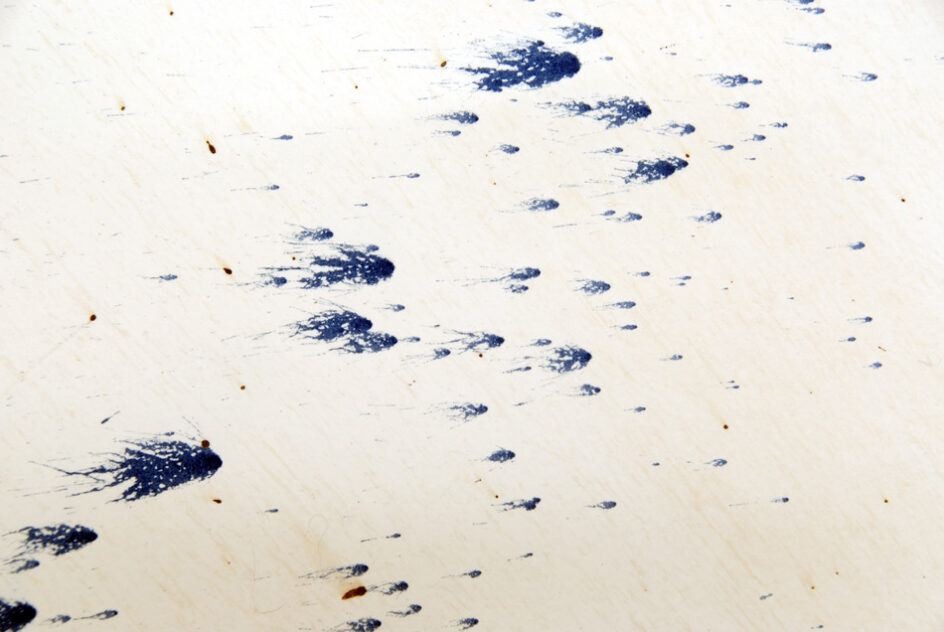
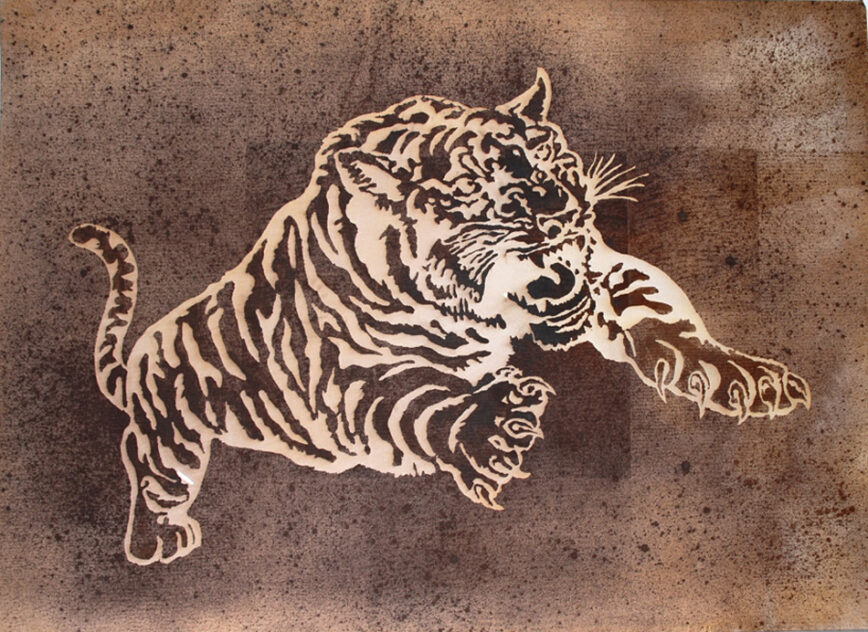
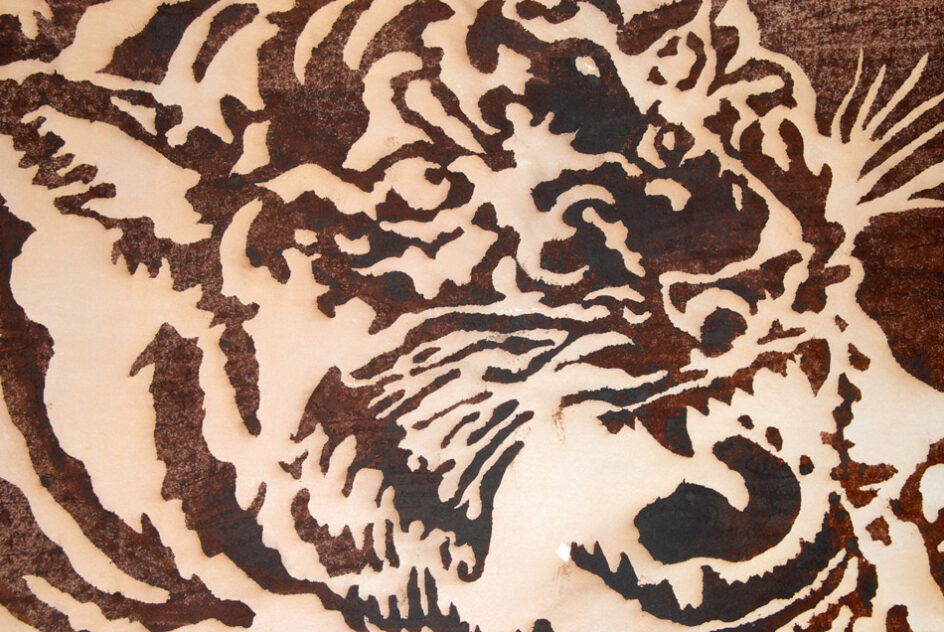
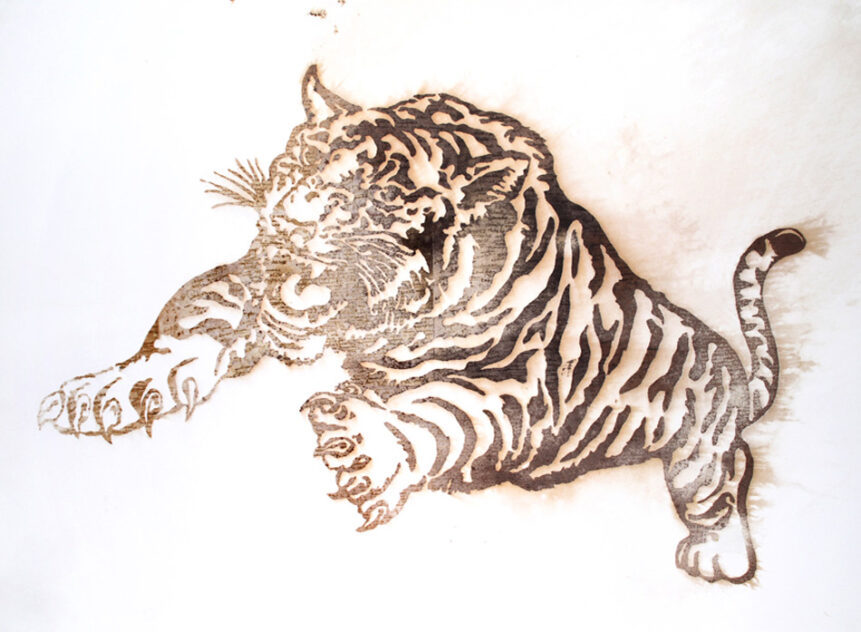
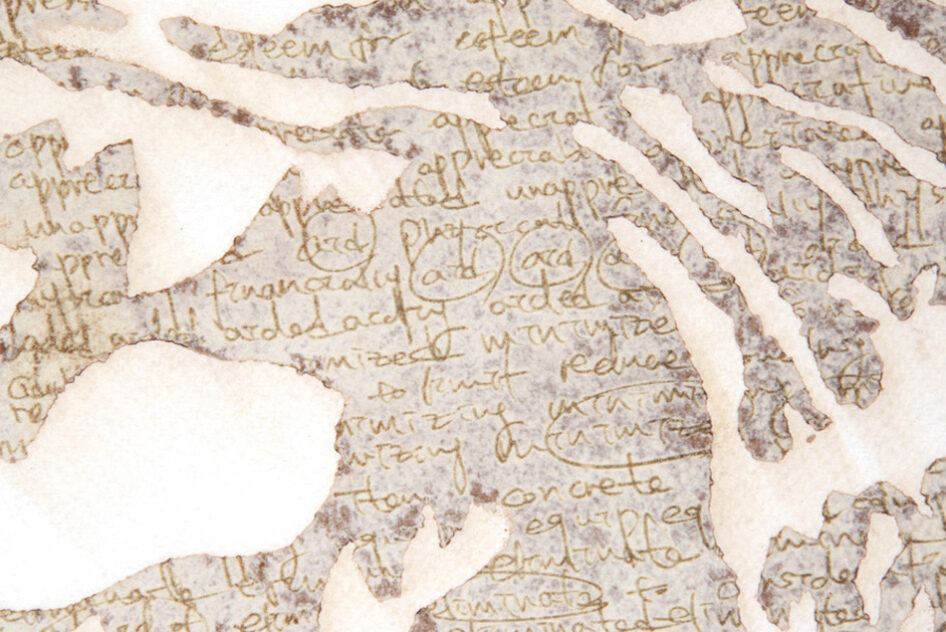
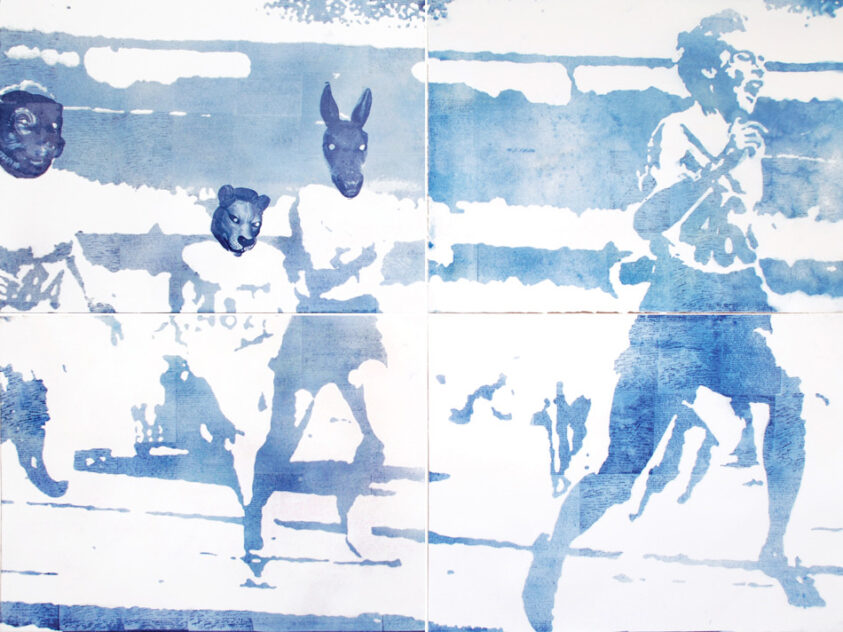
Beastly Words explores the fundamental flaw of language as an expression of our deepest selves, and the contradictions of language as image. Pained, repetitive words and phrases are subdued and channeled into new forms, given life as watery zebras, muscular tigers, an anthropomorphized WWII fighter plane, and breathless track runners.

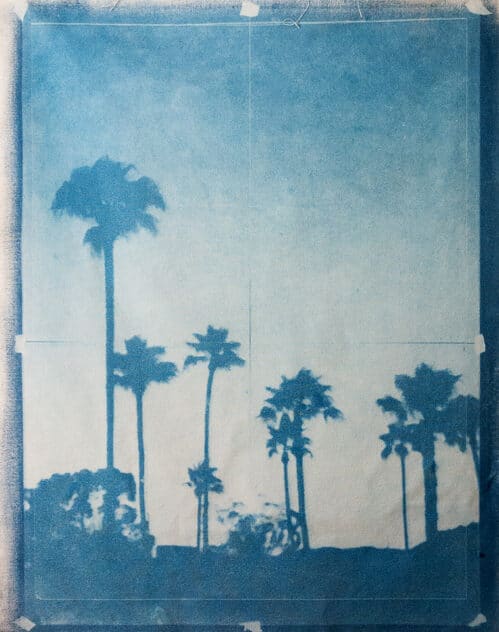
Brown first creates film negatives from mysterious scrawlings recovered from a university library trash can—the aching and robotic exercises of an unknown author. Brown’s subsequent use of older photographic techniques to recontextualize the images, through Cyanotype and Van Dyke processes, naturally limits his palette to a calming range of organic browns and blues, fading or deepening depending on exposure to light. He imposes a more natural and visceral world on the underlying fumbling language, as well as foiling the hyper-Photoshopped slickness of our mass-media world.