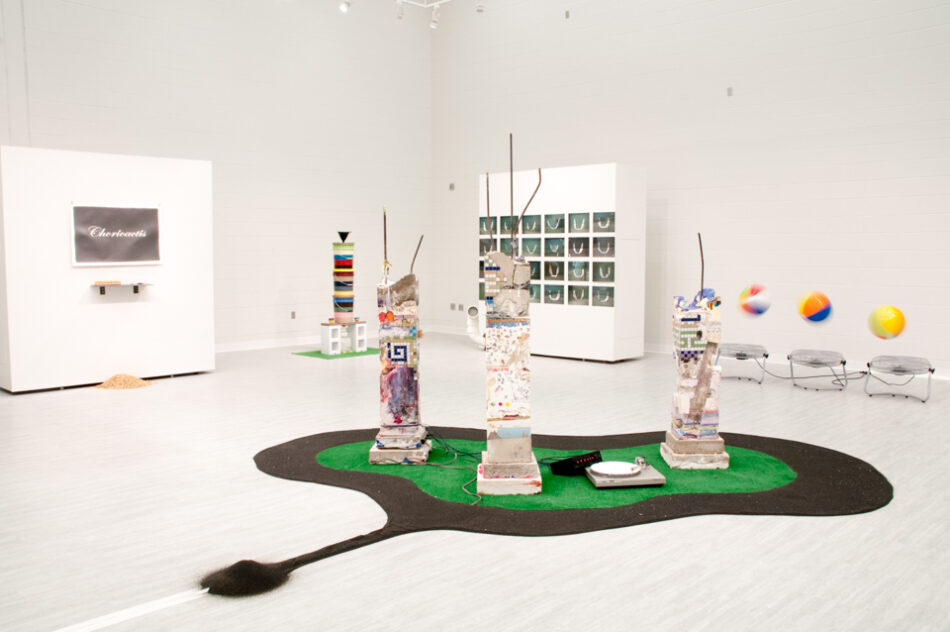
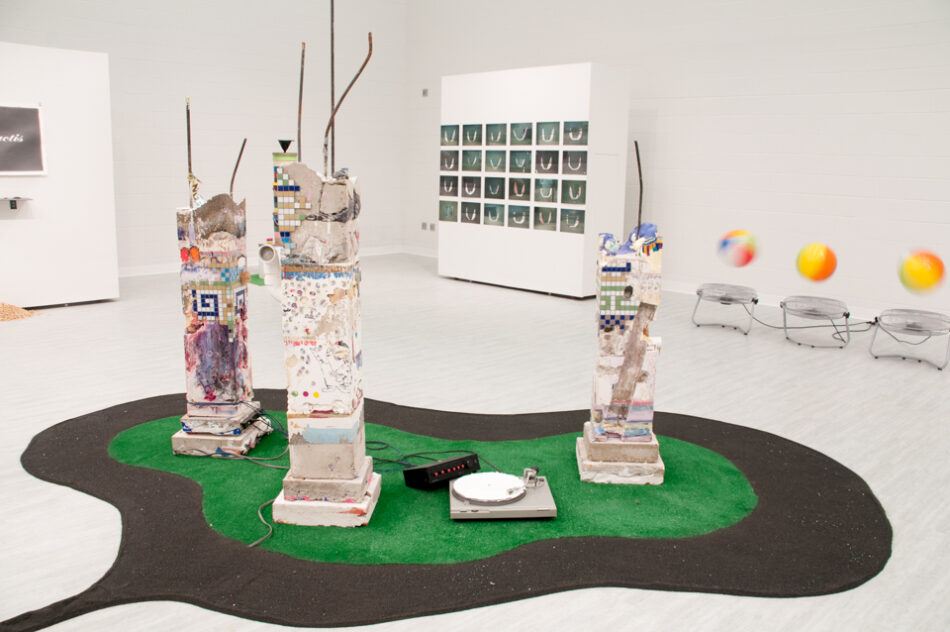
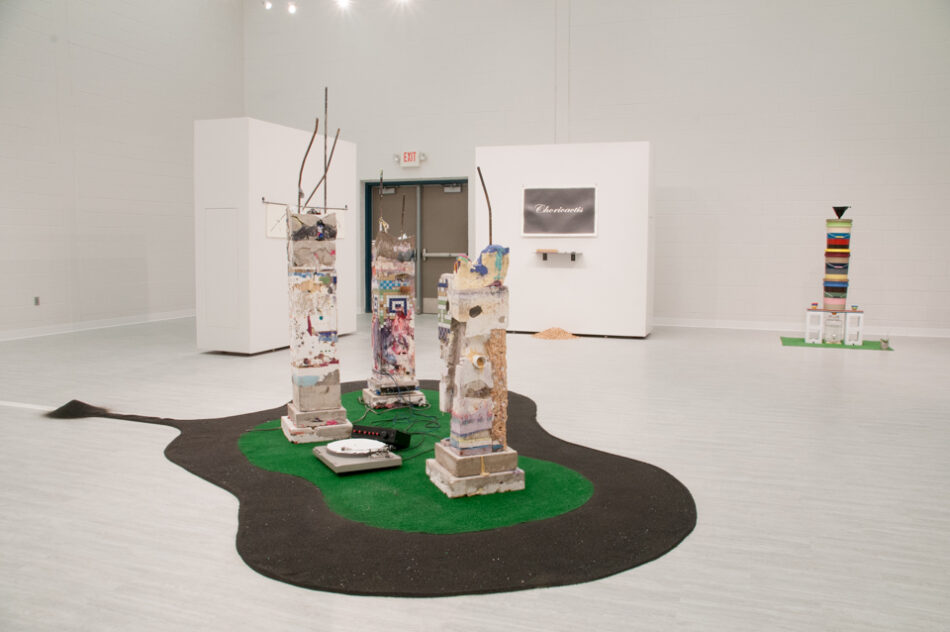
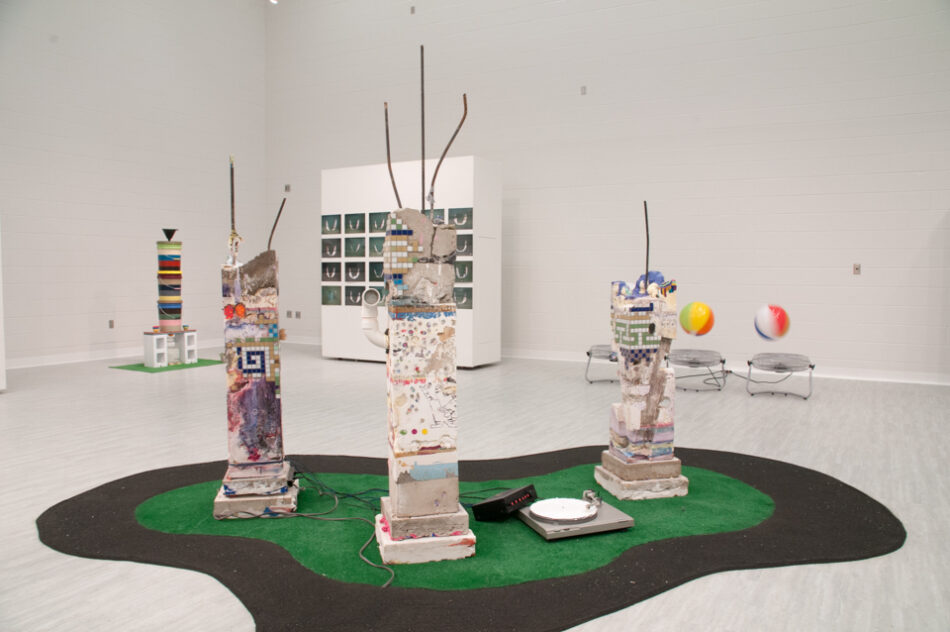
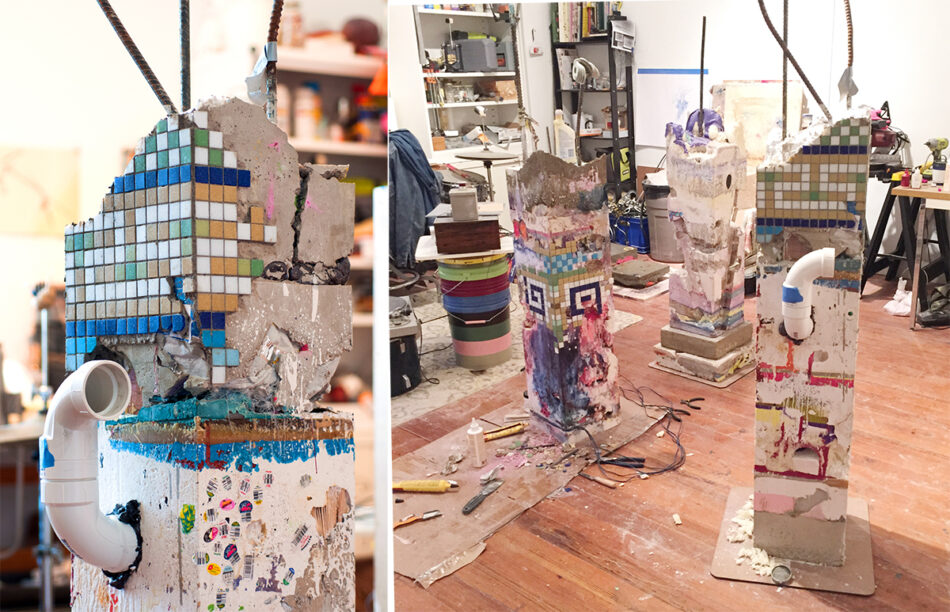
Act III: Columns (1-3), 2015-2016
Artificial turf, black beauty abrasive, plaster, cement, wax, chocolate, bacon fat, Vaseline, clay, resin, foam, glass, ink, debris, found objects, speakers, and record player
Dimensions variable
Act III: Columns (1–3) was made during Brown’s time in the Lawndale Artist Studio Program. It is the final act of a larger narrative that also includes Act I: Waiting Room and the records of Side A. Together, the works form the set for an unfinished three-part play that is still missing its second act.
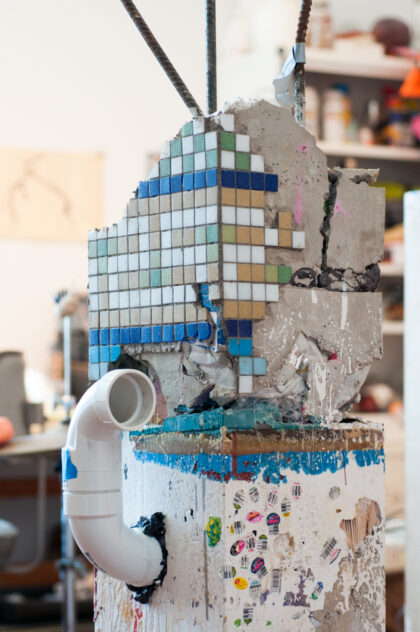
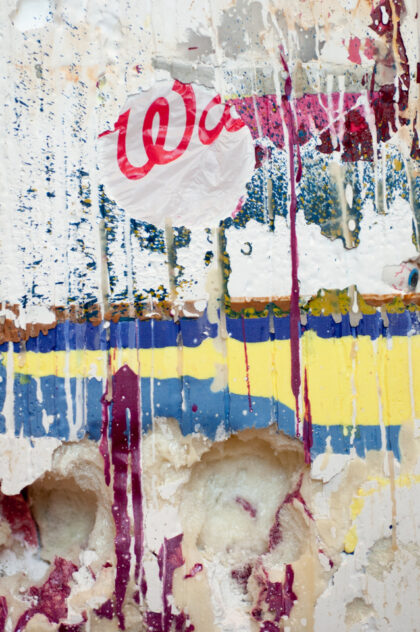
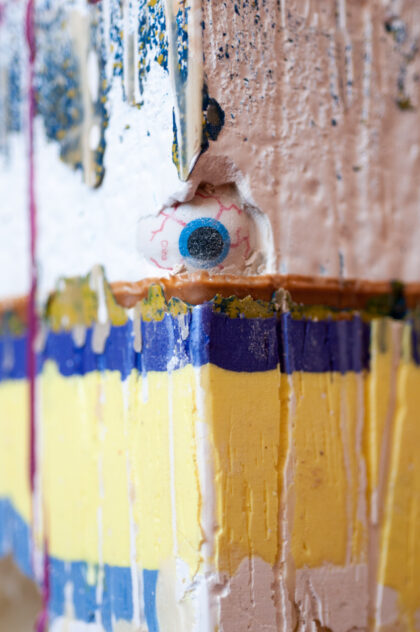
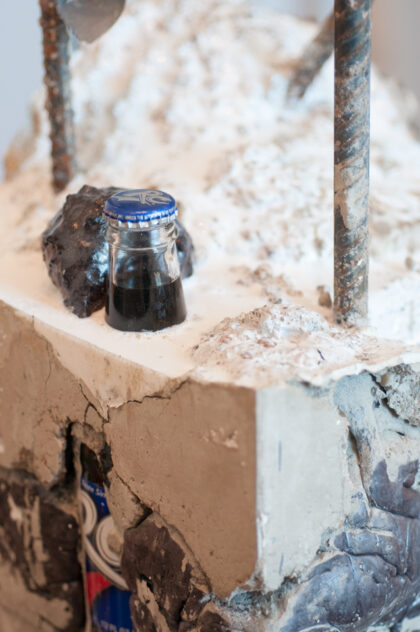
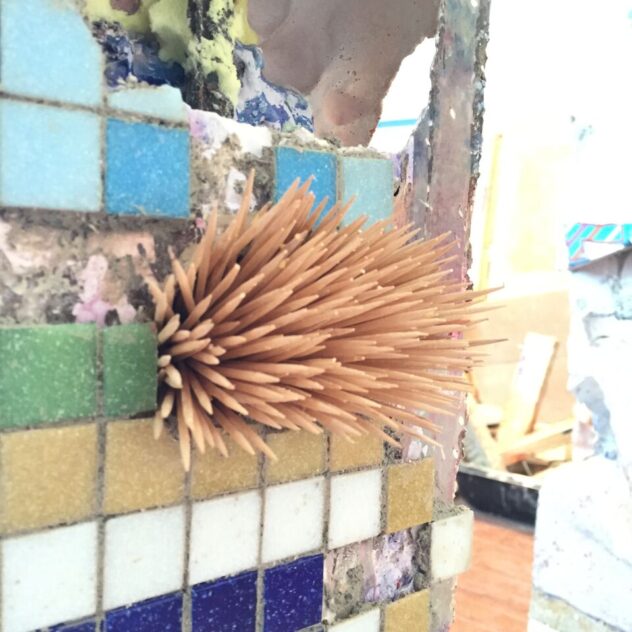
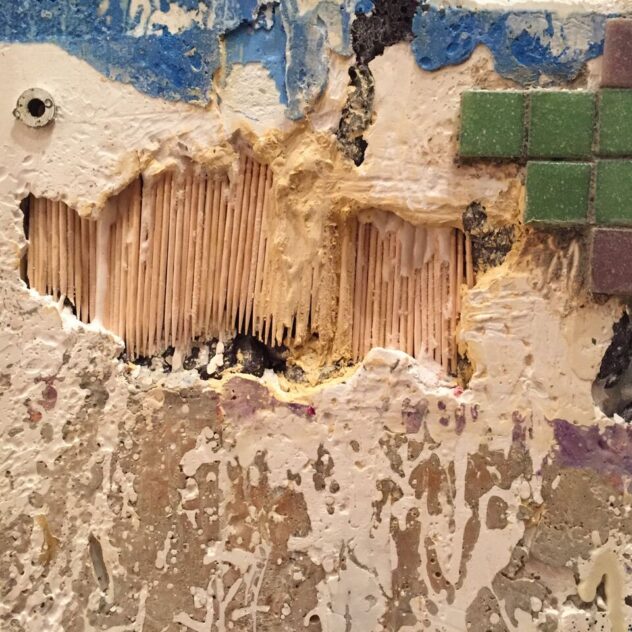
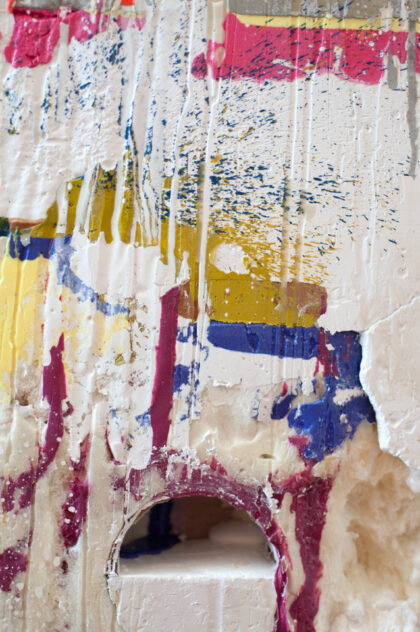
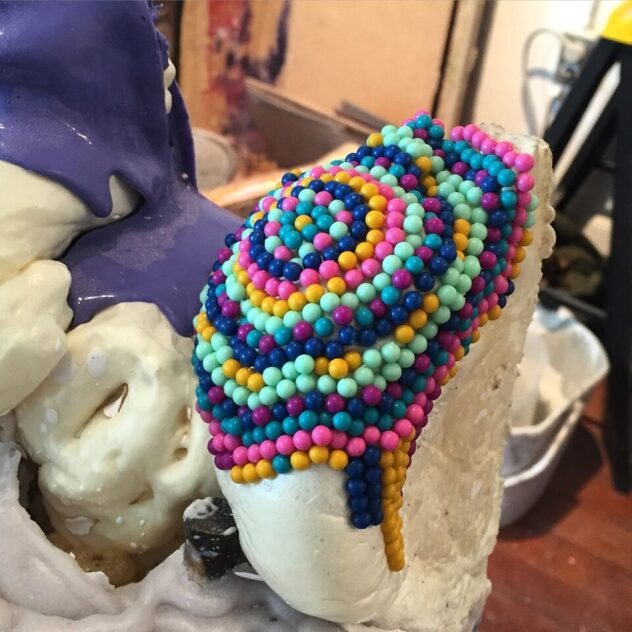
The work consists of three broken columns, the ruins of a structure that once stood. To make them, Brown built three adjustable housings and, over the course of the residency, filled them with studio waste, found objects, ephemera, trash, and other things he had collected. Between layers of objects he poured phase-changing materials, substances that turn from liquid to solid: two-part plastics, silicone rubber, resin, wax, concrete, plaster, and even chocolate and bacon fat. Rebar ran through each mold, both for reinforcement and to exaggerate the broken condition of the finished pieces. Each column became a kind of time capsule.
When the walls of the molds came off, many of the hidden objects revealed themselves through cracks and broken sections, and Brown excavated parts of the columns to expose even more. He then applied a patchwork of tiles over sections of each column, suggesting how they looked originally, before they began to decay and fall apart.
Conceptually, the work is about the giant structures we trust every day without question: physical ones like buildings and bridges, but also institutions like banks, governments, and commercial giants. We only ever see them from the outside, and what lies beneath that thin shell may be very different. The piece was inspired by a 2016 news story from Taiwan, where an earthquake brought down an apartment building and revealed tin cans packed inside its pillars.
The three columns sit on an island of artificial turf surrounded by black sand. Their soundtrack comes from the records of Side A, another picture of a fragmented culture: bits and pieces joined together in an attempt to make the semblance of a whole. The result scratches, skips, and gets stuck repeating its blemishes until someone moves the needle.