Dearman, 2026
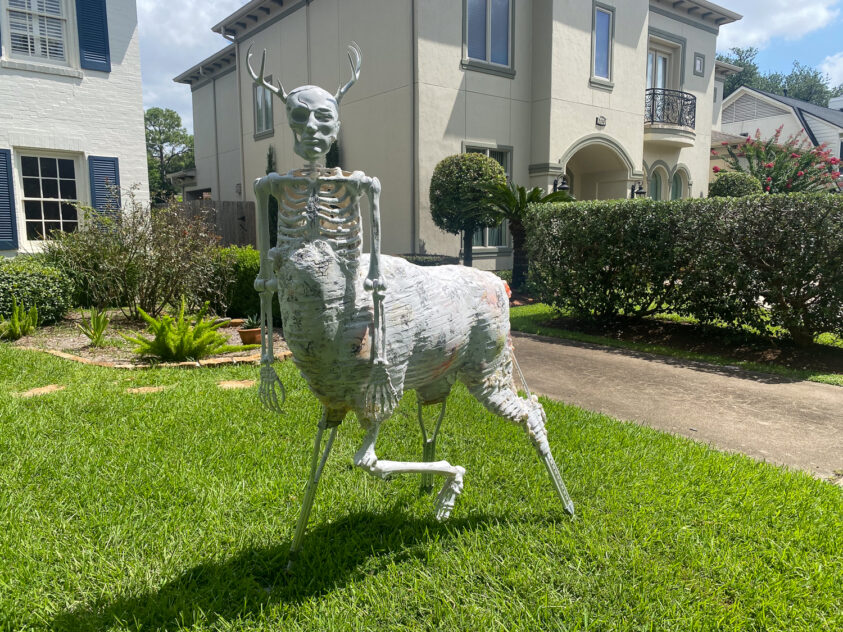
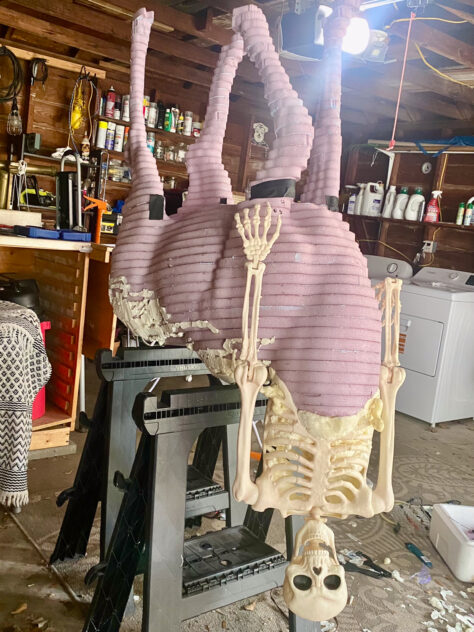
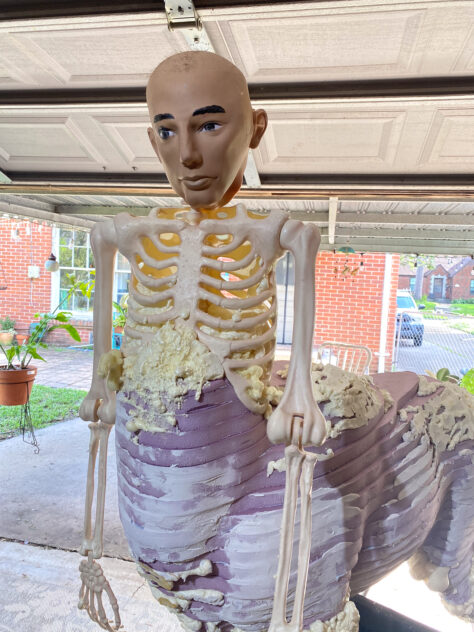
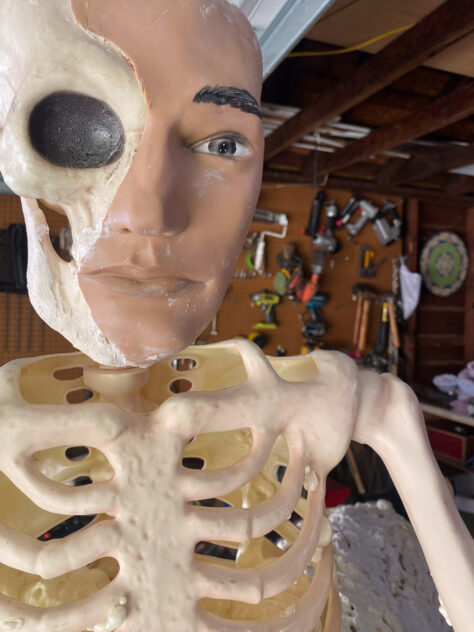
Mixed media: found objects, foam, plaster, and paint
Approx. 75″ × 50″ × 30″, dimensions variable
Exhibited in YARD, an exhibition series in Houston front yards organized by Chris Wicker, Anna Taylor, and Trent Teinert with support from The Idea Fund
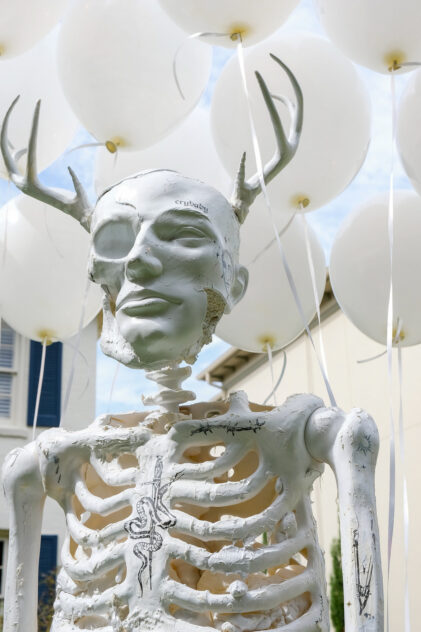
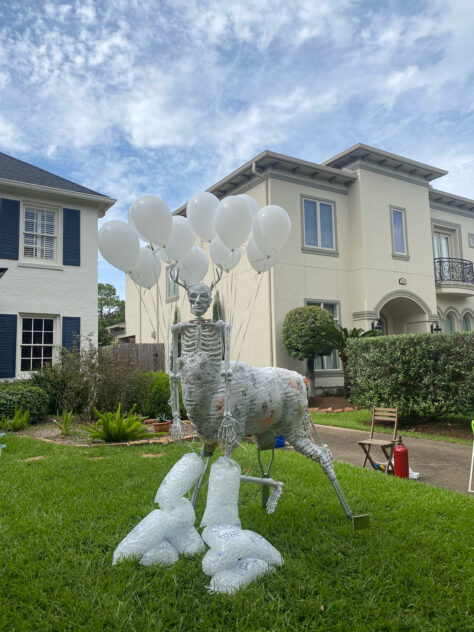
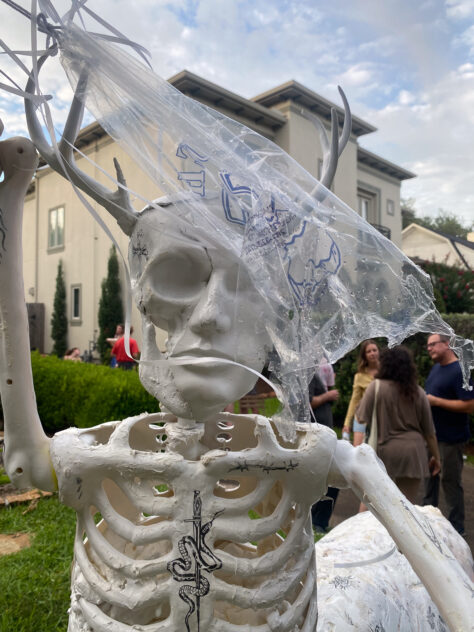
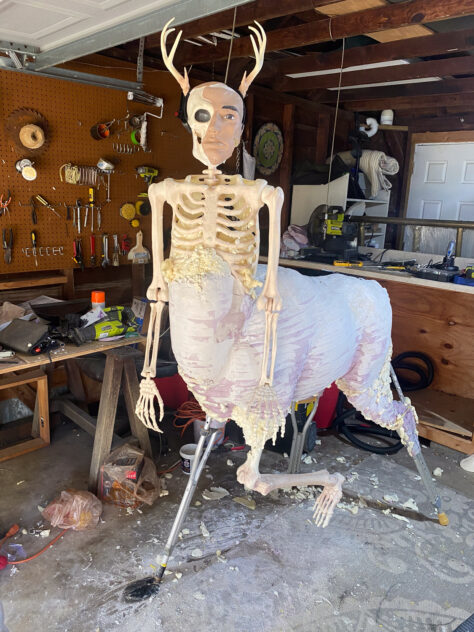
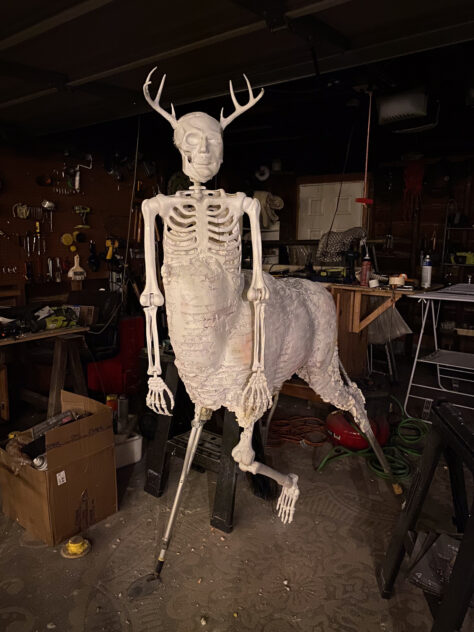
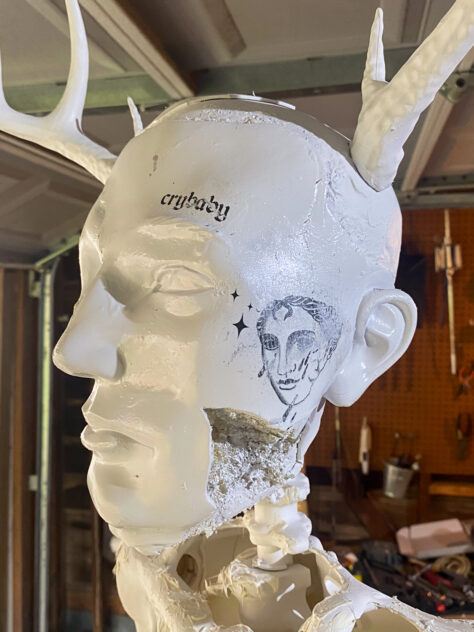
Dearman is a cervitaur, a half-man, half-deer figure built from found objects, foam, plaster, and paint. Its name and structure come from DEAR MAN, a skill from Dialectical Behavior Therapy for asking clearly for what you need.
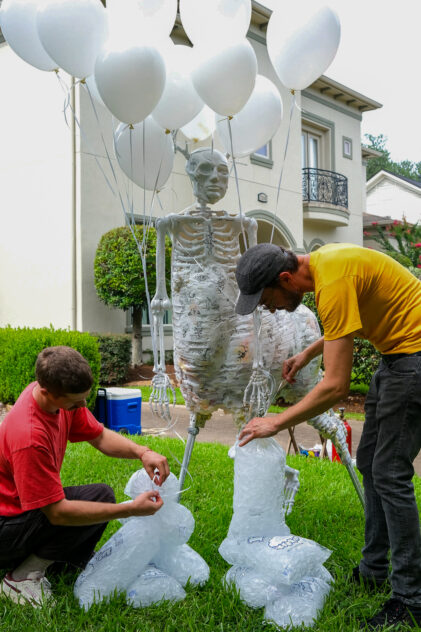
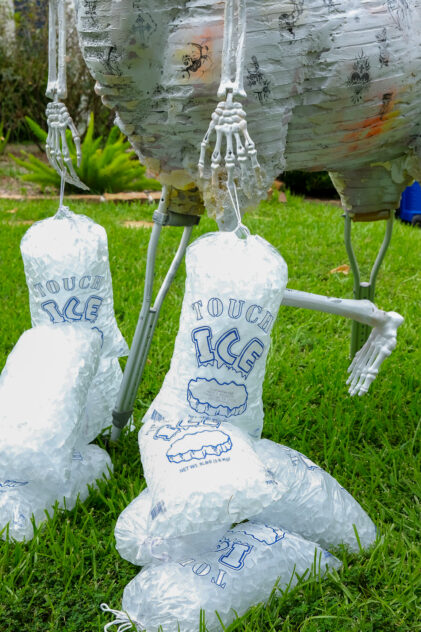
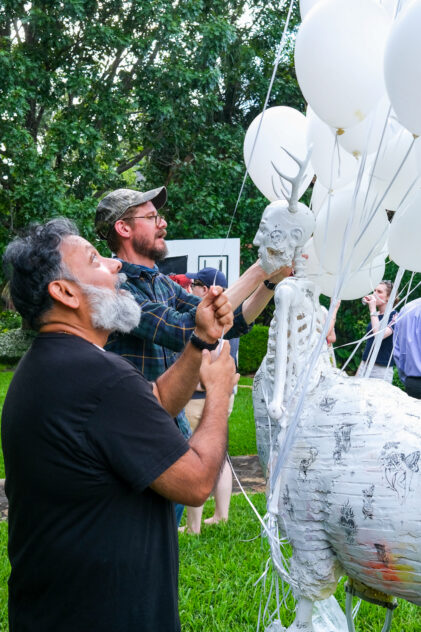
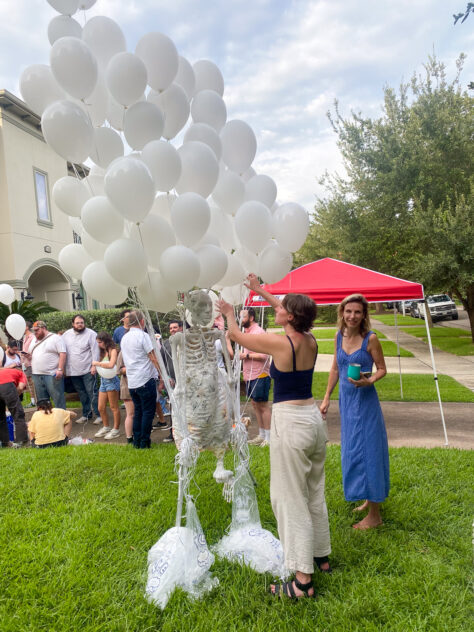
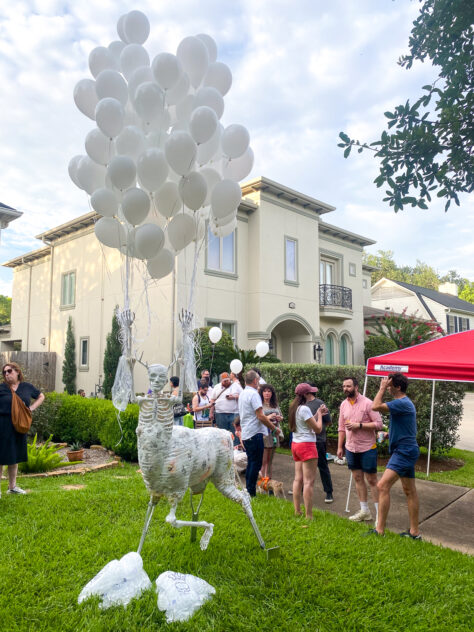
Presented in a front yard, Dearman stood with ten bags of ice tied to his wrists, five in each hand, weighing his arms down. Throughout the exhibition, visitors were invited to fill a helium balloon and tie it to his wrist. Over three to four hours, the Houston heat melted the ice, the balloons accumulated, and, with a final push from a gust of wind, both of his arms rose straight into the air.
The work depended on weather, time, and the people who wandered through the yard to complete it. In a gallery it would have been a sculpture with a set of instructions; in the open it became a slow public event. The final pose can be read as surrender, hands up, or as ascension, asking to be lifted.