Waiting Room, 2016

Waiting Room was made as the set for Act I of a three-act play that was never finished. It was shown in 2016 at Lawndale Art Center in Houston in Double Digits: Lawndale’s Artist Studio Program, 10 Years and Counting, a group exhibition celebrating the thirty artists who took part in Lawndale’s Artist Studio Program in its first ten years.

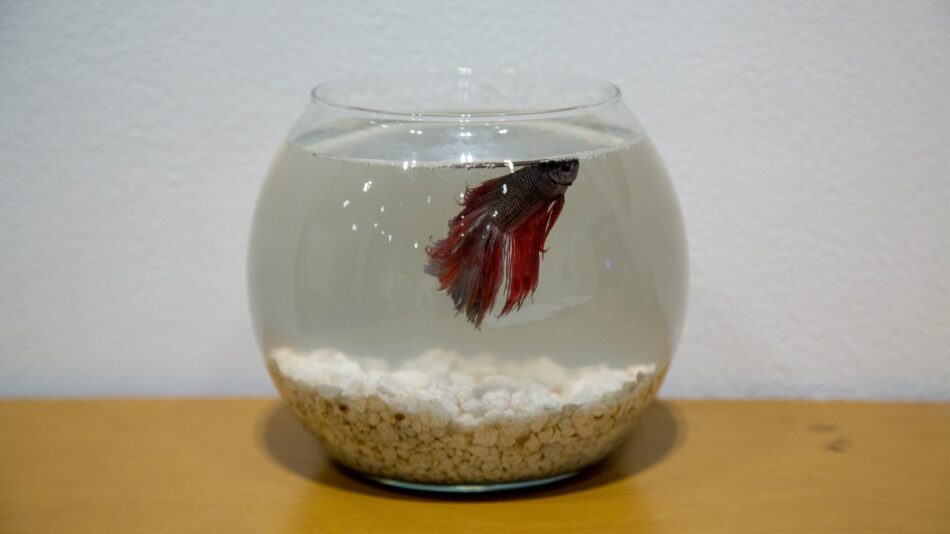
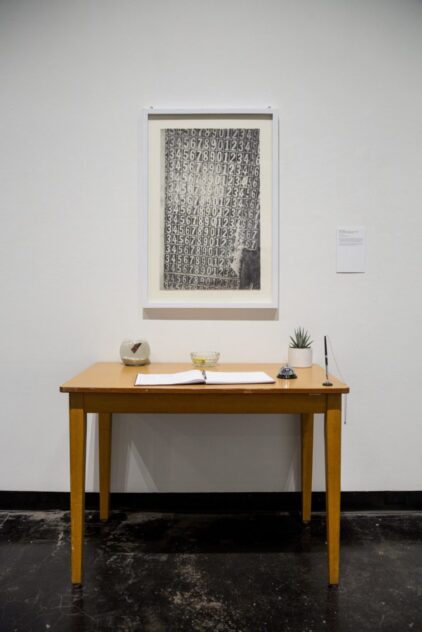
The installation is a reception desk with no receptionist. It has a sign-in book and pen, a bowl of candy, a small succulent, a service bell, and a fishbowl holding a live betta fish named Ennui. Visitors were welcome to sign in, but nobody told them what they were signing in for, and no name was ever called. A charcoal and graphite drawing of numbers hangs above the desk where a clock would be. Every number shows at once, so time looks stopped, or broken, or no longer counting toward anything. (Ennui was not harmed in the making of this work, and lived another five years after the exhibition.)

The work is limbo. Limbo is a waiting room for eternity, where you’re processed but never seen. The installation brings that state down to the scale of an ordinary lobby, the kind of place where everyone has waited without knowing how long it would take or whether anyone was coming.

Act I: Waiting Room (detail), 2016
Charcoal and graphite drawing, betta fish, candy bowl, succulent, sign-in book, bell and pen.
Dimensions variable
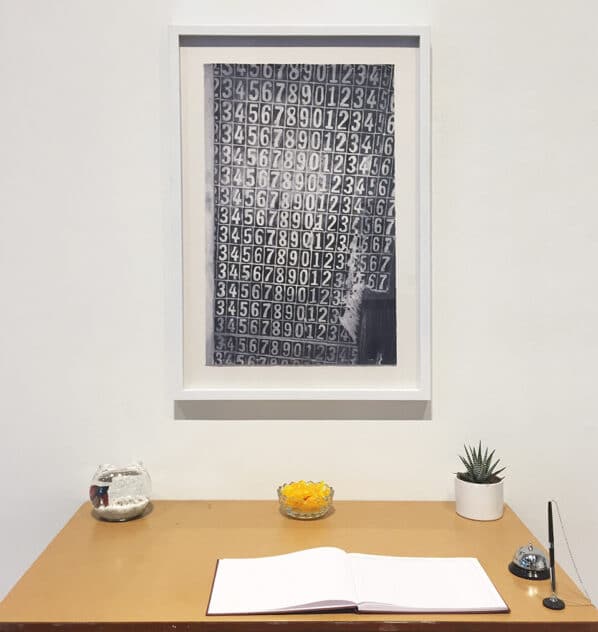
Waiting Room detail: framed charcoal and graphite drawing of numbers above a desk with a fishbowl holding a betta fish, candy dish, sign-in book, service bell, succulent, and pen, 2016 by Bradly Brown
Waiting Room installation view: framed charcoal and graphite drawing of numbers above a wooden desk with a fishbowl holding a betta fish, candy dish, sign-in book, service bell, succulent, and pen, 2016 by Bradly Brown
Ennui, a red betta fish, swimming in a round glass fishbowl with white gravel on a wooden desk, part of Waiting Room, 2016 by Bradly Brown
Ennui, the live betta fish in Waiting Room, 2016.

Transpacific, 2012

Transpacific (a line drawn from Texas to Japan), 2012
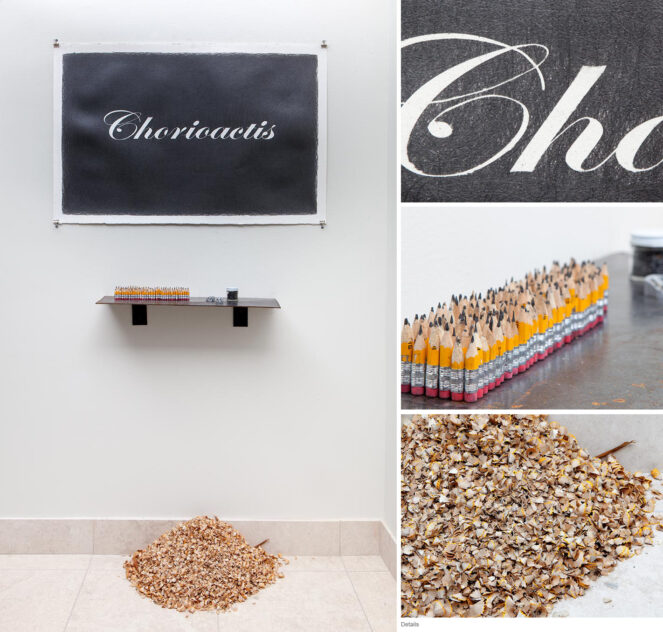
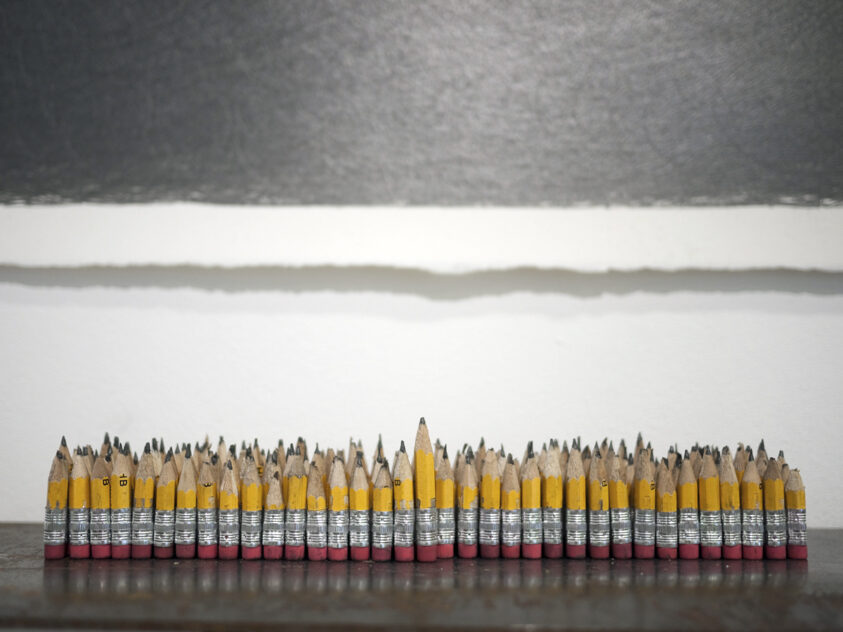
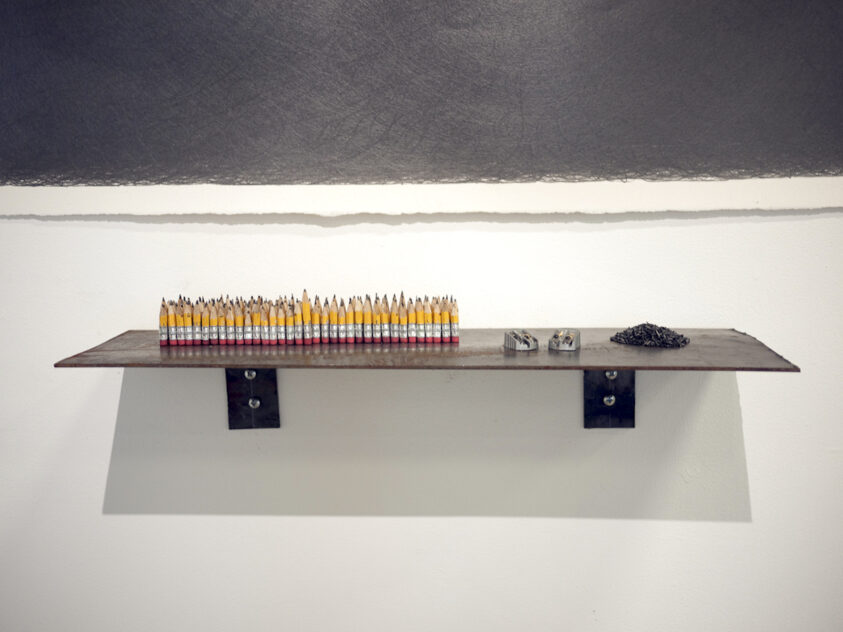
194 #2 pencils, paper, steel, pencil sharpeners
40″w x 72″h

Exhibited in Sons and Daughters of the Sun and Star I, Fort Worth Contemporary Arts, Fort Worth, TX, 2012
Catalog: Sons and Daughters of the Sun and Star (PDF). See also Damemoto, made for the Hiroshima half of the exchange.

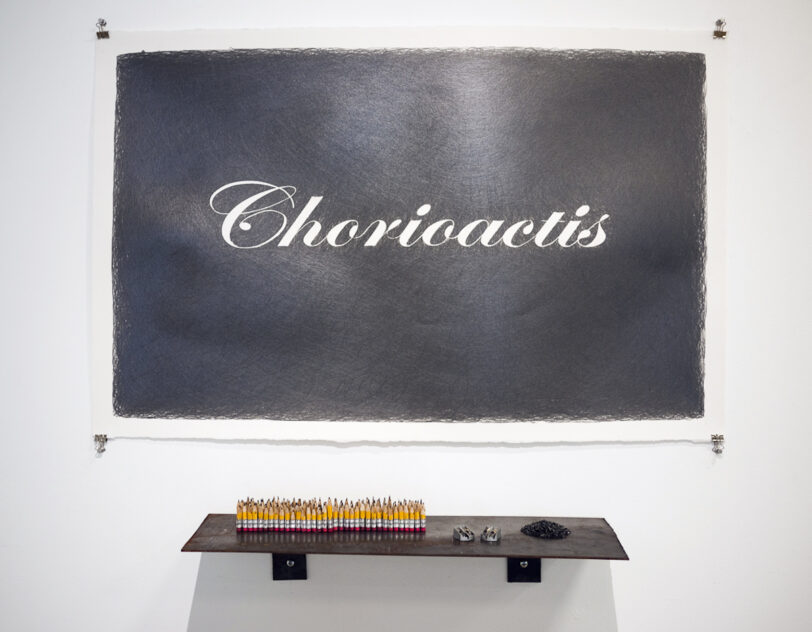
Made for an exchange between Texas Christian University and Hiroshima City University, Transpacific is one continuous line drawn with 194 pencils on a single sheet of paper. By the old claim that a pencil can draw a line 35 miles long, together they hold about 6,790 miles of graphite, the distance from Fort Worth to Hiroshima.

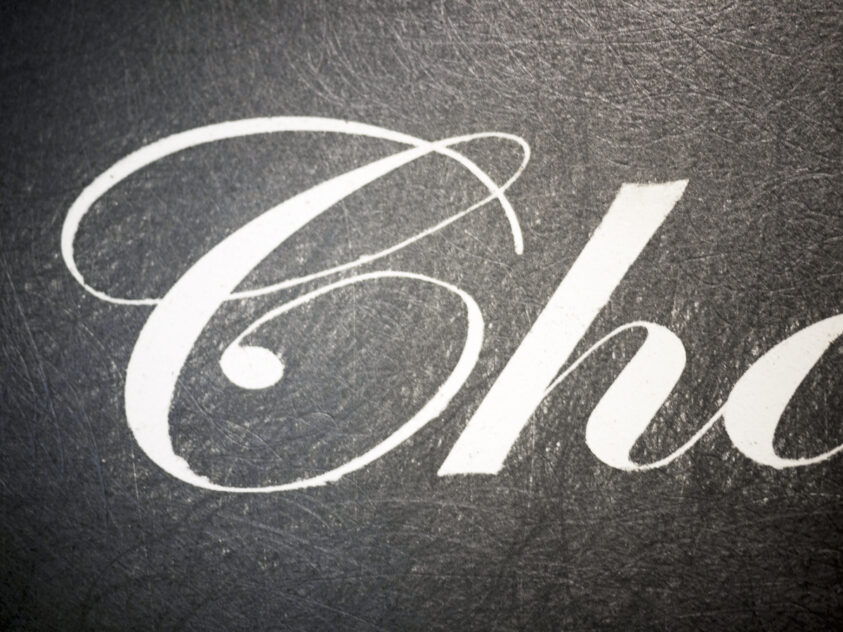
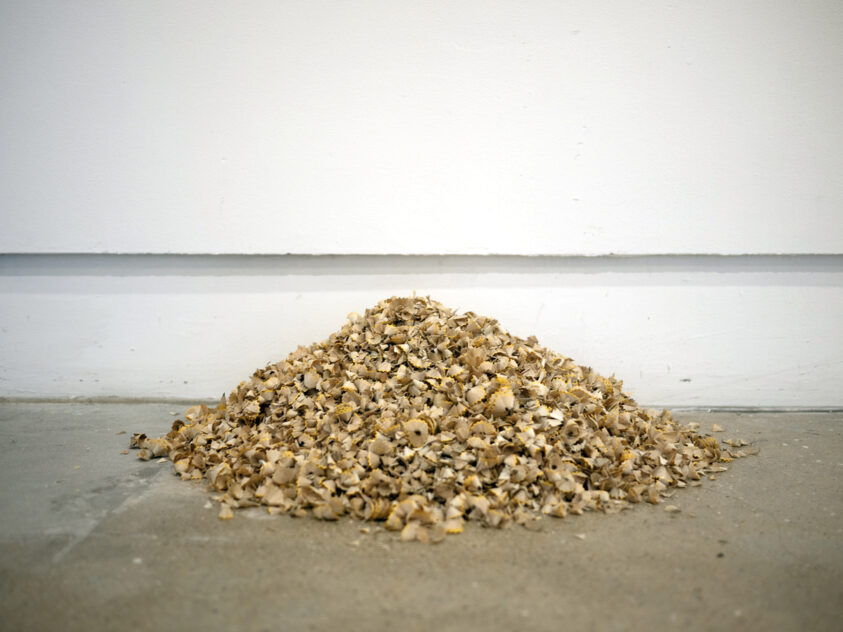
The word Chorioactis is masked out and left blank. It is the Latin name of a rare mushroom, the Devil’s Cigar or Texas Star in the United States and kirinomitake in Japan, that grows only in a few isolated places in Texas and Japan. The drawing’s repeated marks echo its spores drifting between the two, carried by wind and chance. The piece is shown with everything left from the 194 pencils: broken tips, shavings, and stubs sharpened down as far as they would go. In her essay for the exhibition catalog, critic Lucia Simek pointed to Transpacific as a record of the exchange itself, the artists’ actual journey between the two cities rendered in graphite.

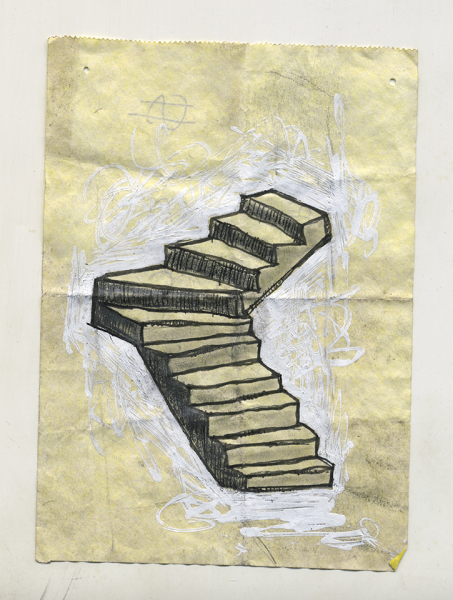
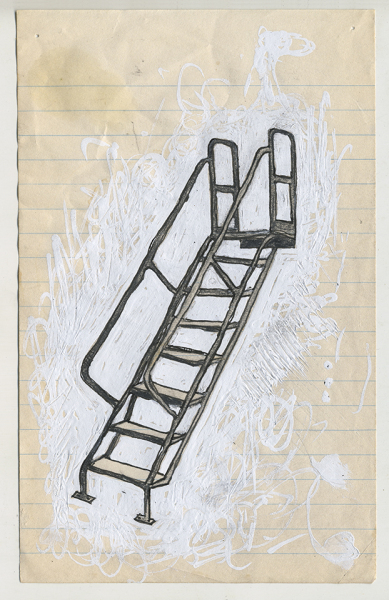
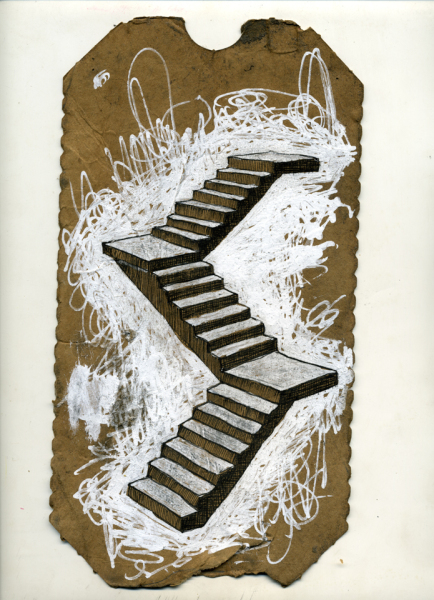
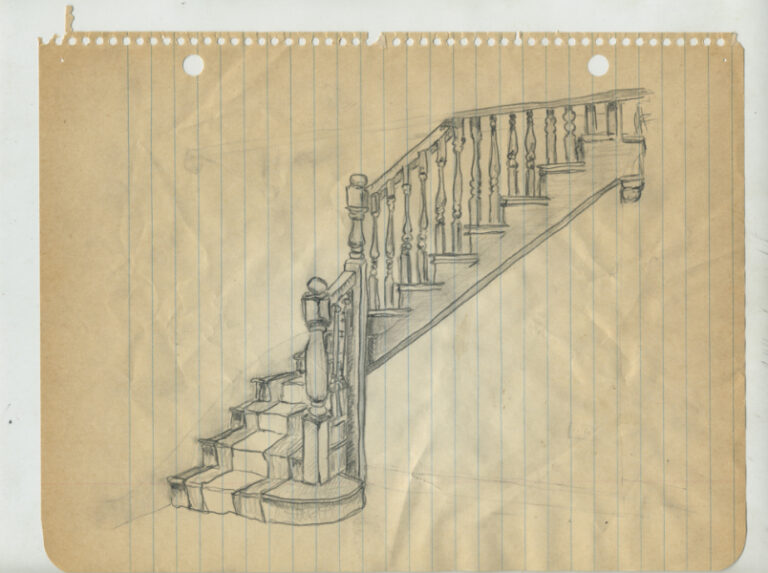
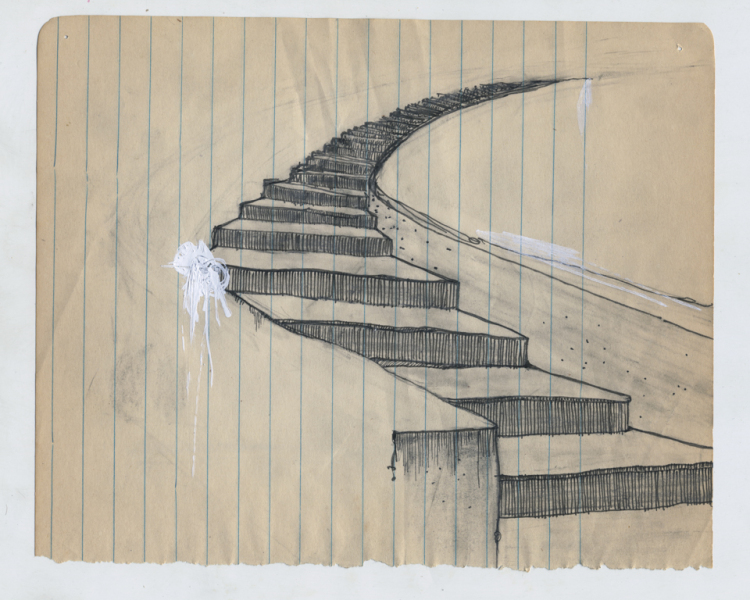
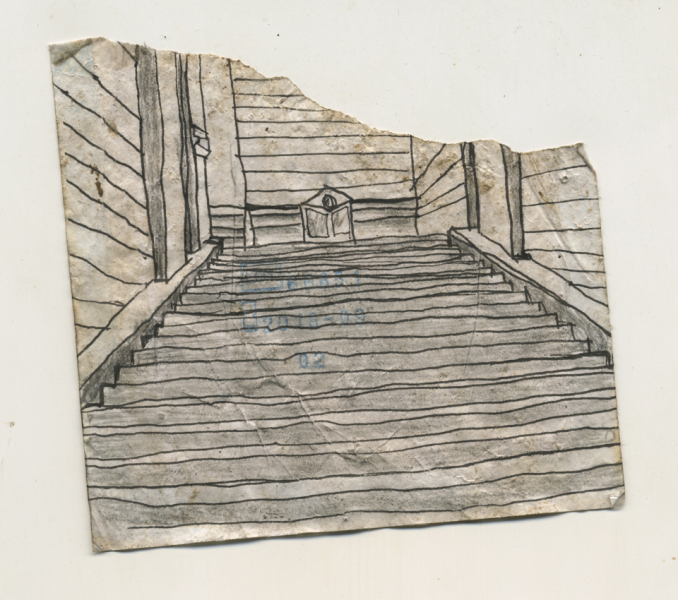
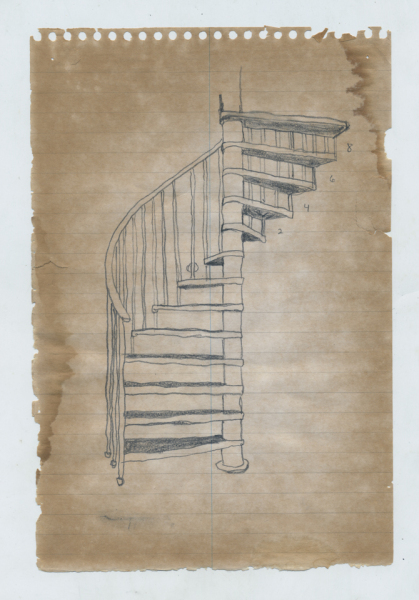
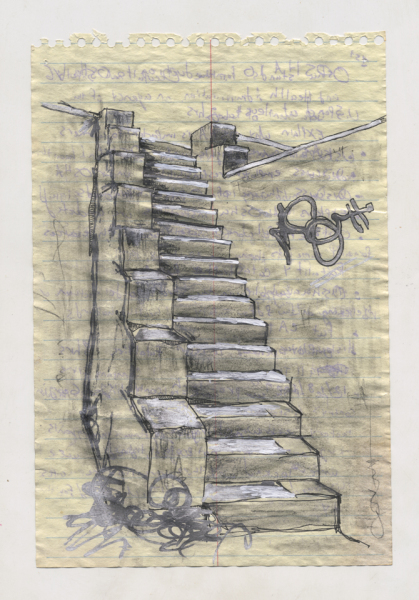
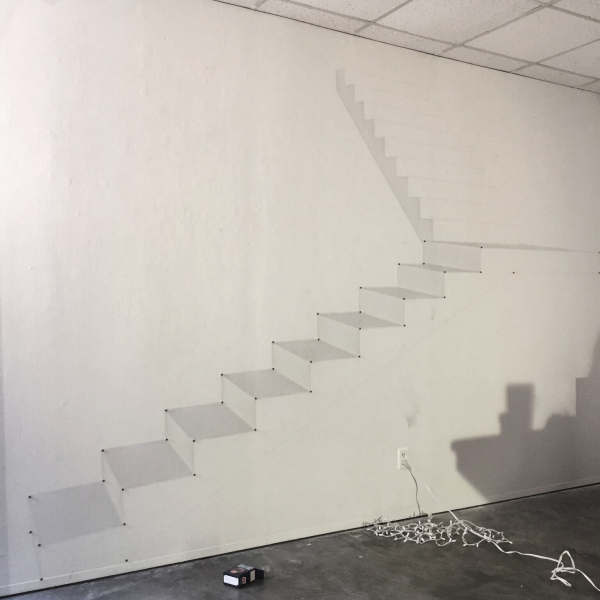
Drawing Stairs, 2016–present

Drawing Stairs (1-9), ongoing
Graphite / ink on paper

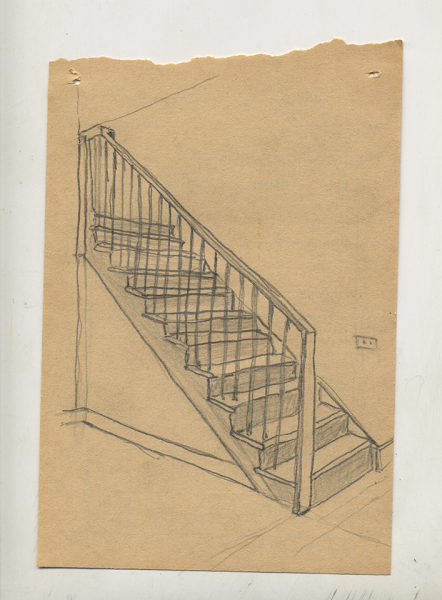
Drawing Stairs is an ongoing series built on a play on words. Brown seeks out staircases in public places and draws them on whatever paper he finds nearby: torn scraps, loose notebook pages, and abandoned notebooks picked up along the way. Each drawing is made on site, in graphite or ink, while Brown holds himself in an awkward physical position near the stairs for as long as the drawing takes.

Working this way in public turns the act of drawing into a kind of performance. People passing by slow down, stop, and stare as they try to work out what he is doing. The title names both halves of the work: Brown is literally drawing stairs, and at the same time drawing stares.

The found paper carries its own history into each piece, with ruled lines, spiral-binding holes, stains, and torn edges sitting alongside the drawn steps, railings, and landings.

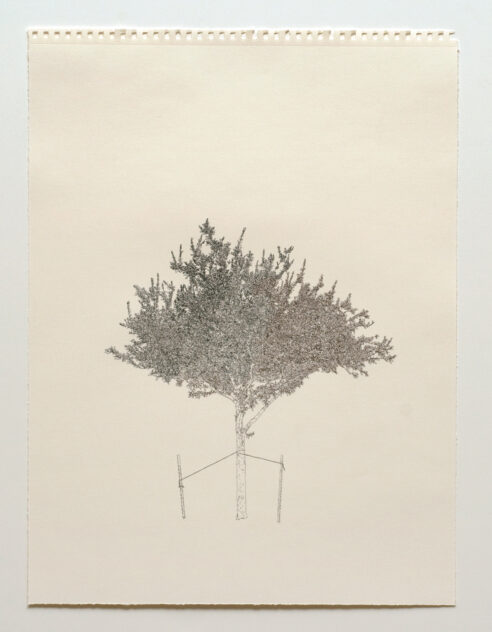
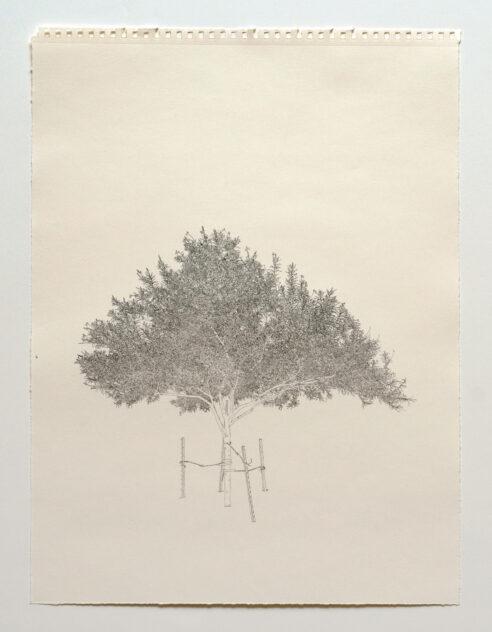
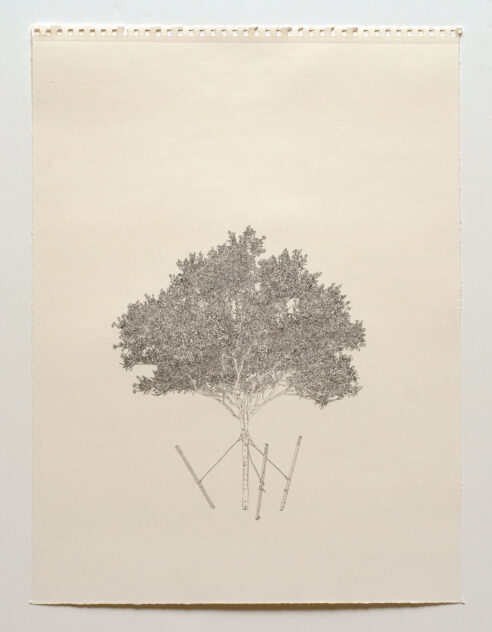
Three Trees, 2012

Three Trees, 2012
Unique digital prints
13″ x 17″

In Three Trees, the computer monitor becomes a camera lucida. Working from photographs, Brown redraws each tree by hand on screen, identifying every leaf while staying true to the original image.

The finished digital drawings are printed onto torn sketchbook paper. The ragged edges make each print a unique object, yet the image itself is infinitely reproducible. Like the cliché verre, the 19th-century process of printing hand-drawn glass plates on photographic paper, the work asks how an art object is valued: what is a physical print worth compared to the digital information that defines it?

The series is part of Brown’s ongoing fusion of drawing and painting with photography, a body of digitally crafted work that reevaluates tools and techniques from photographic history.