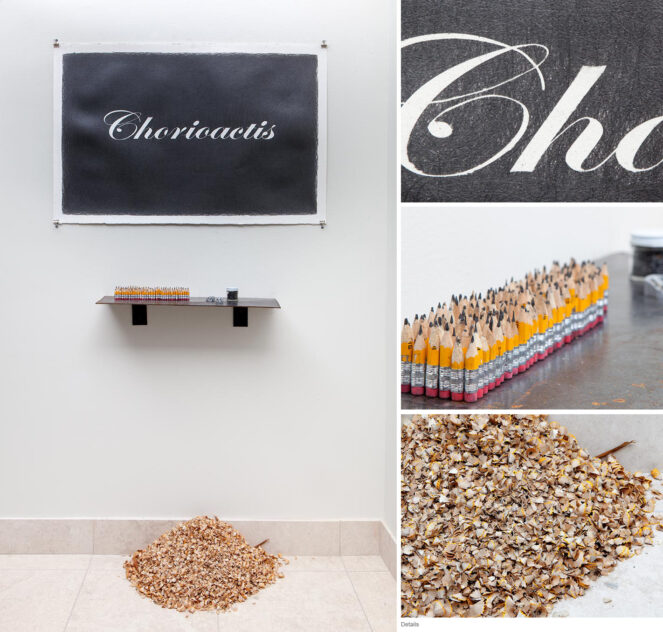
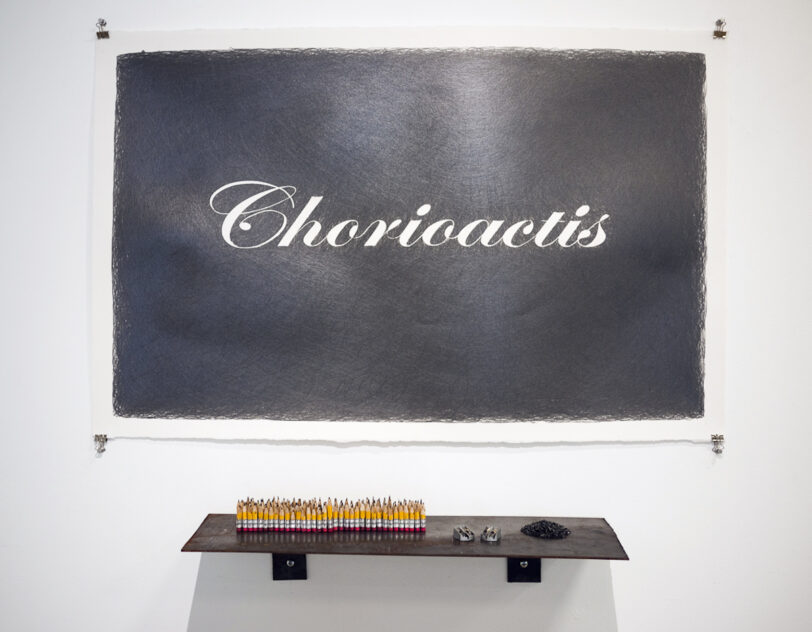
Transpacific (a line drawn from Texas to Japan), 2012
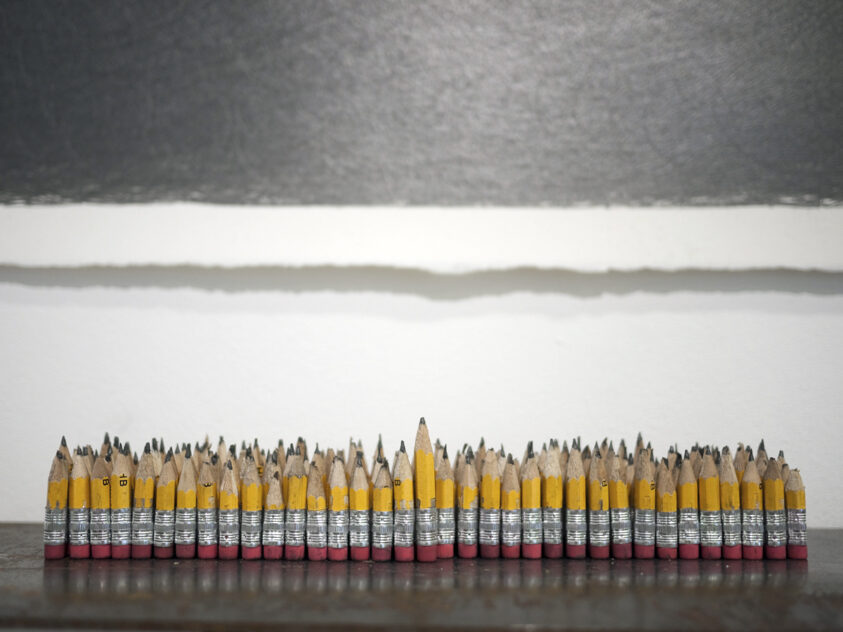
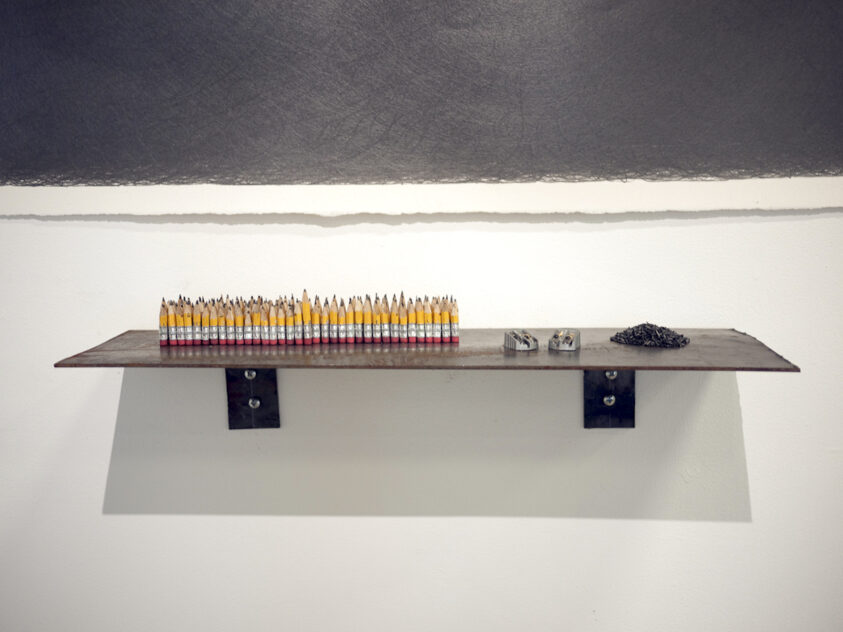
194 #2 pencils, paper, steel, pencil sharpeners
40″w x 72″h
Exhibited in Sons and Daughters of the Sun and Star I, Fort Worth Contemporary Arts, Fort Worth, TX, 2012
Catalog: Sons and Daughters of the Sun and Star (PDF). See also Damemoto, made for the Hiroshima half of the exchange.
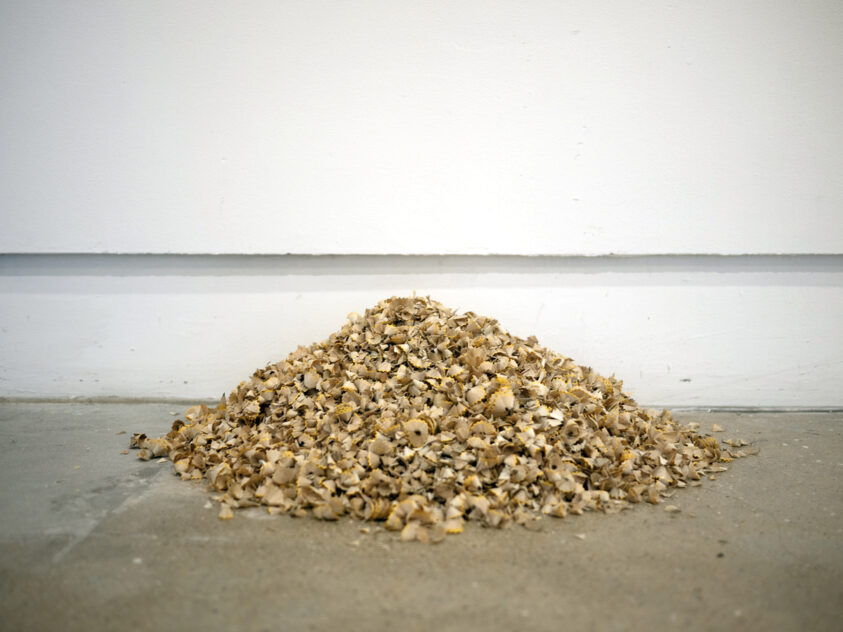
Made for an exchange between Texas Christian University and Hiroshima City University, Transpacific is one continuous line drawn with 194 pencils on a single sheet of paper. By the old claim that a pencil can draw a line 35 miles long, together they hold about 6,790 miles of graphite, the distance from Fort Worth to Hiroshima.
The word Chorioactis is masked out and left blank. It is the Latin name of a rare mushroom, the Devil’s Cigar or Texas Star in the United States and kirinomitake in Japan, that grows only in a few isolated places in Texas and Japan. The drawing’s repeated marks echo its spores drifting between the two, carried by wind and chance. The piece is shown with everything left from the 194 pencils: broken tips, shavings, and stubs sharpened down as far as they would go. In her essay for the exhibition catalog, critic Lucia Simek pointed to Transpacific as a record of the exchange itself, the artists’ actual journey between the two cities rendered in graphite.