Attention Retention, 2012

Attention Retention, 2012
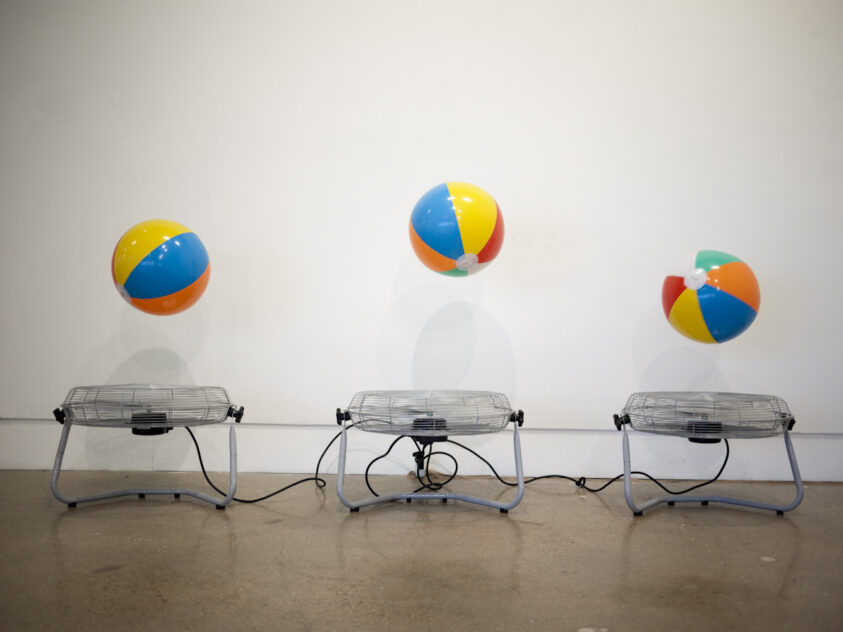
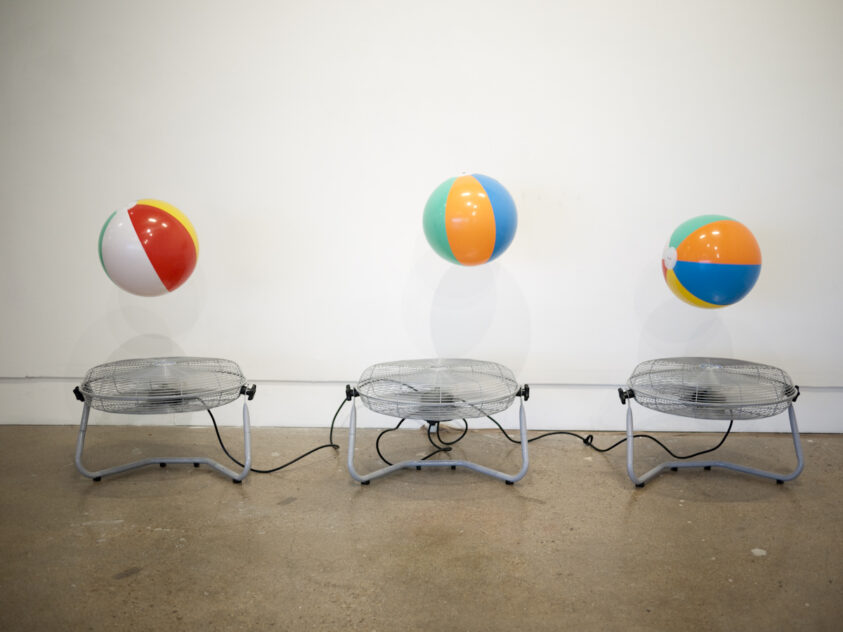
Three floor fans and three 16″ beach balls

Exhibited in For a Limited Time Only, Brown’s TCU MFA thesis exhibition, Fort Worth Contemporary Arts, Fort Worth, TX, 2013. Named one of the Top Five Artworks in Fort Worth Weekly’s Best of Culture 2013.

Walking through Walmart one day, Brown saw about six people gathered around a product display. Under a sign reading “Clearance—High Velocity Floor Fans—$34,” a chrome fan pointed straight up on full blast, with a multicolored beach ball hovering in the air above it. Bernoulli’s principle keeps the ball in place: fast-moving air has lower pressure than still air, so the stream wraps around the ball, pushes it back to center whenever it drifts, and holds it aloft. It’s a trick many people remember from junior high physics or a children’s science museum.

What caught Brown’s attention wasn’t the trick but the shoppers, who stood transfixed. The display held people longer than most viewers spend with an artwork in a museum or gallery. Would the same device hold an audience the same way if it were presented as an art object? Could it work as a Duchampian readymade once it was moved into a gallery?

Attention Retention takes that question into the gallery as a kind of social experiment. Three floor fans sit in a row, each levitating a 16″ beach ball. The balls bob in a constant rhythm, filling the room with color and repetitive motion that is hypnotic, holding the viewer’s gaze while demanding attention.

In a world of media saturation and nonstop information, attention has become a sought-after commodity. One 2008 study found that the average attention span had dropped to five minutes, down from twelve a decade earlier. Placed in a gallery, the piece becomes a constant distraction that changes how the whole space is experienced. A moving object in a still room is a kind of seduction: even viewers who aren’t looking at it keep it in their peripheral vision or steal quick glances. That pull is a survival instinct. The brain reads movement in a quiet space as one of three things: a predator, a source of food, or a potential mate.

The repetitive bobbing also gives the beach balls a kind of personality, and viewers begin to relate to them as if they were alive. Attention Retention was part of For a Limited Time Only, Brown’s 2013 MFA thesis exhibition at TCU, which looked at how attention, behavior modification and the drive to survive shape everyday decisions. See also Escape Plan and Purification Station, which were shown in the same exhibition.
Title Loan, 2017

Title Loan, 2017
Cyanotype on canvas
variable sizes

Title Loan was made during the North Set Residency, a March–May 2017 residency organized by Bea Ying Projects in Houston. Three artists, Bradly Brown, Jessica Ninci, and Eden Rae, were given a vacant commercial building at 3411 Irvington Boulevard to use as studio space for several months. The building, renamed North Set Studios, had once been a title loan office. Work made during the residency was shown at the North Set Residency Closing Exhibition on April 28, 2017.

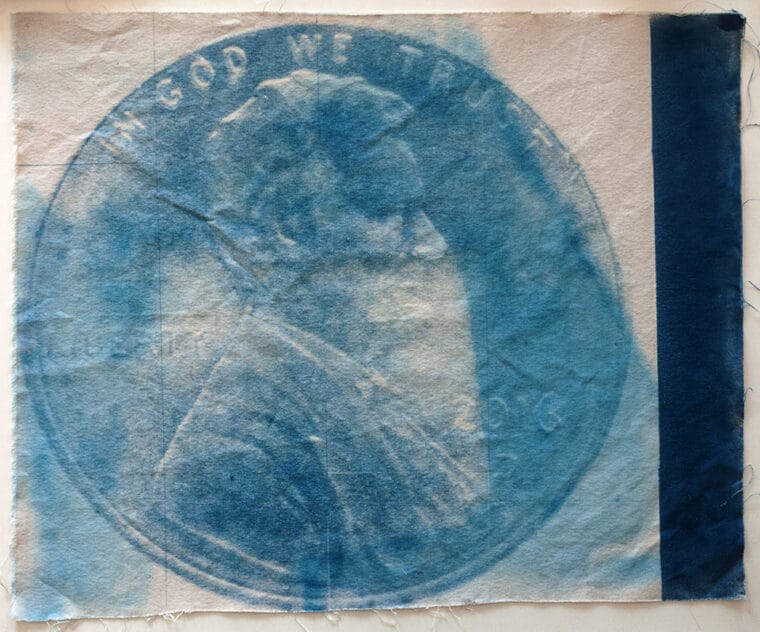
The series is a group of cyanotypes on canvas that reflect on the space they were made in. A title loan office sells the promise of a quick way forward, and the work considers the pursuit of the American Dream: how chasing it can feel like Sisyphus pushing a boulder up the hill, and how that pursuit is taken advantage of by people and businesses like short-term lenders.

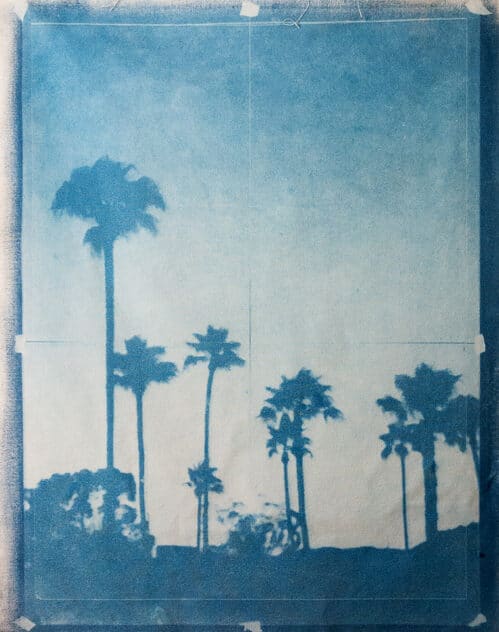
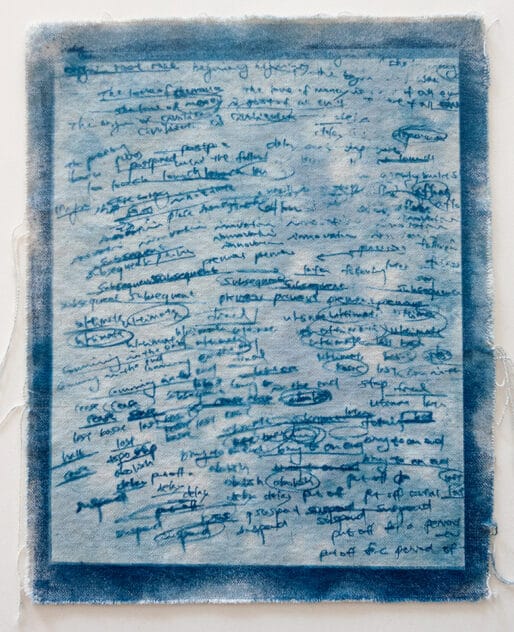
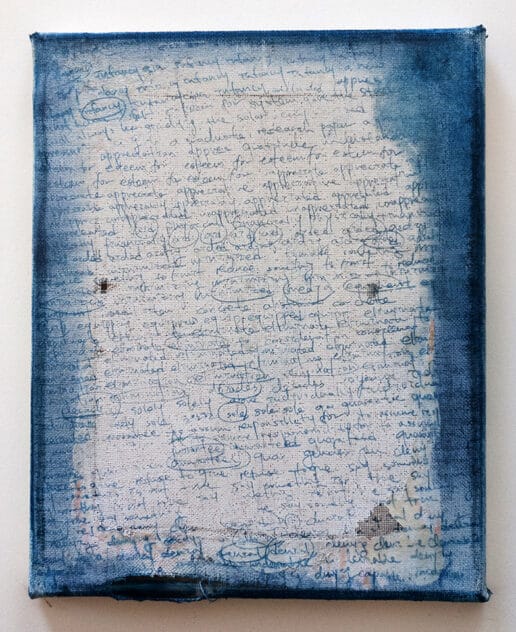
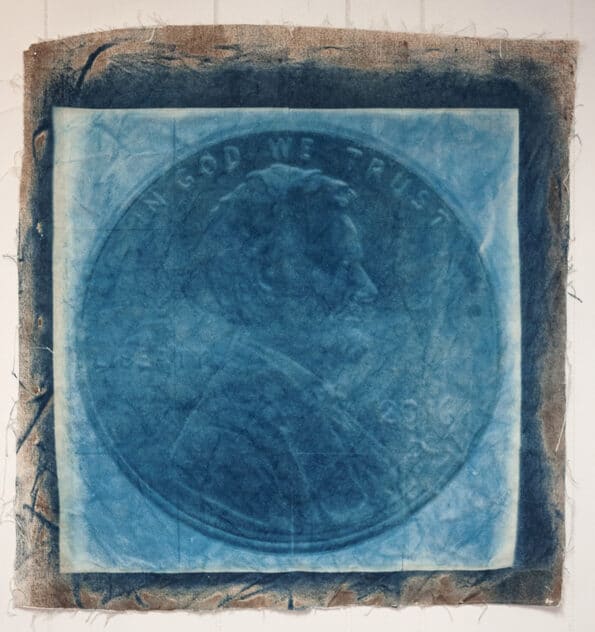
A large cyanotype of palm trees stands in for the idealized “paradise” at the end of that pursuit. Other prints are made from sheets of paper Brown pulled out of a trash can, left by someone, perhaps a student, who was learning English and had written the same words over and over as practice. The dense pages of repeated handwriting show the work and commitment it takes to chase a better life, even when that effort becomes obsessive and compulsive. Two giant cyanotype pennies on canvas offer Brown’s two cents on the pursuit of happiness and on those who profit from it.

A second series made at North Set, Spider Webs, extends the idea: the webs reference how title loan and other short-term lending companies can trap people in cycles of debt that are hard to escape. The found English-practice pages also appear in Brown’s earlier exhibitions Barnyard and Beastly Words.

The North Set Residency Zines, printed by The Center for Imaginative Cartography and Research, are available for purchase here.

Matchbooks, 2010

Matchbooks, 2010
Digital prints from film scans
Dimensions variable

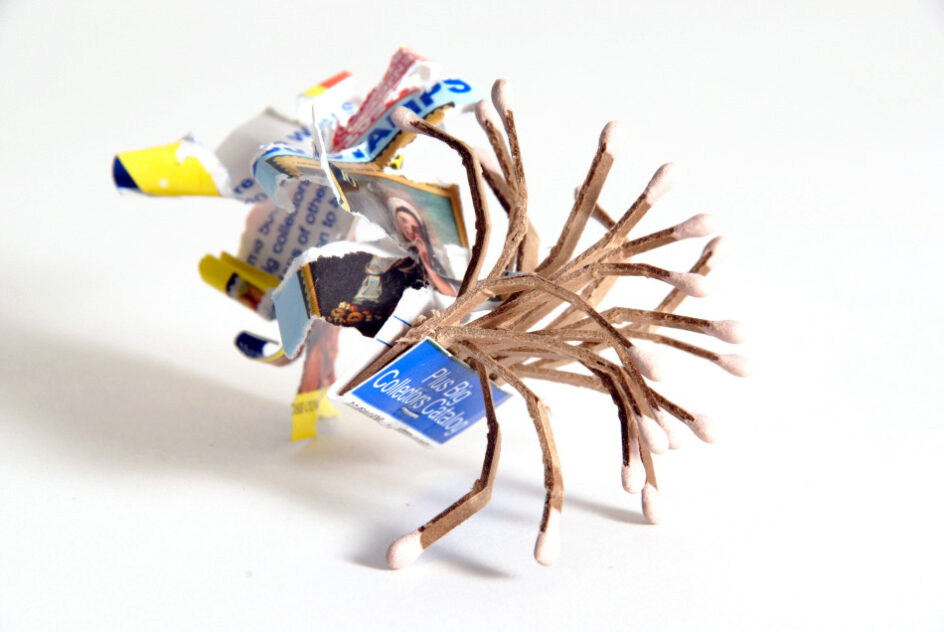
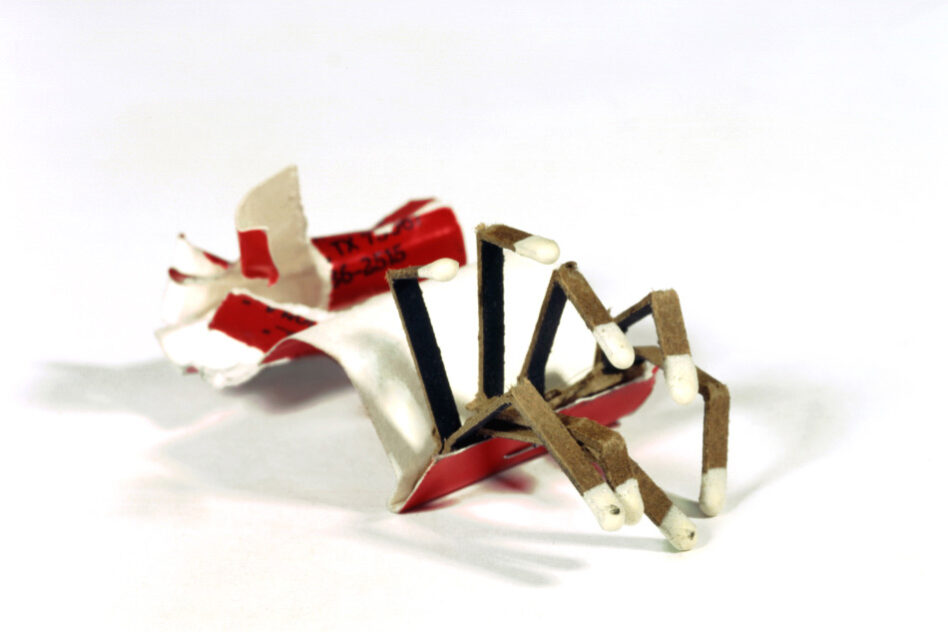
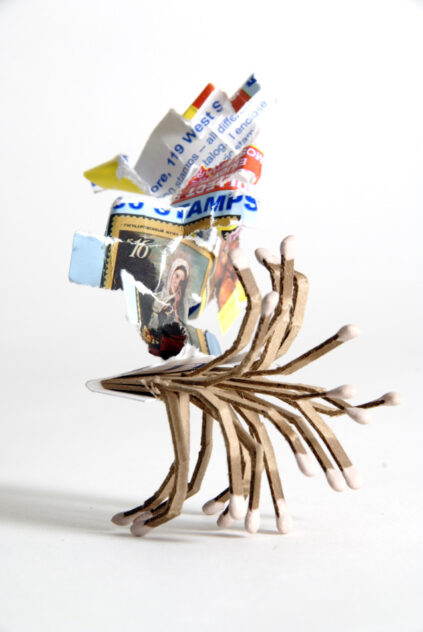
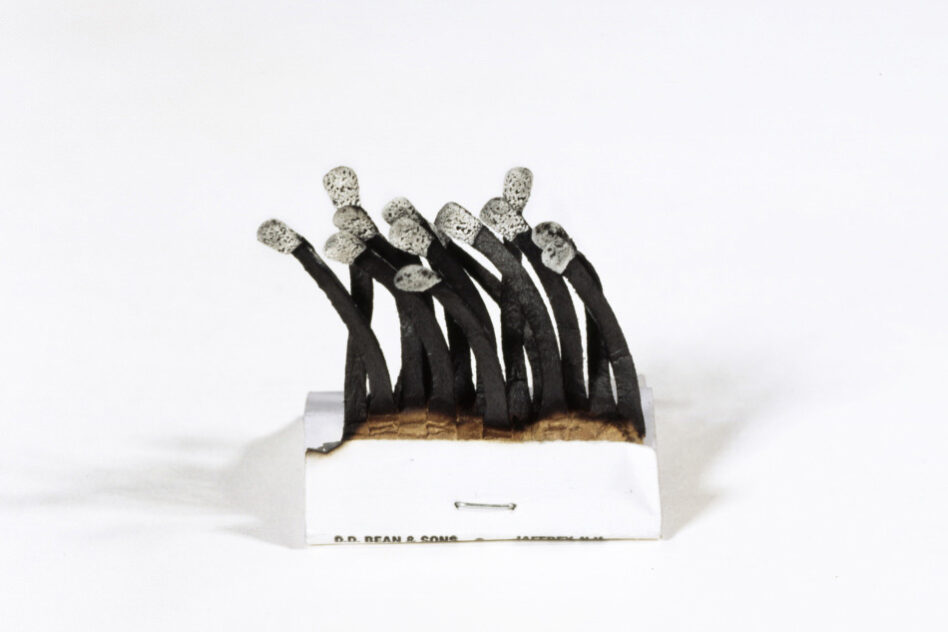
Matchbooks is a series of miniature sculptures made from ordinary paper matchbooks, photographed on film and printed at a large scale. Bent, folded, and torn, the matches and covers become small creatures with many legs, suggesting sea life, crustaceans, or insects. Enlarged in the photographs, objects that fit in the palm of a hand take on a gigantic, living presence.

The series is an exercise in taking a banal, everyday object and recontextualizing it as something whimsical or otherworldly. Like much of Brown’s work, it asks viewers to adjust their perspective and let go of their assumptions about what they are looking at.

The pieces also lend themselves to a formal reading of shape, form, color, and composition. Brown works with the graphics already printed on each matchbook, so every sculpture becomes a kind of three-dimensional collage, which the photograph then flattens back into two dimensions.

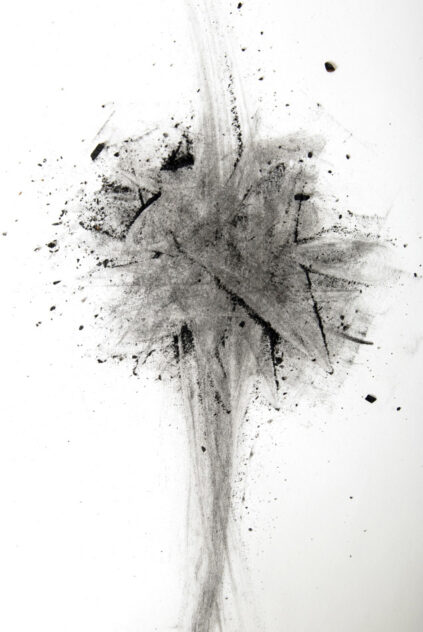
A related sequence follows the matches from material to application. Burned matches still standing in their matchbook read like a bouquet of flowers or long grass bending in the wind. The same burnt matches are then crushed into a pile of ash, and finally that ash is dragged across a page the way charcoal is used to make a drawing.

The sequence ties directly to Brown’s piece Several Ways to Start a Fire, which considers how the discovery and control of fire shaped human evolution and the development of art, writing, storytelling, and even language.

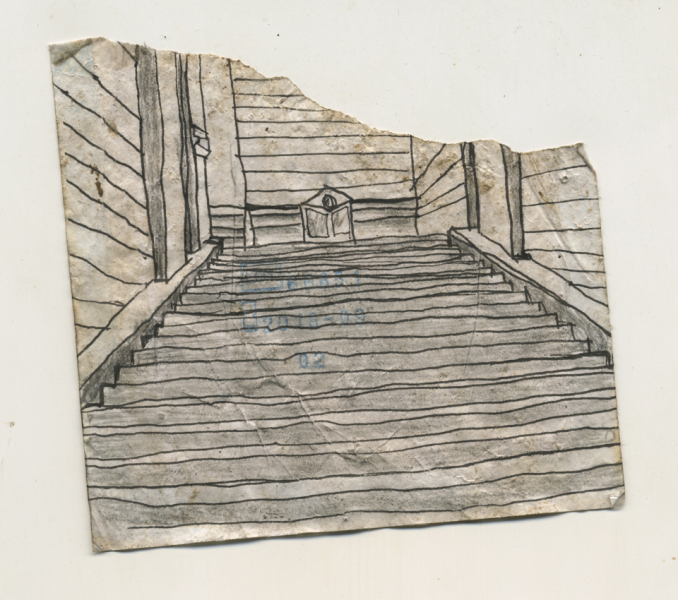
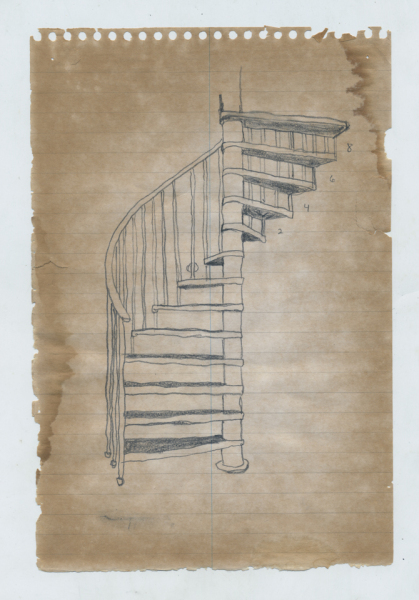
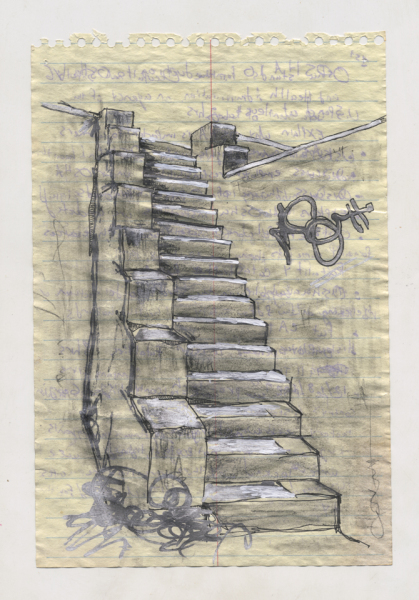
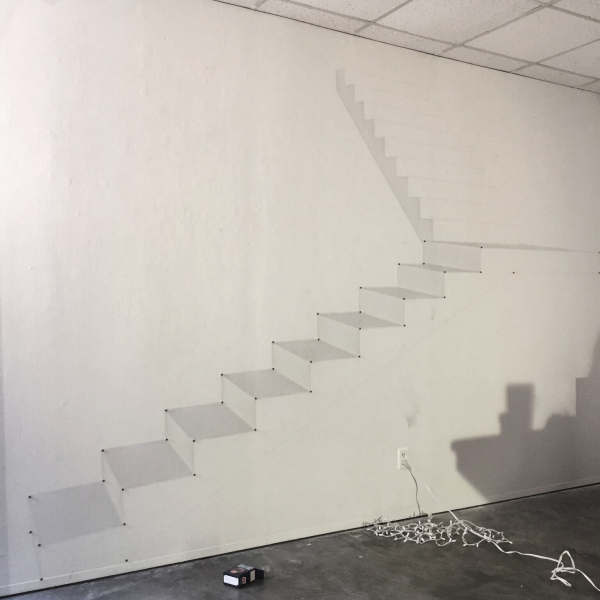
Drawing Stairs, 2016–present

Drawing Stairs (1-9), ongoing
Graphite / ink on paper

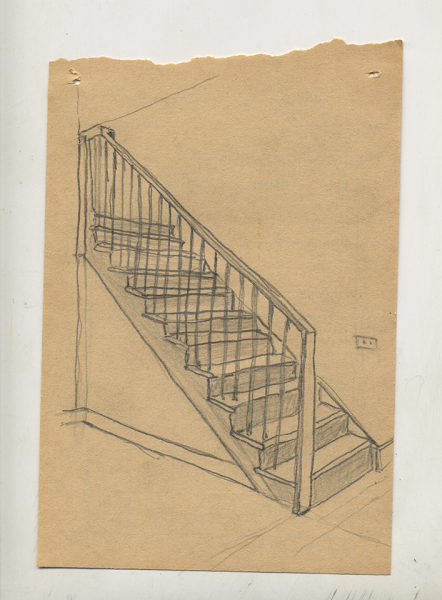
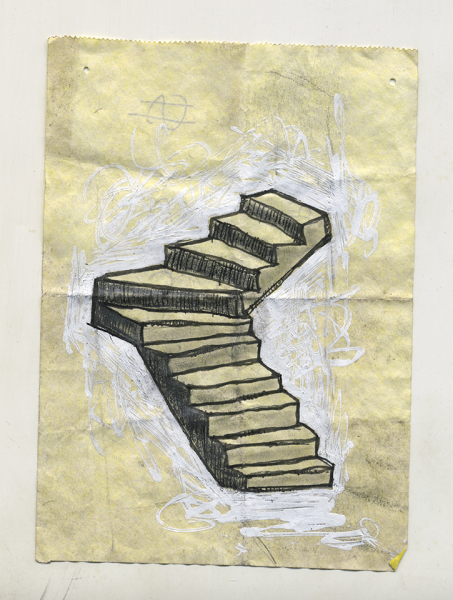
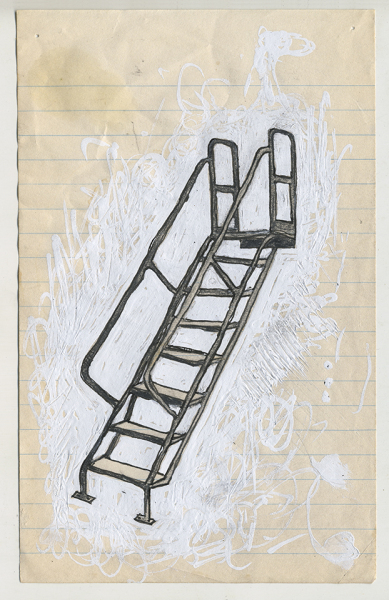
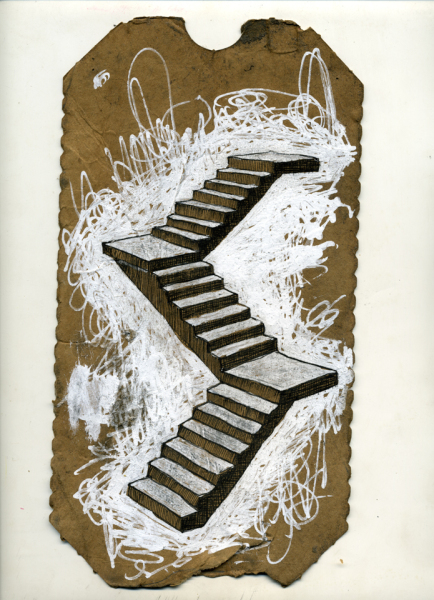
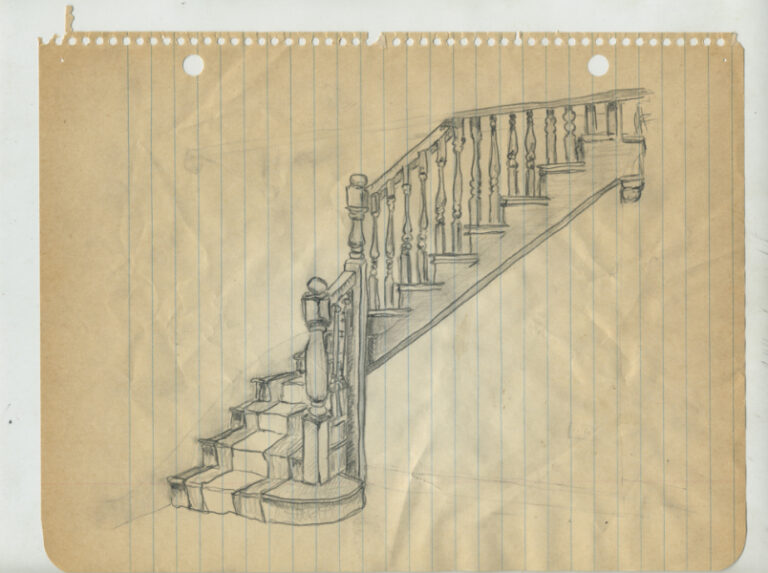
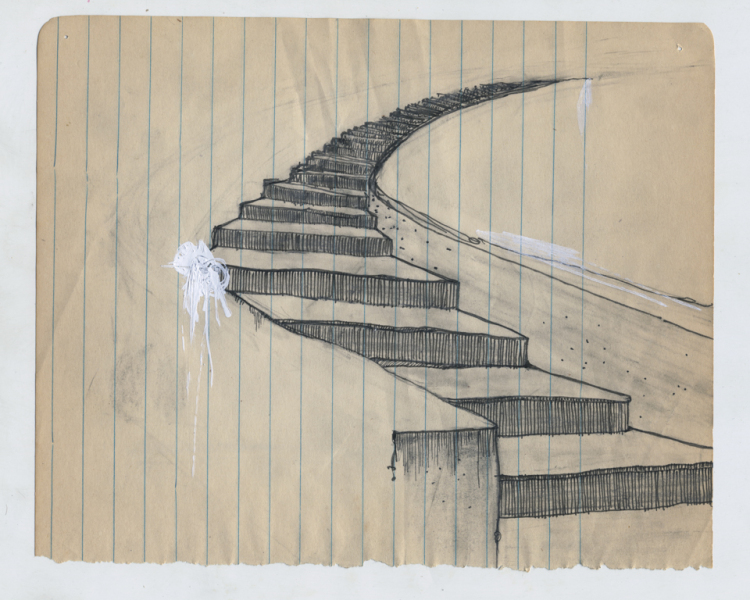
Drawing Stairs is an ongoing series built on a play on words. Brown seeks out staircases in public places and draws them on whatever paper he finds nearby: torn scraps, loose notebook pages, and abandoned notebooks picked up along the way. Each drawing is made on site, in graphite or ink, while Brown holds himself in an awkward physical position near the stairs for as long as the drawing takes.

Working this way in public turns the act of drawing into a kind of performance. People passing by slow down, stop, and stare as they try to work out what he is doing. The title names both halves of the work: Brown is literally drawing stairs, and at the same time drawing stares.

The found paper carries its own history into each piece, with ruled lines, spiral-binding holes, stains, and torn edges sitting alongside the drawn steps, railings, and landings.