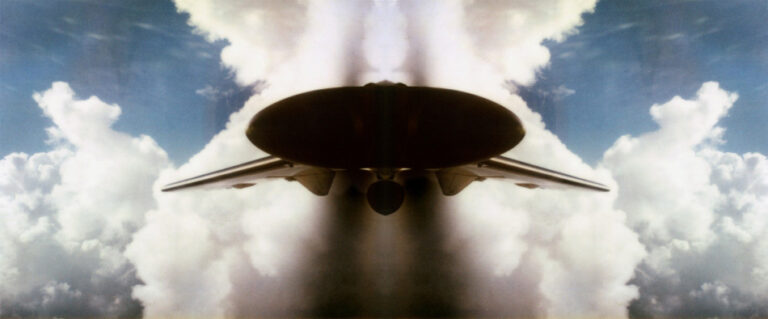
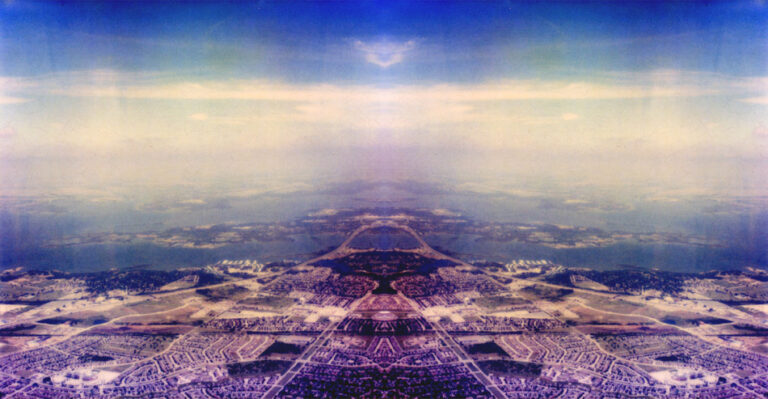
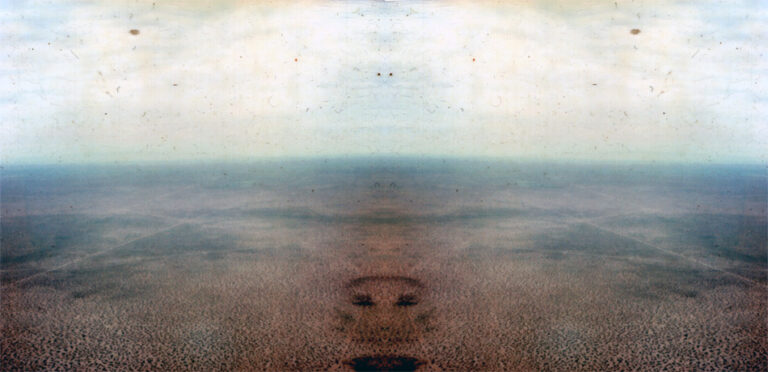
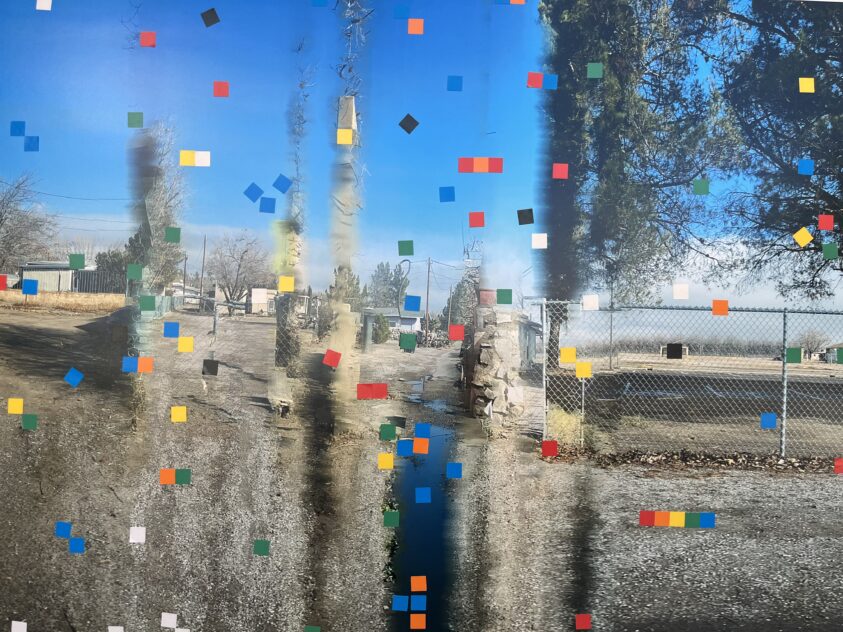
Layer Cake, 2024

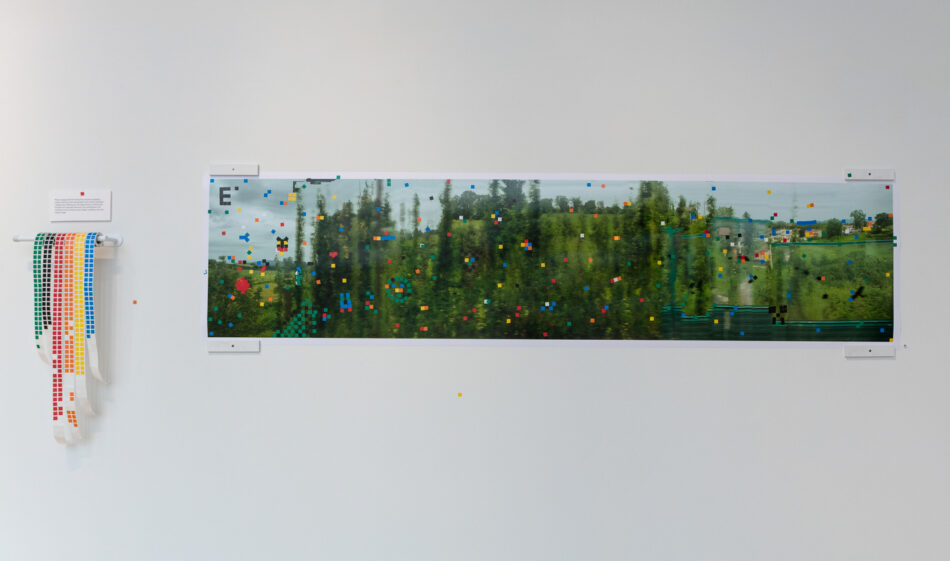
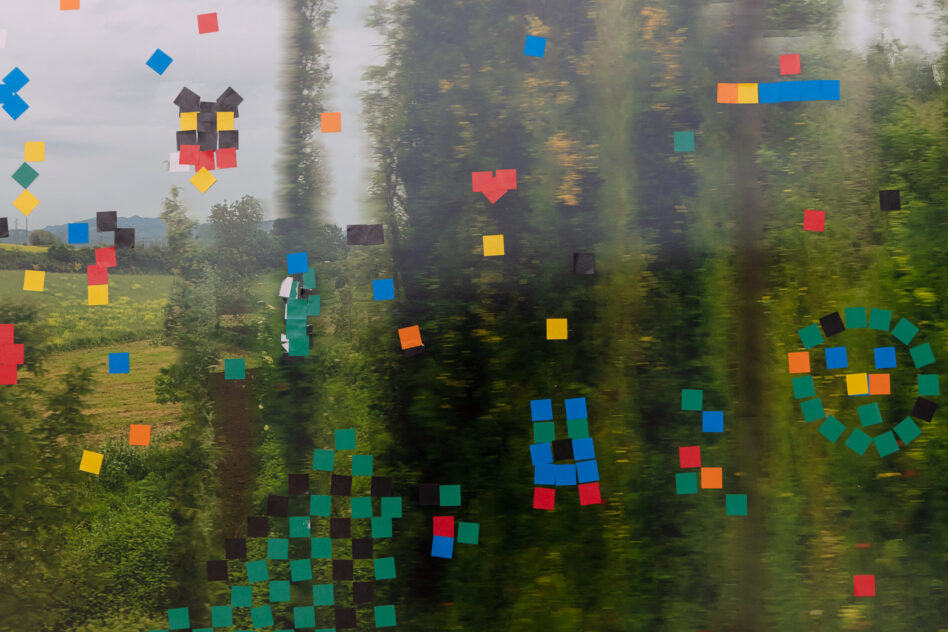
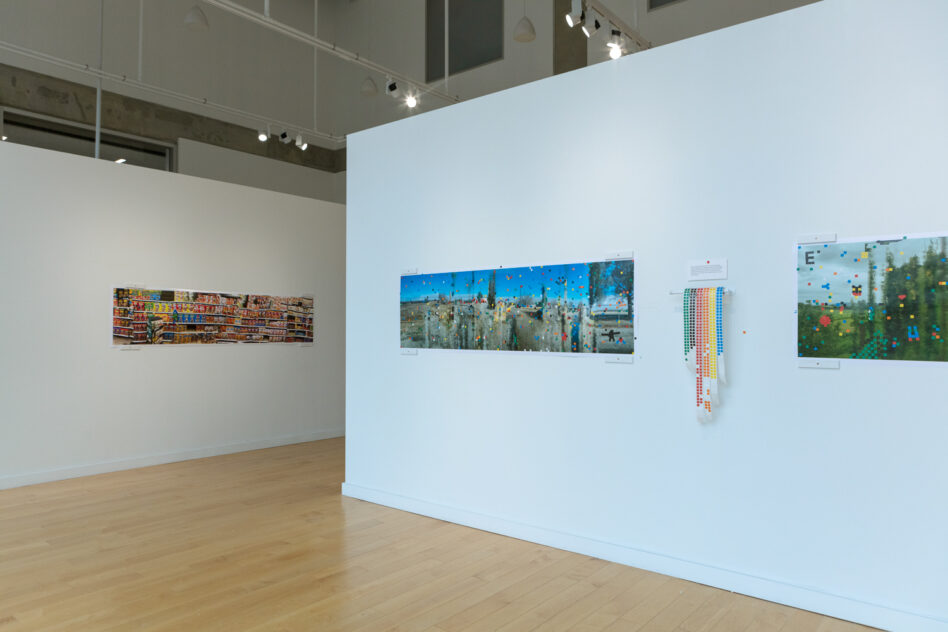
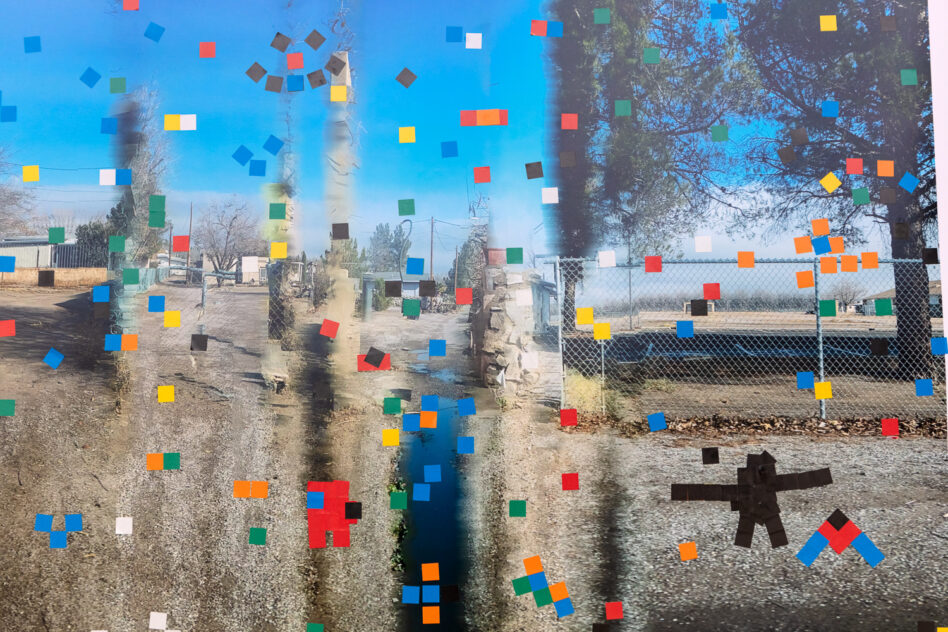
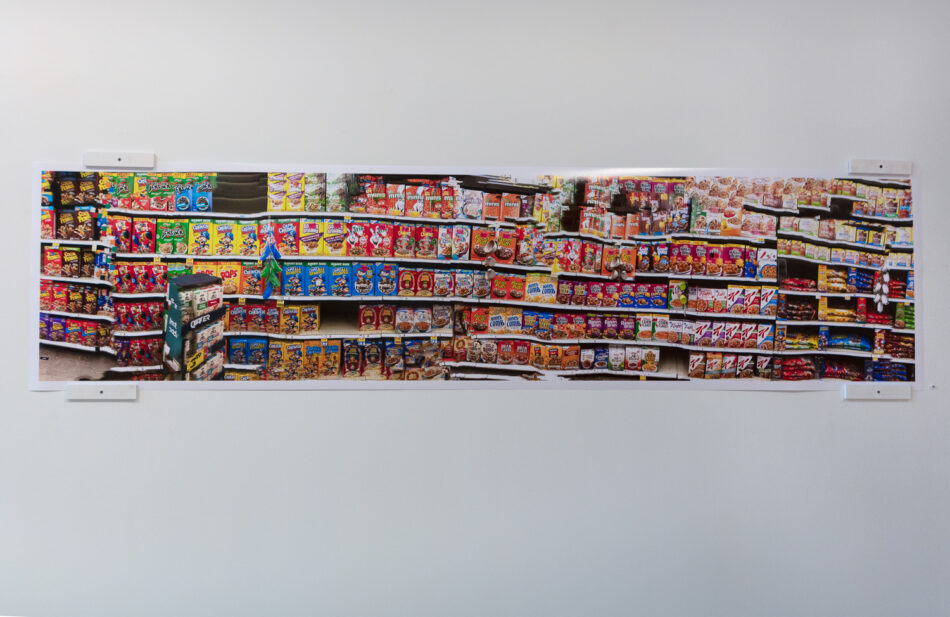
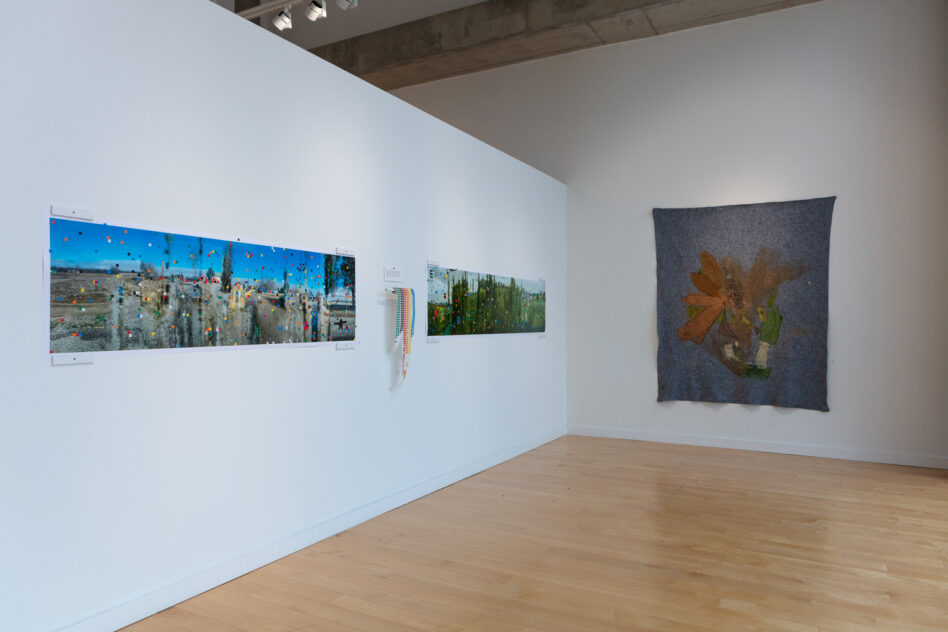
Layer Cake (San Miguel, Valmontone, & Cereal Aisle), 2024
Inkjet prints
24″ × 95″ each

Exhibited in Layer Cake, a group exhibition with Jonathan Paul Jackson and Xochi Solis at the University Gallery, Sam Houston State University, Huntsville, Texas.

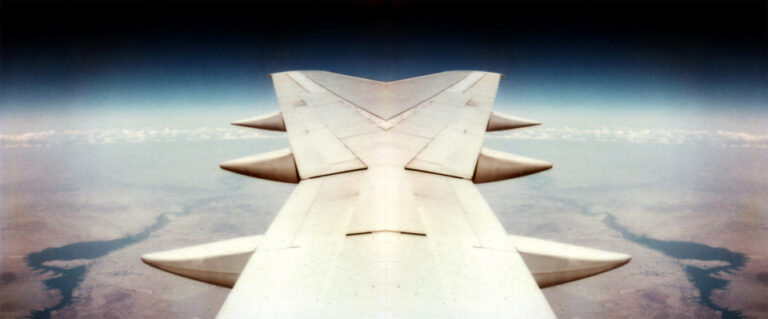
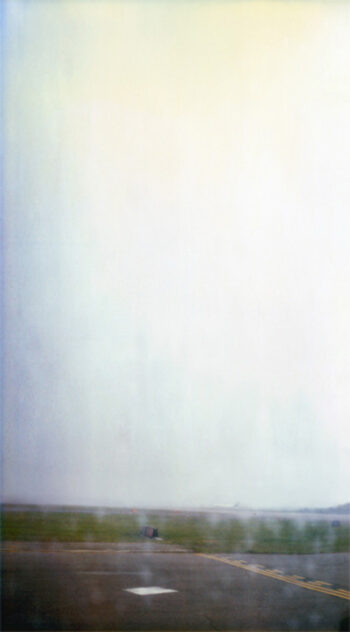
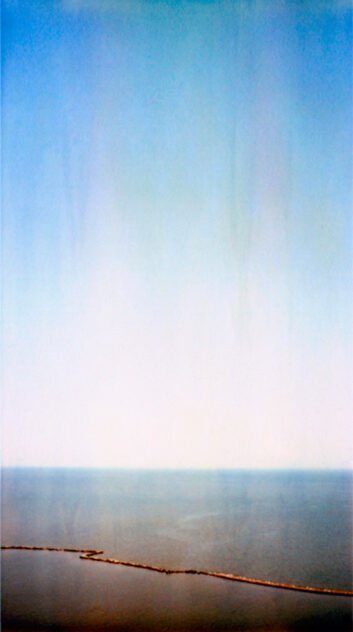
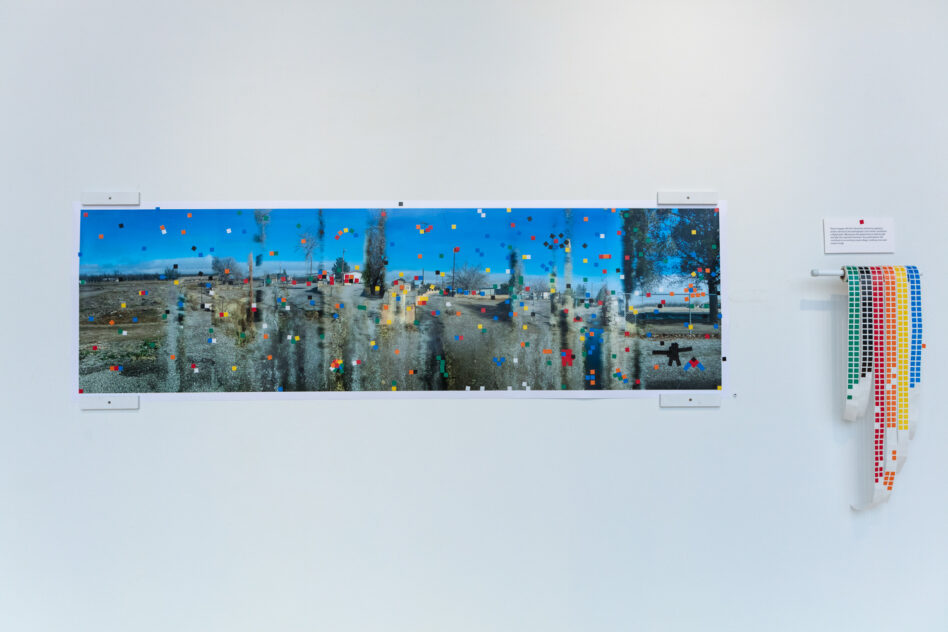
Each panorama in Layer Cake was shot on an iPhone from a moving vehicle: a train, a car, or a shopping cart. Panorama mode expects a slow, steady sweep, so the motion breaks each scene into stretched, repeated, and misaligned slices full of digital glitches and distortion.

In the gallery, the prints hang alongside spools of tiny square stickers in red, green, blue, black, and white. Each sticker is a pixel. Visitors are invited to patch and repair the glitches, but every repair adds to the abstraction, turning the camera’s errors into a shared composition.

Each person becomes a pixel, and the image reaches its best resolution only when everyone takes part.
Title Loan, 2017

Title Loan, 2017
Cyanotype on canvas
variable sizes

Title Loan was made during the North Set Residency, a March–May 2017 residency organized by Bea Ying Projects in Houston. Three artists, Bradly Brown, Jessica Ninci, and Eden Rae, were given a vacant commercial building at 3411 Irvington Boulevard to use as studio space for several months. The building, renamed North Set Studios, had once been a title loan office. Work made during the residency was shown at the North Set Residency Closing Exhibition on April 28, 2017.

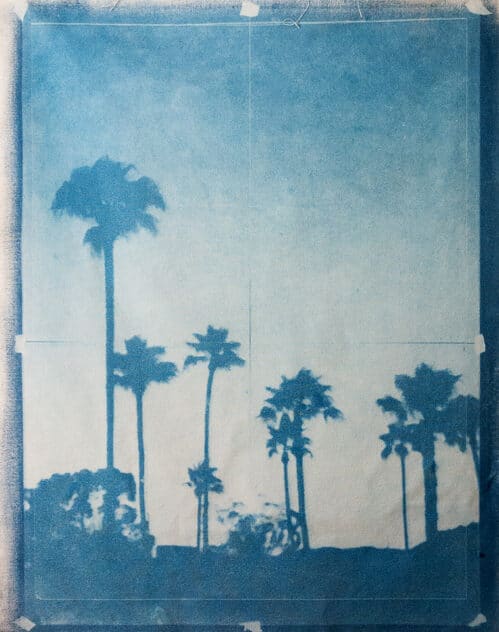
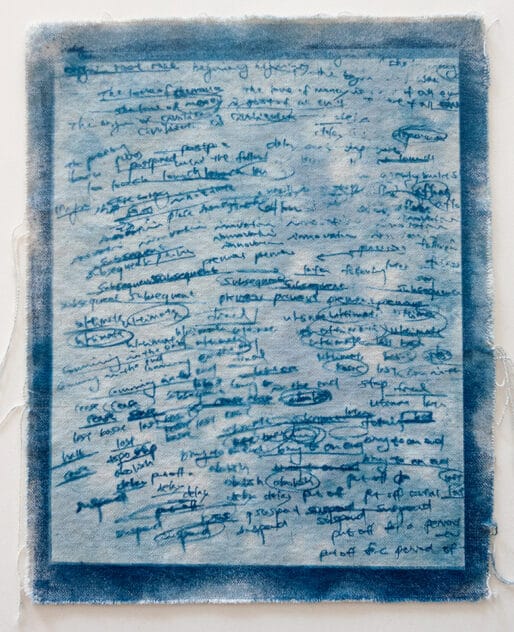
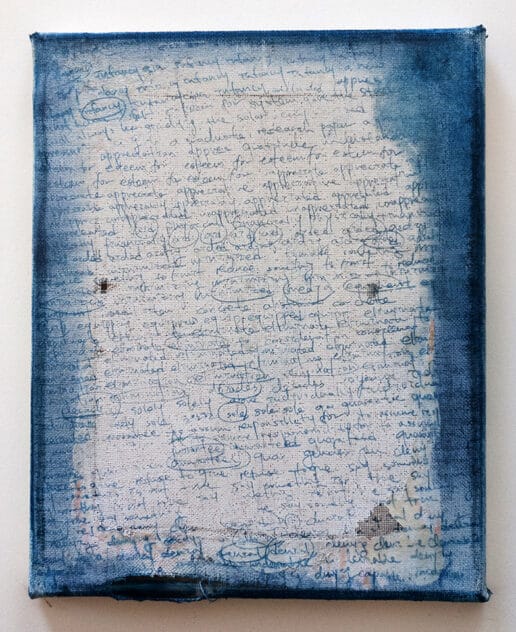
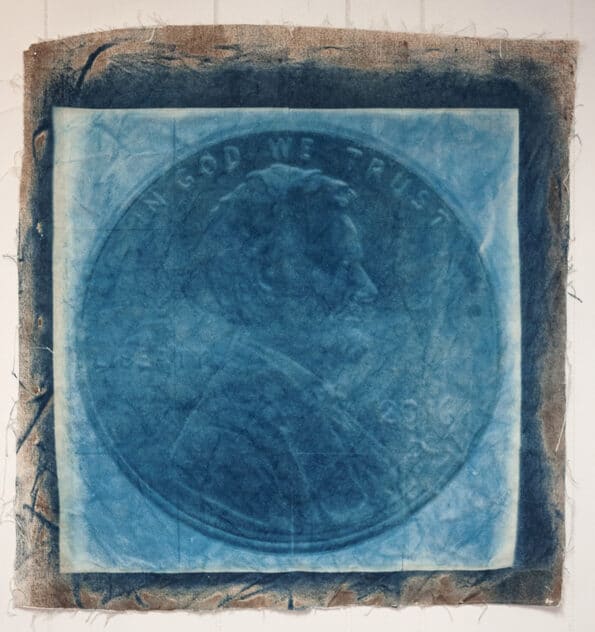
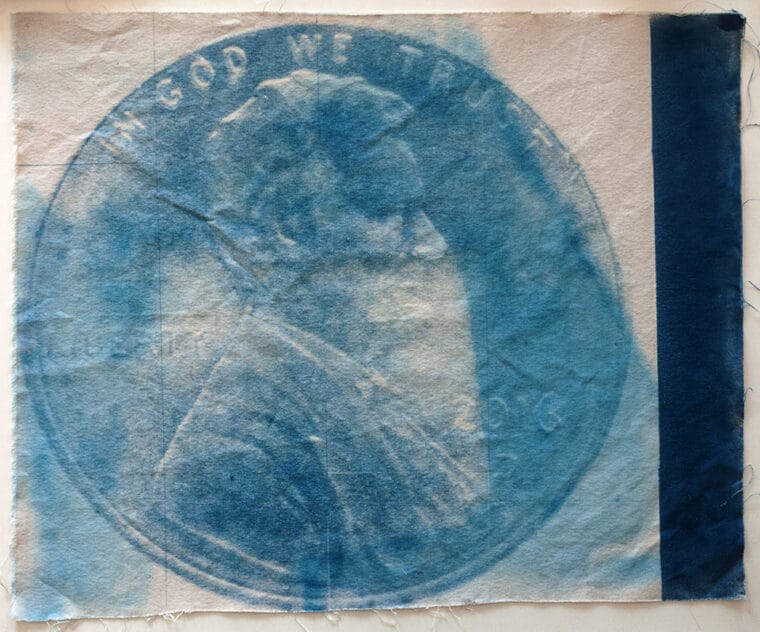
The series is a group of cyanotypes on canvas that reflect on the space they were made in. A title loan office sells the promise of a quick way forward, and the work considers the pursuit of the American Dream: how chasing it can feel like Sisyphus pushing a boulder up the hill, and how that pursuit is taken advantage of by people and businesses like short-term lenders.

A large cyanotype of palm trees stands in for the idealized “paradise” at the end of that pursuit. Other prints are made from sheets of paper Brown pulled out of a trash can, left by someone, perhaps a student, who was learning English and had written the same words over and over as practice. The dense pages of repeated handwriting show the work and commitment it takes to chase a better life, even when that effort becomes obsessive and compulsive. Two giant cyanotype pennies on canvas offer Brown’s two cents on the pursuit of happiness and on those who profit from it.

A second series made at North Set, Spider Webs, extends the idea: the webs reference how title loan and other short-term lending companies can trap people in cycles of debt that are hard to escape. The found English-practice pages also appear in Brown’s earlier exhibitions Barnyard and Beastly Words.

The North Set Residency Zines, printed by The Center for Imaginative Cartography and Research, are available for purchase here.

Matchbooks, 2010

Matchbooks, 2010
Digital prints from film scans
Dimensions variable

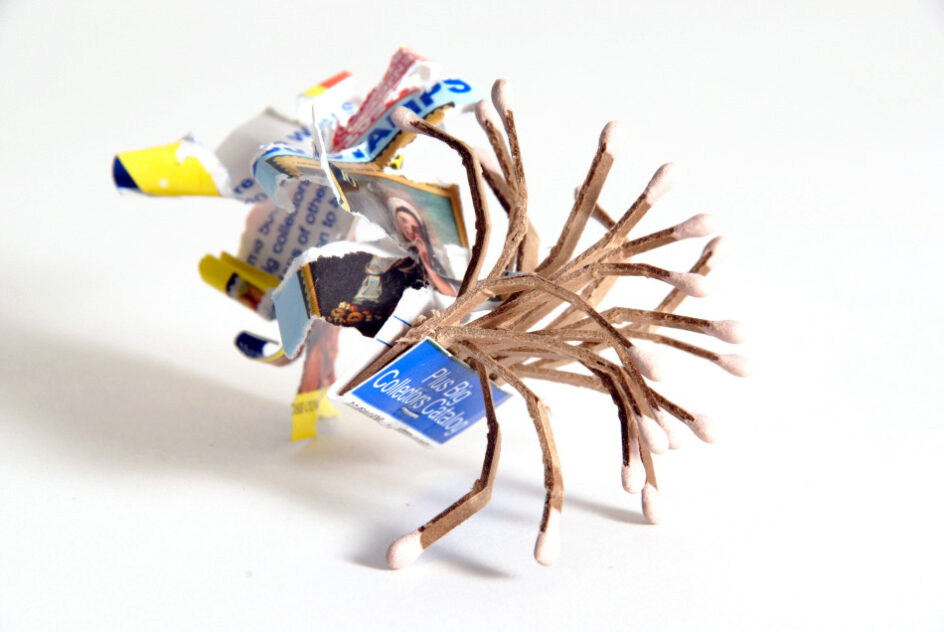
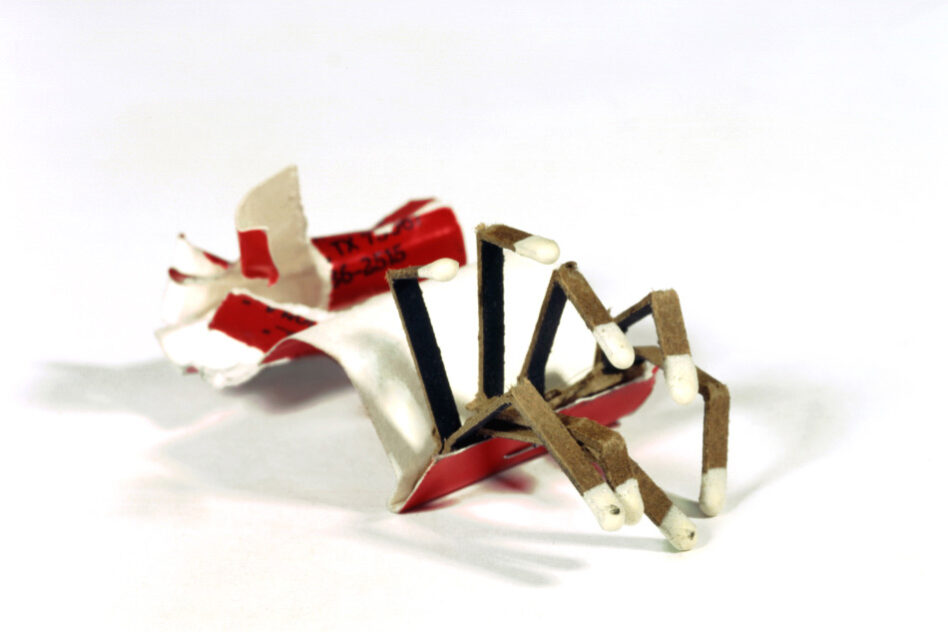
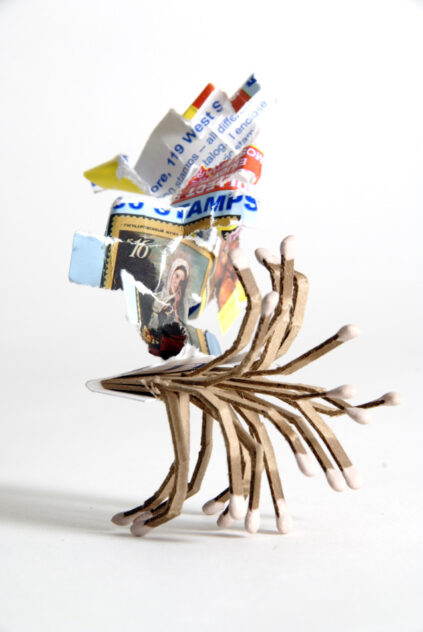
Matchbooks is a series of miniature sculptures made from ordinary paper matchbooks, photographed on film and printed at a large scale. Bent, folded, and torn, the matches and covers become small creatures with many legs, suggesting sea life, crustaceans, or insects. Enlarged in the photographs, objects that fit in the palm of a hand take on a gigantic, living presence.

The series is an exercise in taking a banal, everyday object and recontextualizing it as something whimsical or otherworldly. Like much of Brown’s work, it asks viewers to adjust their perspective and let go of their assumptions about what they are looking at.

The pieces also lend themselves to a formal reading of shape, form, color, and composition. Brown works with the graphics already printed on each matchbook, so every sculpture becomes a kind of three-dimensional collage, which the photograph then flattens back into two dimensions.

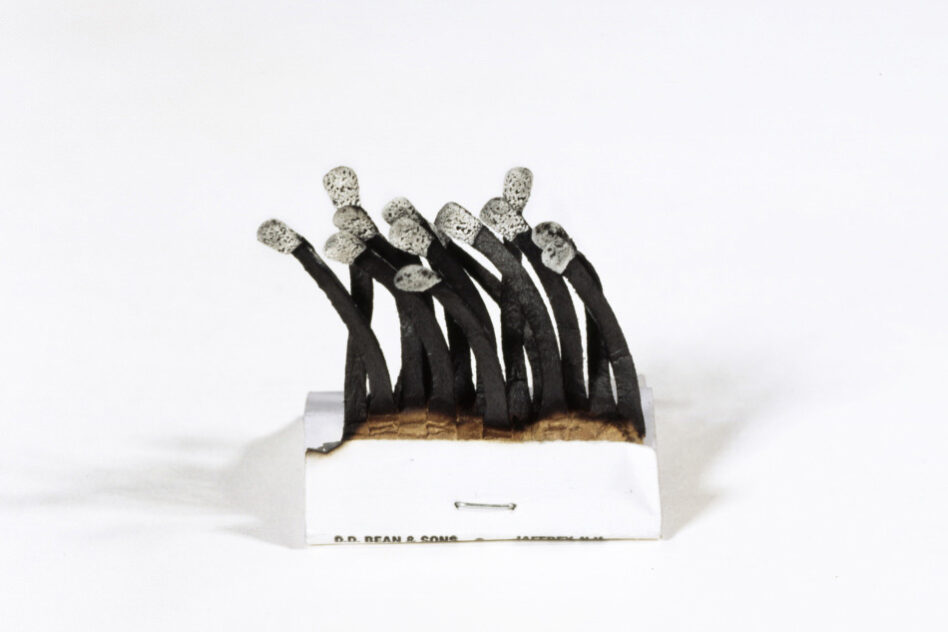
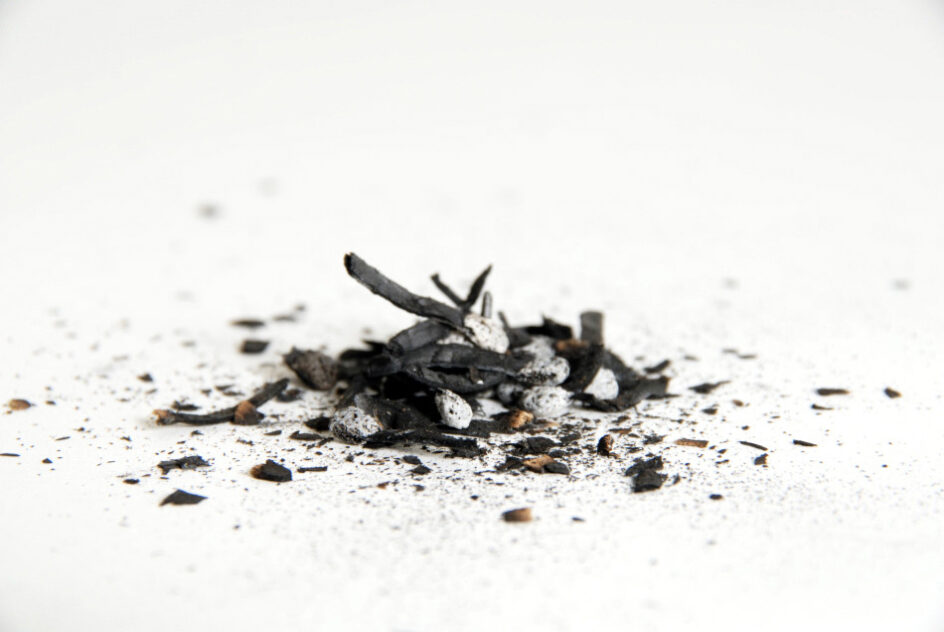
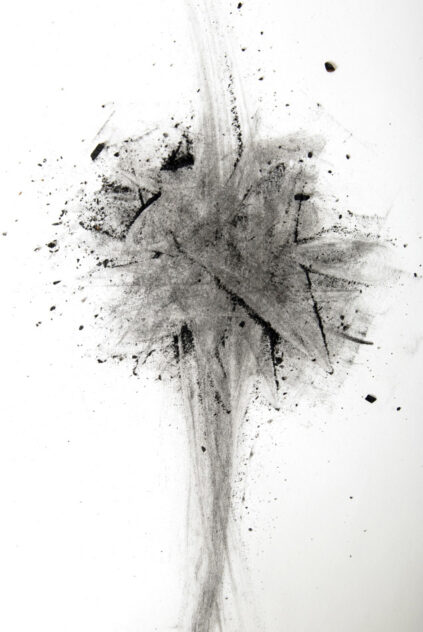
A related sequence follows the matches from material to application. Burned matches still standing in their matchbook read like a bouquet of flowers or long grass bending in the wind. The same burnt matches are then crushed into a pile of ash, and finally that ash is dragged across a page the way charcoal is used to make a drawing.

The sequence ties directly to Brown’s piece Several Ways to Start a Fire, which considers how the discovery and control of fire shaped human evolution and the development of art, writing, storytelling, and even language.